Abstract
Background and Introduction:
Musculoskeletal disorders (MSDs) represent a leading cause of disability worldwide, significantly impacting individuals' quality of life and contributing to rising healthcare costs. Traditional treatments such as pharmacological interventions and physical therapy remain the primary approaches for managing MSDs; however, therapies such as Osteopathic Manipulative Medicine (OMM) are gaining recognition for their potential benefits in managing these conditions. Osteopathic principles emphasize the connection between structural changes in the spinal column and musculoskeletal system, highlighting their impact on overall health and disease development. OMM is a hands-on diagnostic and therapeutic approach utilized by osteopathic physicians, incorporating manual techniques to restore bodily function, alleviate pain, and enhance patient well-being. Unlike conventional treatments, OMM focuses on the body's self-healing mechanisms and seeks to address the root cause of musculoskeletal dysfunctions rather than merely alleviating symptoms. Despite its potential effectiveness, public awareness and perception of OMM remain understudied, and its integration into mainstream healthcare has been inconsistent.
Methods:
This nationwide web-based survey assessed public perceptions of Osteopathic Manipulative Medicine (OMM), with a focus on its distinct role in musculoskeletal pain management. It targeted 1,000 U.S. adults aged 18 and older from diverse backgrounds and collected demographic data including age, location, marital and employment status, number of children, income, and race/ethnicity.
Results:
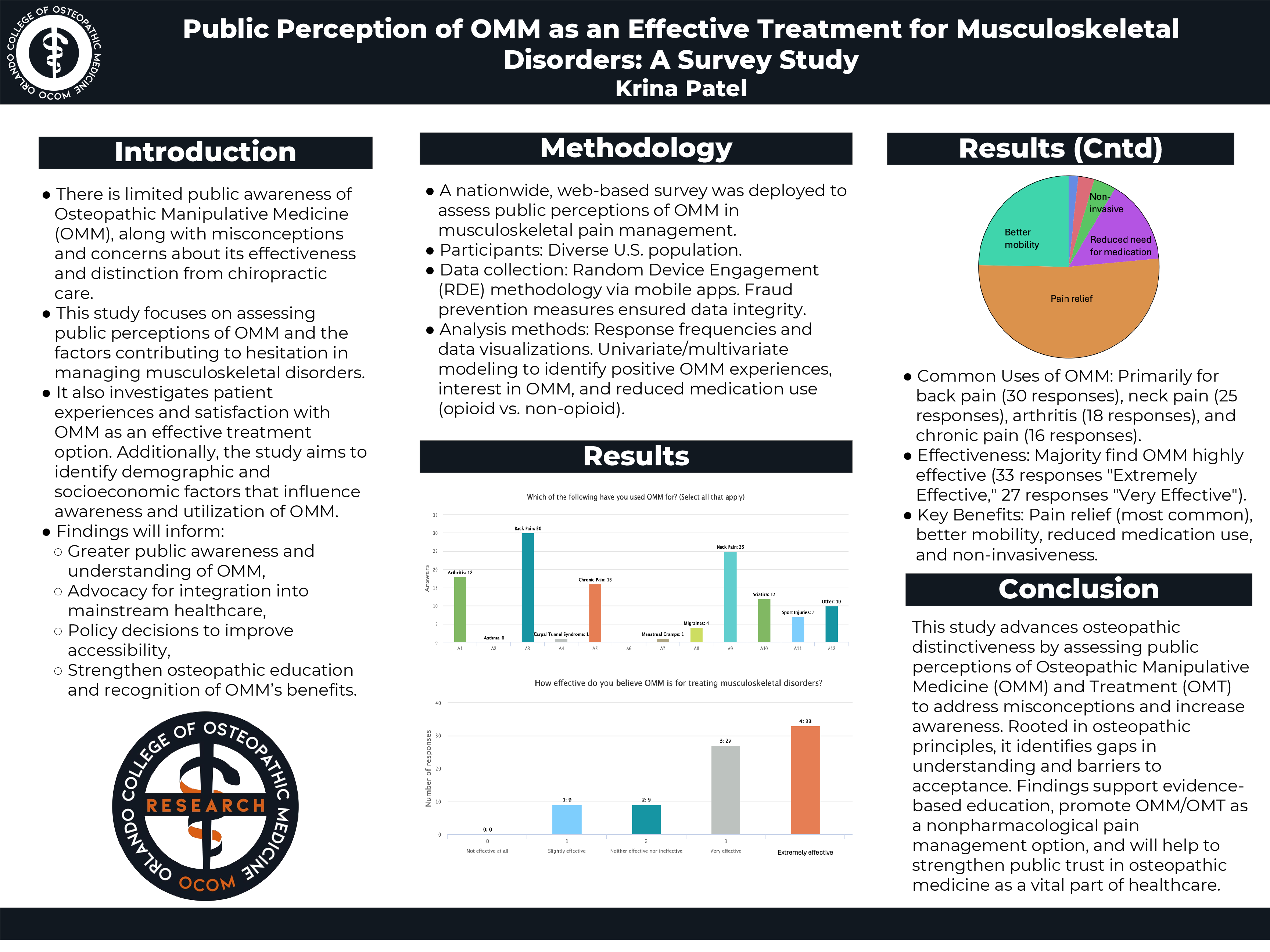
OMM was most commonly reported as being used for back pain (30 responses), neck pain (25 responses), arthritis (18 responses), and chronic pain (16 responses). The majority of participants found OMM to be highly effective, with 33 respondents rating it as "Extremely Effective" and 27 as "Very Effective." Key benefits identified included pain relief, improved mobility, reduced reliance on medication, and its non-invasive nature.
Conclusion:
This study advances the distinctiveness of osteopathic medicine by assessing public perceptions of Osteopathic Manipulative Medicine (OMM) and Osteopathic Manipulative Treatment (OMT). This study addressed common misconceptions and raised awareness of the benefits of OMM and OMT in patient care. Grounded in the tenets of osteopathic medicine, the research identified gaps in public understanding and barriers to the acceptance of OMM/OMT. It also contributed to the advancement of osteopathic manipulation by providing evidence-based data to inform the development of targeted educational programs, promoting greater integration of OMM/OMT as a viable, nonpharmacological approach to pain management. The study’s findings contributes to the existing body of osteopathic research while enhancing public understanding and trust in osteopathic medicine, reinforcing its recognition as a distinct and essential component of healthcare.