Abstract
Background: Transition to adulthood is complicated for adolescents and young adults with autism and/or intellectual disability (AYAAID) and their caregivers. Caregivers of AYAAID face additional challenges related to caring for their child through adulthood. They tend to be socioeconomically disadvantaged and are at greater risk for developing serious health issues. The transition literature has explored the caregiver experience among youth with special health care needs, but few studies have focused on AYAAID. Specific barriers to transition have not been formally studied in New York State (NYS), which is home to nearly 30,000 children and over 342,000 adults with autism.
Objective: To identify barriers experienced by caregivers of AYAAID during the transition from childhood to adulthood in NYS.
Design/Methods:
A qualitative study was designed to explore the experience of caregivers of AYAAID in NYS. Participants were recruited from the membership of a community support organization, Parent to Parent of NYS. Eligible participants self-identified as a caregiver for a child aged 16-24 years with a formal diagnosis of autism and/or intellectual disability, residence in NYS for at least the past year, and fluency in English. They were randomly assigned to one of four 1-hour focus groups conducted via virtual audio-visual meetings. Qualitative thematic analysis was performed by two researchers analyzing the focus group transcripts using NVivo software to identify the most common barriers reported by caregivers of AYAAID in NYS. A third researcher adjudicated any discrepancies in coding and themes.
Results:
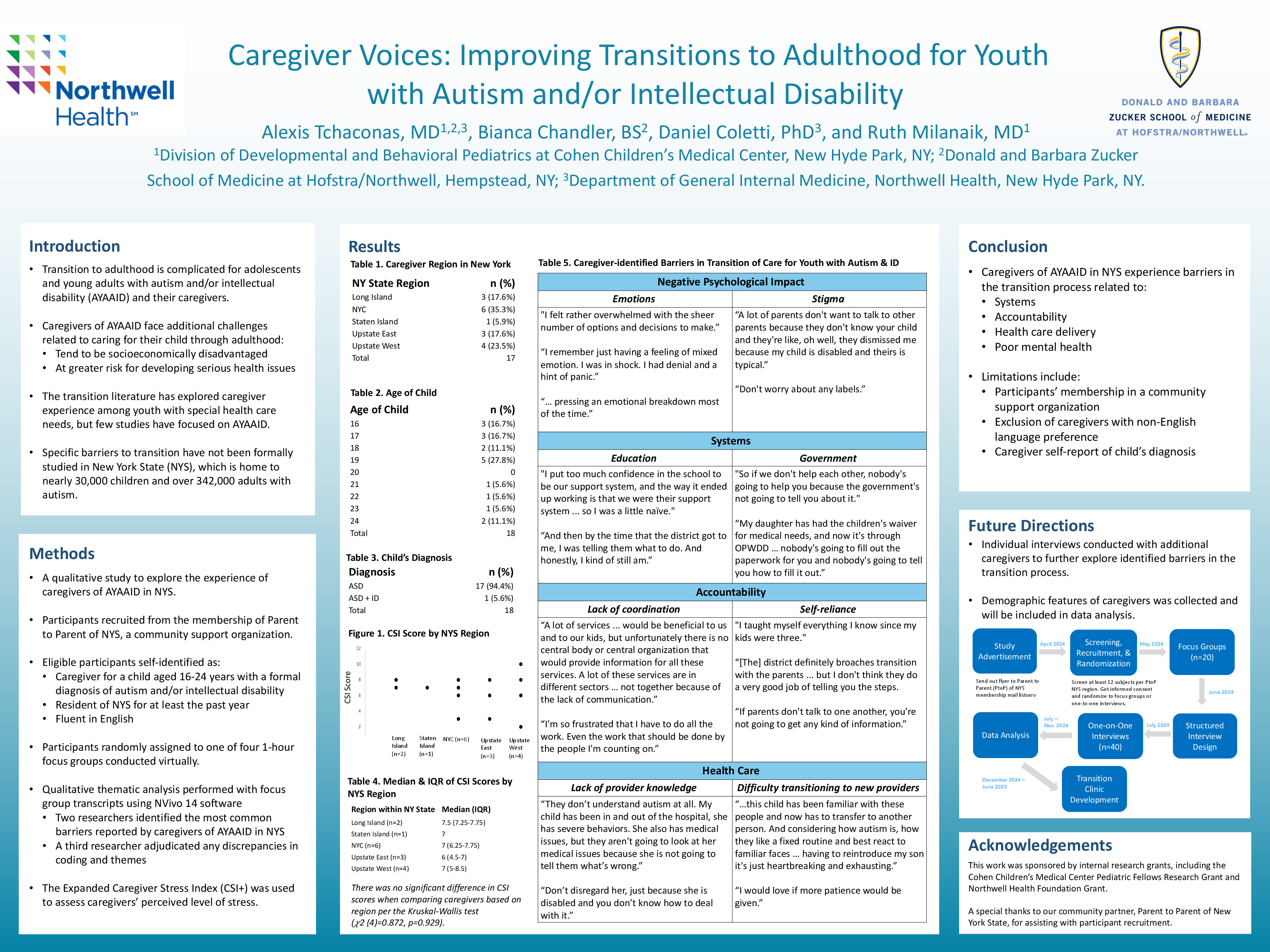
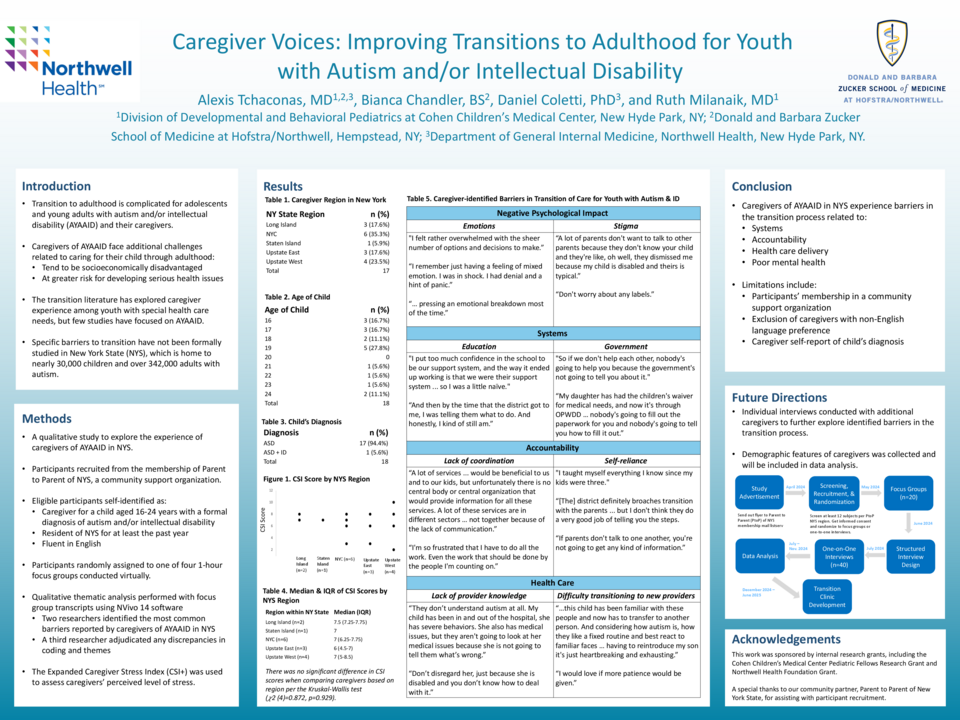
Of the 20 caregivers consented for the study, a total of 18 attended a focus group. Participants represented 5 regions across NYS, including two upstate regions (n=8) and three downstate regions (n=10). The most common barriers identified were the negative impact of the transition process on the caregiver and child, difficulties navigating complex educational and state health systems, inadequate care coordination to support caregivers leading them to feel alone and in charge of the process, and disappointment in medical providers who lack the knowledge and time to help facilitate transition (Table 1).
Conclusions:
Caregivers of AYAAID in NYS experience barriers in the transition process related to systems, accountability, health care delivery, and poor mental health. Limitations include participants’ membership in a community support organization and exclusion of caregivers with non-English language preference. Individual interviews will be conducted with caregivers next to further characterize the identified barriers.