
Abstract
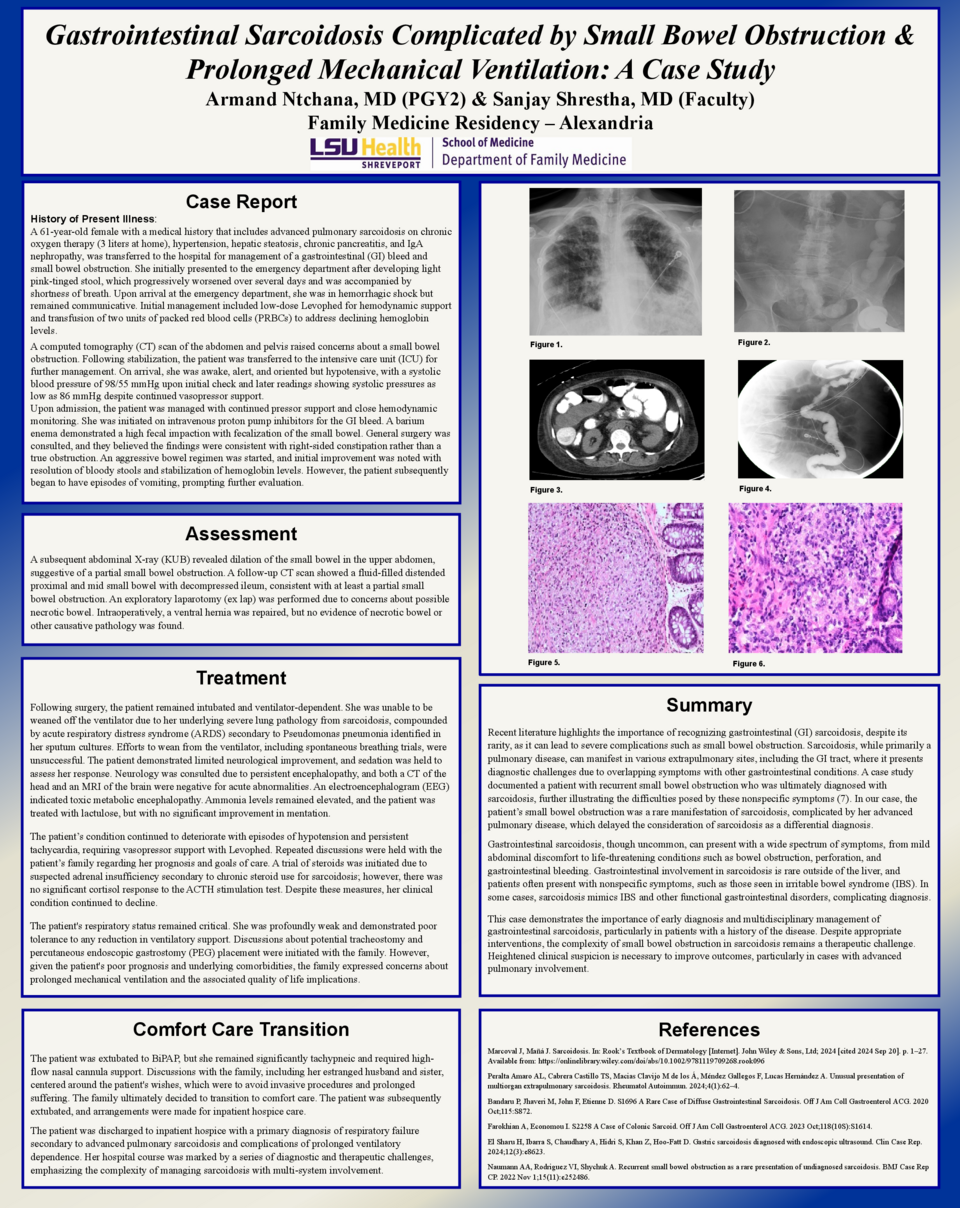
Recent literature highlights the importance of recognizing gastrointestinal (GI) sarcoidosis, despite its rarity, as it can lead to severe complications such as small bowel obstruction. Sarcoidosis, while primarily a pulmonary disease, can manifest in various extrapulmonary sites, including the GI tract, where it presents diagnostic challenges due to overlapping symptoms with other gastrointestinal conditions. A case study documented a patient with recurrent small bowel obstruction who was ultimately diagnosed with sarcoidosis, further illustrating the difficulties posed by these nonspecific symptoms. In our case, the patient’s small bowel obstruction was a rare manifestation of sarcoidosis, complicated by her advanced pulmonary disease, which delayed the consideration of sarcoidosis as a differential diagnosis. Gastrointestinal sarcoidosis, though uncommon, can present with a wide spectrum of symptoms, from mild abdominal discomfort to life-threatening conditions such as bowel obstruction, perforation, and gastrointestinal bleeding. Gastrointestinal involvement in sarcoidosis is rare outside of the liver, and patients often present with nonspecific symptoms, such as those seen in irritable bowel syndrome (IBS). In some cases, sarcoidosis mimics IBS and other functional gastrointestinal disorders, complicating diagnosis. This case demonstrates the importance of early diagnosis and multidisciplinary management of gastrointestinal sarcoidosis, particularly in patients with a history of the disease. Despite appropriate interventions, the complexity of small bowel obstruction in sarcoidosis remains a therapeutic challenge. Heightened clinical suspicion is necessary to improve outcomes, particularly in cases with advanced pulmonary involvement.


