Abstract
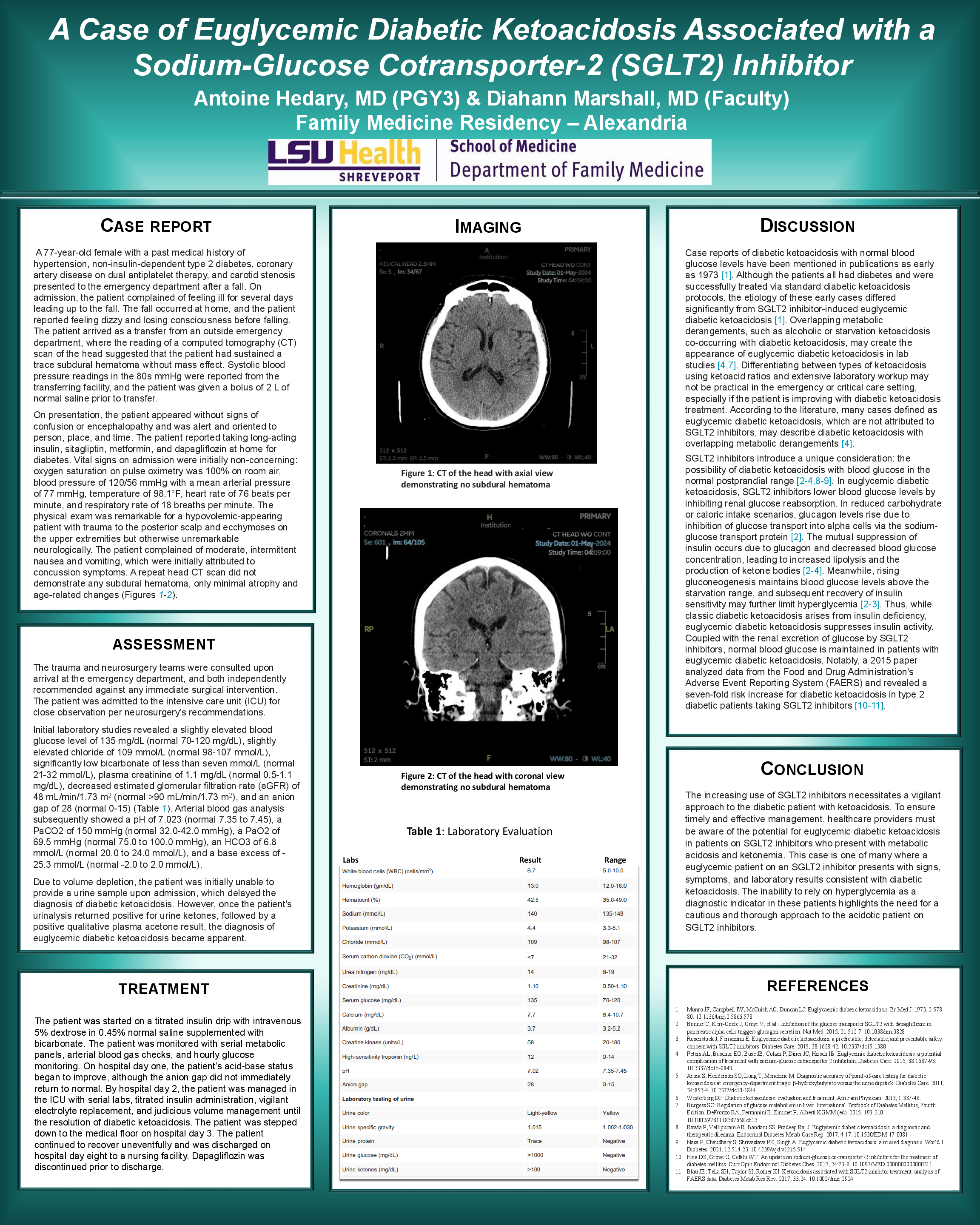
The increasing use of SGLT2 inhibitors necessitates a vigilant approach to the diabetic patient with ketoacidosis. To ensure timely and effective management, healthcare providers must be aware of the potential for euglycemic diabetic ketoacidosis in patients on SGLT2 inhibitors who present with metabolic acidosis and ketonemia. This case is one of many where a euglycemic patient on an SGLT2 inhibitor presents with signs, symptoms, and laboratory results consistent with diabetic ketoacidosis. The inability to rely on hyperglycemia as a diagnostic indicator in these patients highlights the need for a cautious and thorough approach to the acidotic patient on SGLT2 inhibitors.