Abstract
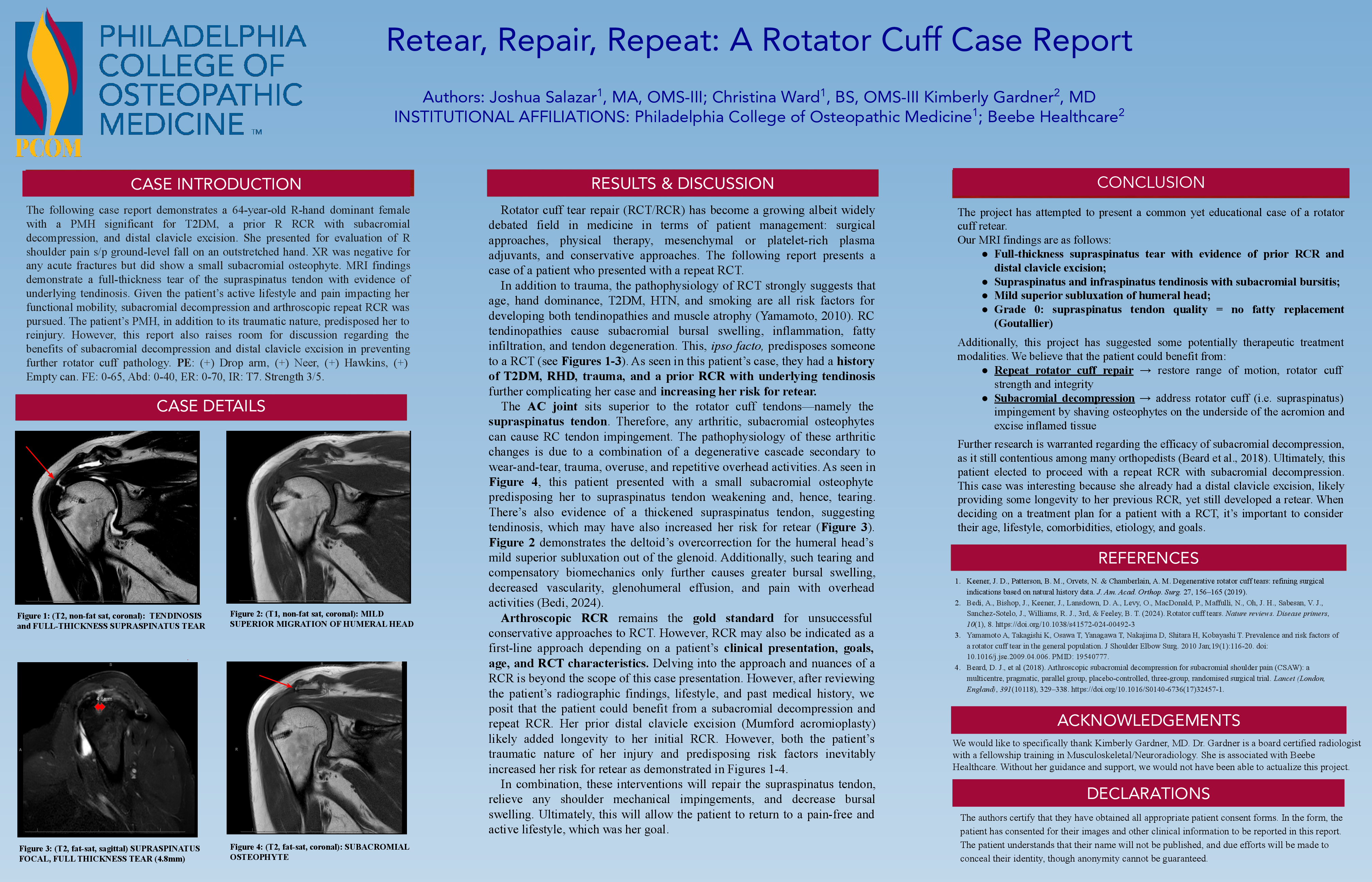
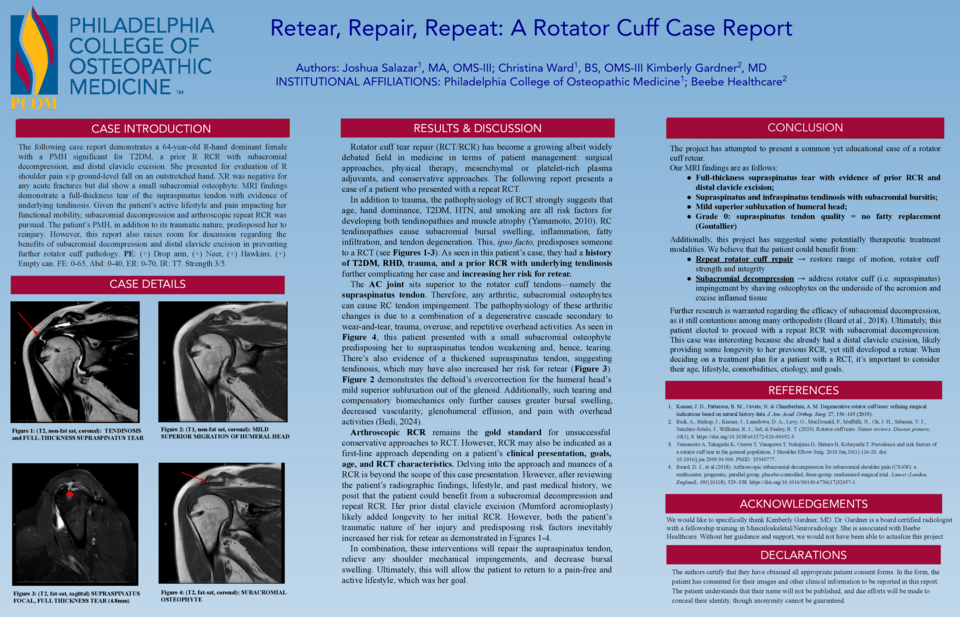
This case report examines a 64-year-old, right-hand dominant female with a history of type 2 diabetes mellitus, prior right rotator cuff repair (RCR), subacromial decompression (SAD), and distal clavicle excision, who presented with right shoulder pain following a ground-level fall. Radiographic findings revealed a full-thickness tear of the supraspinatus tendon, tendinosis, superior humeral head migration, and subacromial osteophyte formation. This report highlights risk factors such as age, diabetes, previous shoulder surgeries, and trauma that can predispose patients to repeat rotator cuff tears (RCT). It discusses the role of subacromial osteophytes and tendinosis in increasing the risk for RCT and explores strategies for managing repeat RCTs. Specifically, it suggests that for patients with active lifestyles who present with significant functional deficits, combining surgical interventions such as SAD and repeat RCR should be considered. This surgical approach can directly address tendon impingement, restore tendon function, and alleviate bursal-associated pain. However, this case also raises questions about the efficacy of SAD in preventing repeat rotator cuff pathology, underscoring the need for further research into its long-term benefits and emphasizing the importance of exploring management options for repeat RCTs.