Abstract
Introduction
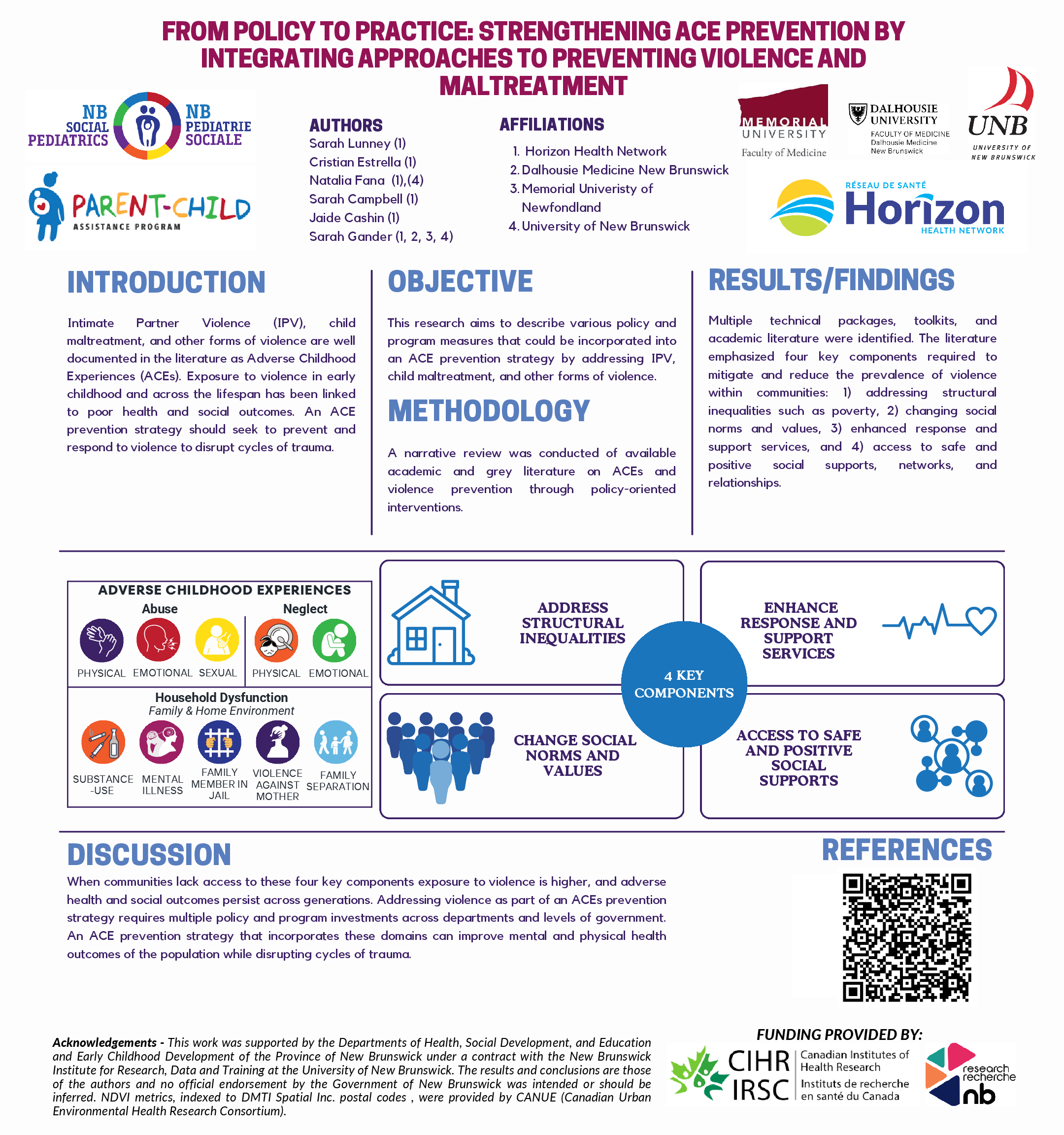
Intimate Partner Violence (IPV), child maltreatment, and other forms of violence are well documented in the literature as Adverse Childhood Experiences (ACEs). Exposure to violence in early childhood and across the lifespan has been linked to poor health and social outcomes. An ACE prevention strategy should seek to prevent and respond to violence to disrupt cycles of trauma.
Objective
This research aims to describe various policy and program measures that could be incorporated into an ACE prevention strategy by addressing IPV, child maltreatment, and other forms of violence.
Methodology
A narrative review was conducted of available academic and grey literature on ACEs and violence prevention through policy-oriented interventions.
Results
Multiple technical packages, toolkits, and academic literature were identified. The literature emphasized four key components required to mitigate and reduce the prevalence of violence within communities: 1) addressing structural inequalities such as poverty, 2) changing social norms and values, 3) enhanced response and support services, and 4) access to safe and positive social supports, networks, and relationships.
Discussion
When communities lack access to these four key components exposure to violence is higher, and adverse health and social outcomes persist across generations. Addressing violence as part of an ACEs prevention strategy requires multiple policy and program investments across departments and levels of government. An ACE prevention strategy that incorporates these domains can improve mental and physical health outcomes of the population while disrupting cycles of trauma.