Abstract
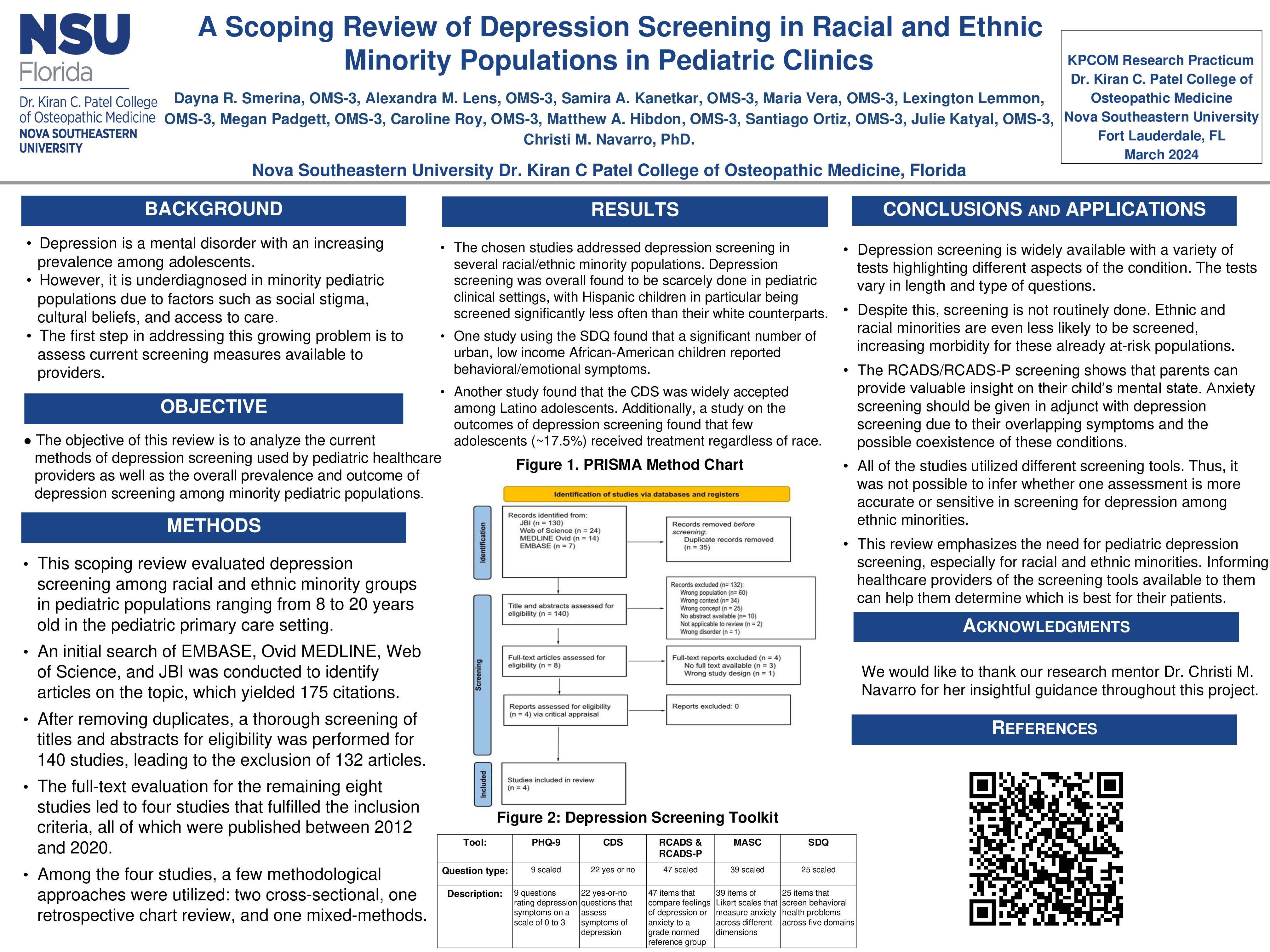
Depression is a mental disorder with an increasing prevalence among adolescents. However, it is under diagnosed in minority pediatric populations due to factors such as social stigma, cultural beliefs, and access to care. The first step in addressing this growing problem is to assess current screening measures available to providers. The objective of this review is to analyze the current methods of depression screening used by pediatric healthcare providers as well as the overall prevalence and outcome of depression screening among minority pediatric populations. This scoping review evaluated depression screening among racial and ethnic minority groups in pediatric populations ranging from 8 to 20 years old in a pediatric primary care setting. There are several tools being utilized in pediatric settings to assess depression. They include the Patient Health Questionnaire-9 (PHQ-9), Columbia Depression Scale (CDS), Revised Child Anxiety and Depression Scale (RCADS) and the parent report version (RCAS-P). Other tools found were the Multidimensional Anxiety Scale for Children (MASC) and the Strengths and Difficulties Questionnaire (SDQ). Depression screening was overall found to be scarcely done in pediatric clinical settings, with Hispanic children in particular being screened significantly less often than their white counterparts. One study using the SDQ found that a significant number of urban, low income African-American children reported behavioral/emotional symptoms. Another study found that the CDS was widely accepted among Latino adolescents. Additionally, a study on the outcomes of depression screening found that few adolescents (~17.5%) received treatment regardless of race. Depression screening is widely available with a variety of tests highlighting different aspects of the condition. The tests vary in length and type of questions. Despite this, screening is not routinely done. Ethnic and racial minorities are even less likely to be screened, increasing morbidity for these already at-risk populations. This review emphasizes the need for pediatric depression screening, especially for racial and ethnic minorities. Informing healthcare providers of the screening tools available to them can help them determine which is best for their patients.