Abstract
Introduction
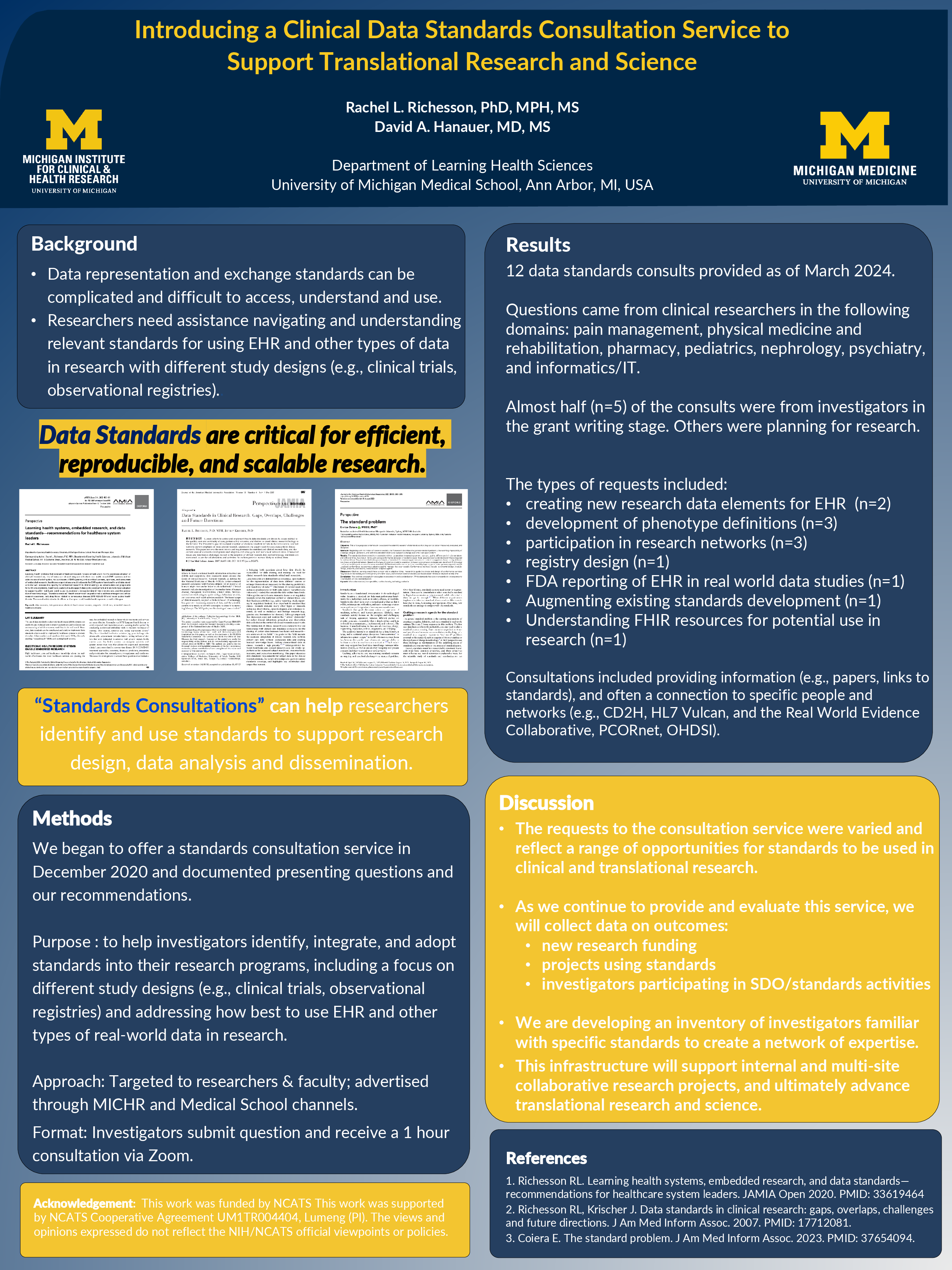
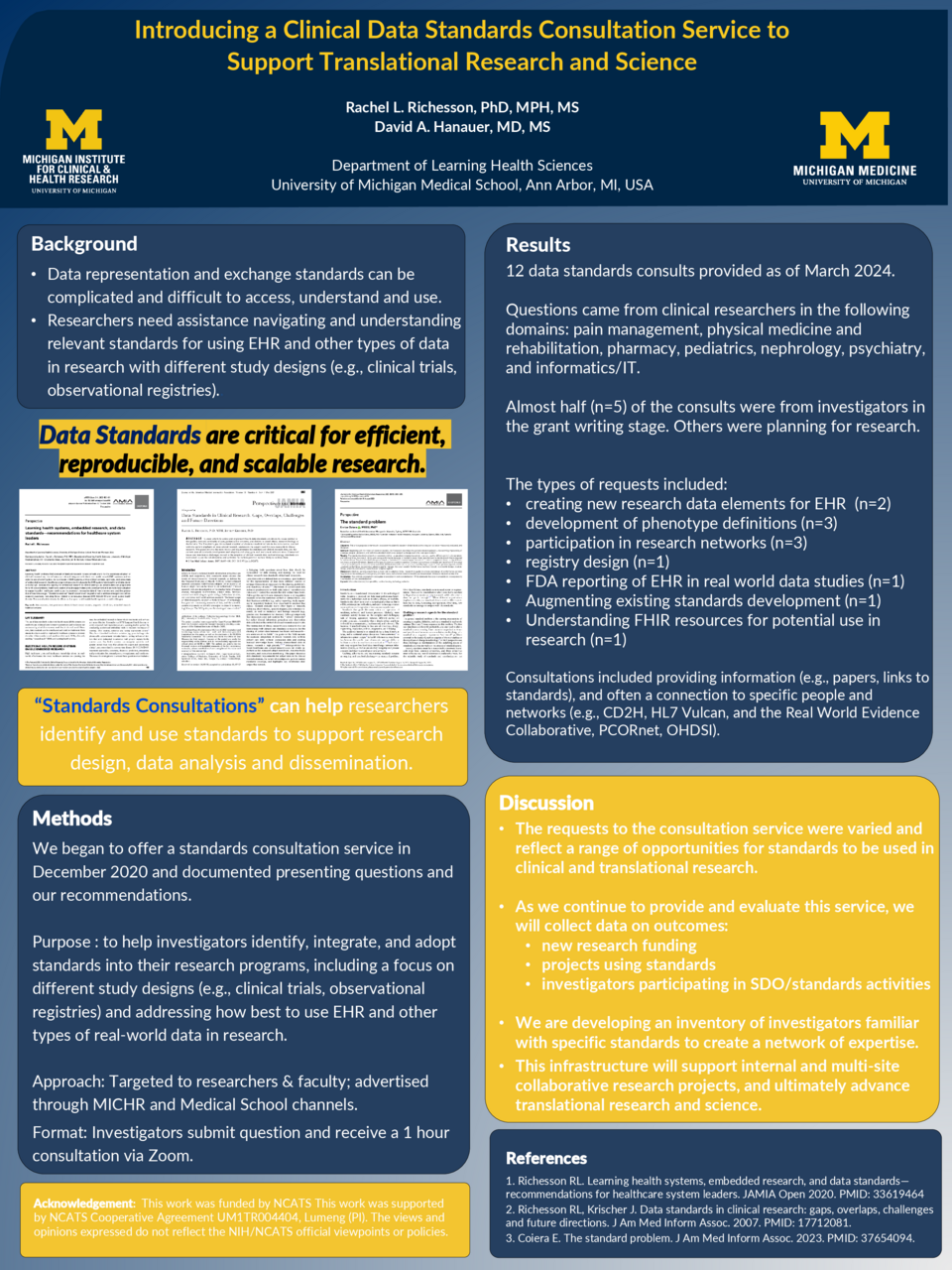
The use of data standards increases the speed and efficiency of study start-up, and enables participation in multi-site networked research and national registries. The coordination of research data standards with emerging EHR data exchange standards (e.g., FHIR) and coding systems (e.g., SNOMED CT, LOINC, RxNorm) will improve our capacity for embedded research, enabling generalizable studies, precision medicine, and sharable data.1 However, identifying and coordinating standards for a research project is challenging as they take many forms (e.g., code system, terminology, ontology, common data elements, data/information model). Many of the overlaps and gaps in clinical research standards reported in 2007 still persist2, and the “standards problem” (creating, adhering to, and maintaining standards) remains unsolved.3 Researchers need guidance on how to identify, select, access, and apply various standards for a particular research study and anticipated dissemination of findings.
Methods
Through our CTSA-supported Michigan Institute for Clinical and Translational Research (MICHR), we developed a standards consultation service in December 2020 to help investigators identify, integrate, and adopt standards into their research programs, including a focus on different study designs (e.g., clinical trials, observational registries) and addressing how best to use EHR and other types of real-world data in research. Consultations included providing information (e.g., papers, links to standards), and often a connection to specific people and networks (e.g., CD2H, HL7 Vulcan, and the Real World Evidence Collaborative, PCORnet, OHDSI). For each consultation, we documented the question and our recommendations in order to understand the scope of information needs and identify barriers to standards implementation or use for various types of research.
Results
We have provided 12 data standards consults as of March 2024. The questions came from clinical researchers in the following domains: pain management, physical medicine and rehabilitation, pharmacy, pediatrics, nephrology, psychiatry, and informatics/IT. The types of requests made included: creating new elements to add to EHR systems for research (n=2), development of phenotype definitions (n=3), participation in research networks (n=3), registry design (n=1), FDA reporting of EHR data in real world data (RWD) studies (n=1), augmenting existing standards development (n=1), and understanding FHIR resources for potential use in research (n=1). Almost half (n=5) of the consults were from investigators in the grant writing stage. In 3 cases, the informatics/standards expert (Richesson) made specific contributions to grant writing and submissions.
Conclusion and Discussion
The requests to the consultation service were varied and reflect a range of opportunities for standards to be used in clinical and translational research. As we continue to provide and evaluate this service, we will collect data on outcomes of the consultation, including new research funding, projects using standards after the consultation, and investigators that participate in standards development organizations or activities. We are developing an inventory of investigators familiar with specific standards to create a network of standards expertise. This infrastructure will support internal and multi-site collaborative research projects, and ultimately advance translational research and science.
https://shorturl.at/xkGqo