Abstract
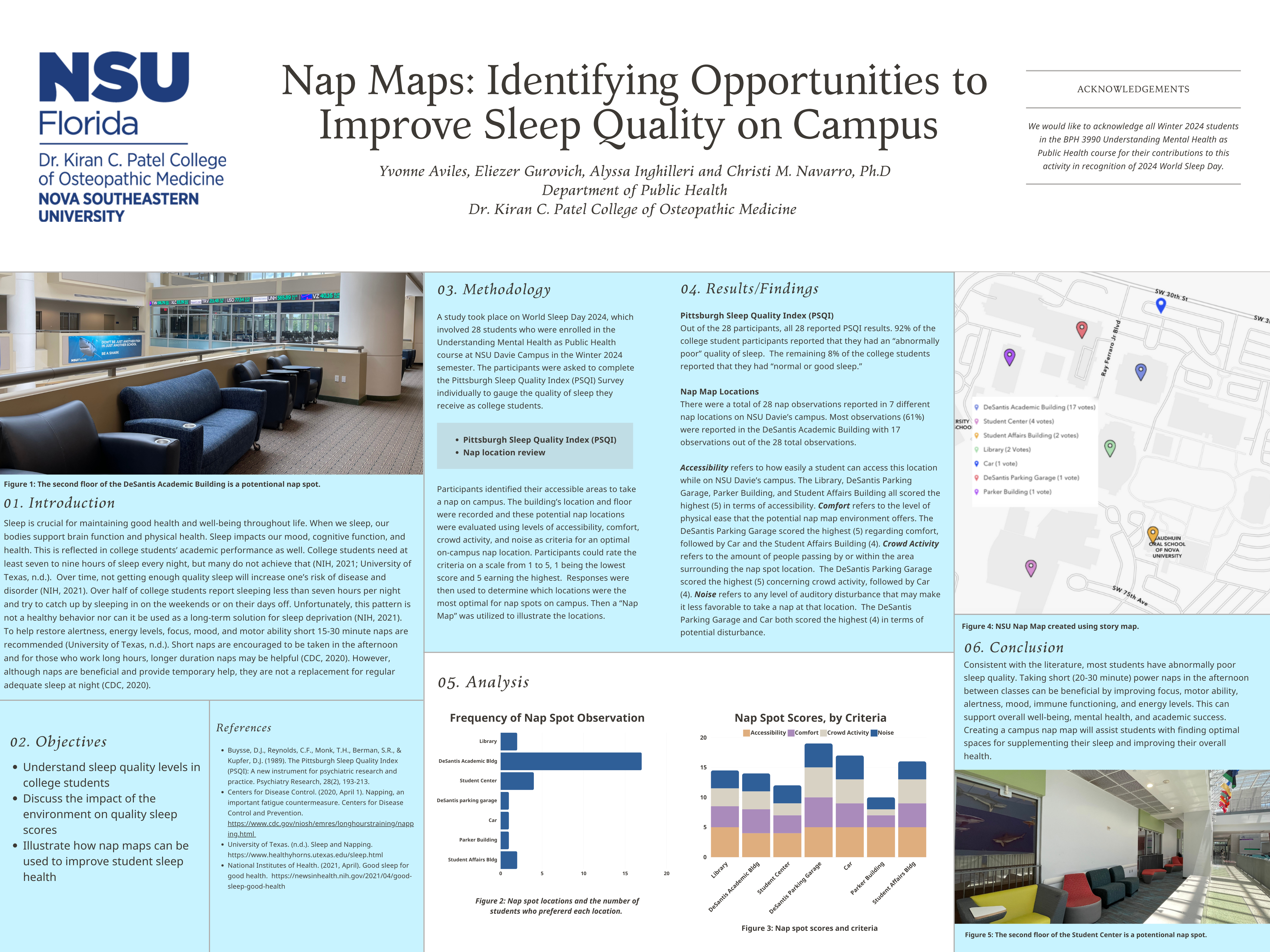
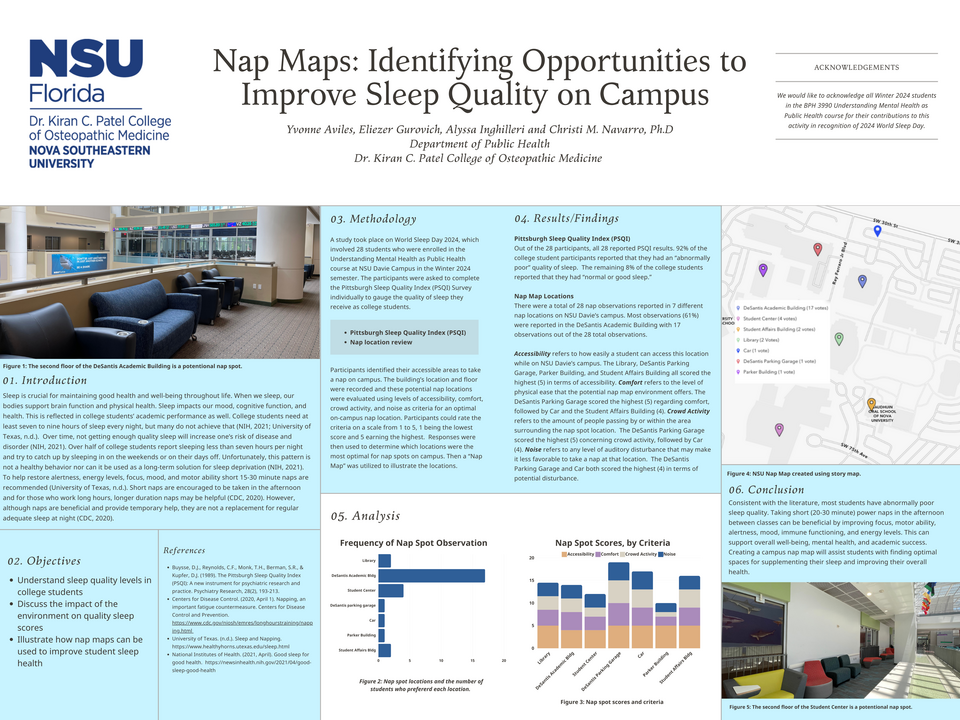
Sleep is essential for maintaining good health and cognitive function throughout life. Inadequate sleep increases the risk of chronic health problems and impacts mood, cognition, and performance. Measurable differences exist in sleep health and hygiene for populations around the globe, creating additional burdens on individuals and reinforcing health inequities. Many college students suffer from sleep deprivation due to academic and work obligations and attempt to compensate with weekend sleep-ins. To mitigate fatigue and enhance alertness, brief naps are advocated, although they do not substitute regular sleep. This study aimed to evaluate student sleep quality and identify optimal napping locations on a college campus. Thirty-one undergraduate participants completed the Pittsburg Sleep Quality Index (PSQI), with 90% reporting "abnormally poor" sleep quality. Napping observations were conducted across eight campus locations, revealing high activity in three key areas: library, student center, and a major classroom building. Accessibility, comfort, crowd activity, and noise levels were assessed. Green Spaces were reported as least crowded and noisy. These findings underscore the urgent need to address student sleep quality. Short naps (20-30 minutes) between classes can enhance focus, alertness, and mood, supporting overall well-being and academic success. The development of a campus nap map can aid students in finding suitable locations for nap supplementation. Interventions targeting sleep hygiene and providing conducive nap environments are imperative for promoting student health and performance.