Abstract
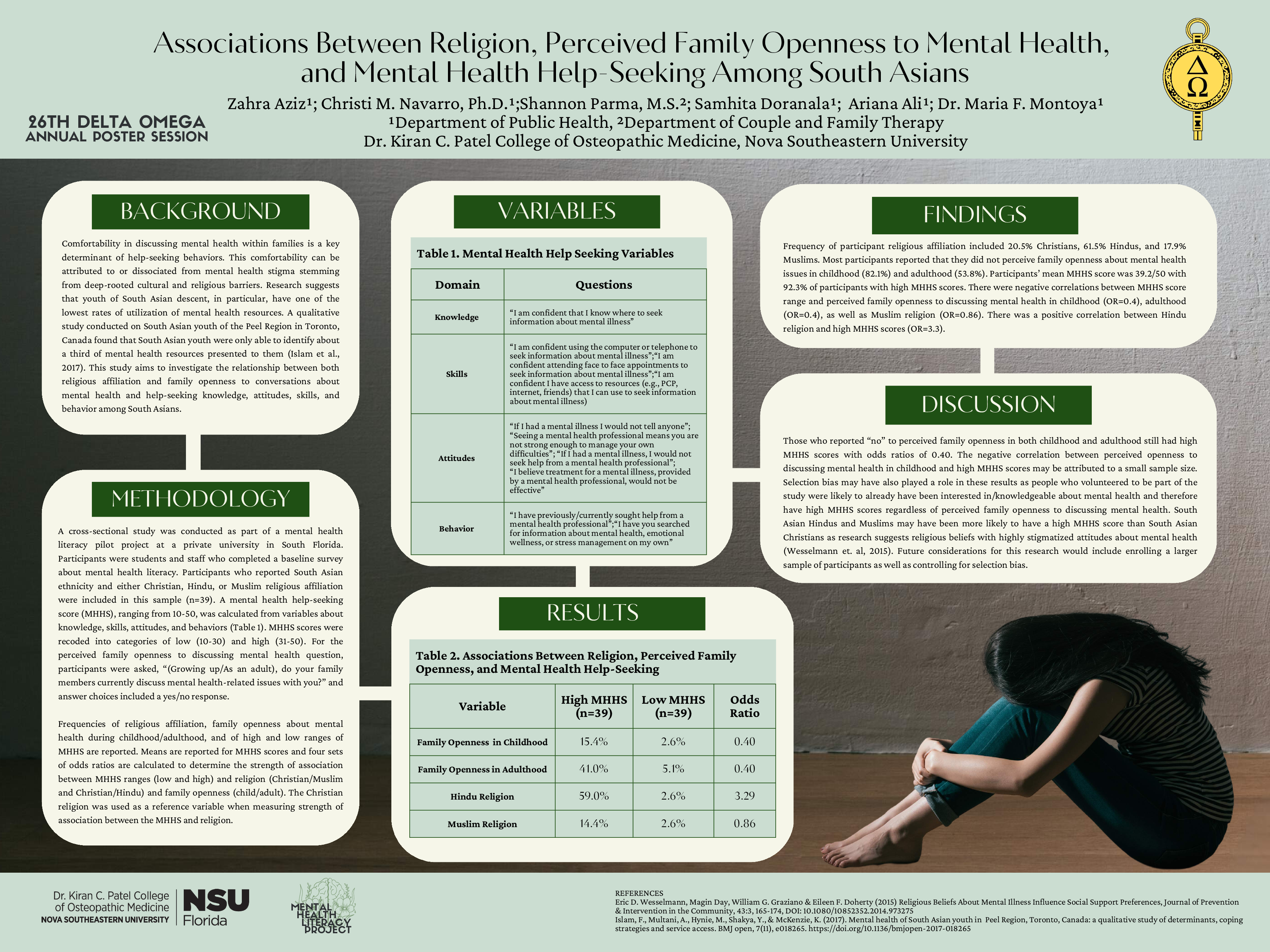
Being comfortable with discussing mental health within one's family is a key determinant of help-seeking behaviors. This comfortability can be attributed to or dissociated from mental health stigma stemming from deep-rooted cultural and religious barriers. Research suggests that youth of South Asian descent, in particular, have one of the lowest rates of utilization of mental health resources. This study aims to investigate the relationship between both religious affiliation and family openness to conversations about mental health and help-seeking knowledge, attitudes, skills, and behavior among South Asians.
A cross-sectional study was conducted as part of a mental health literacy pilot project at a private university in South Florida. Participants were students and staff who completed a baseline survey about mental health literacy. Participants who reported South Asian ethnicity and either Christian, Hindu, or Muslim religious affiliation were included in this sample (n=39). A mental health help-seeking score (MHHS) was calculated from variables about knowledge, skills, attitudes, and behaviors. Perceived family openness to discussing mental health was asked for both childhood and adulthood.
Most participants (92.3%) had high MHHS scores. There were negative correlations between MHHS score range and perceived family openness to discussing mental health in childhood adulthood, as well as Muslim religion. There was a positive correlation between Hindu religion and high MHHS scores (OR=3.3).
Future considerations for this research would include enrolling a larger sample of participants as well as controlling for selection bias.