Abstract
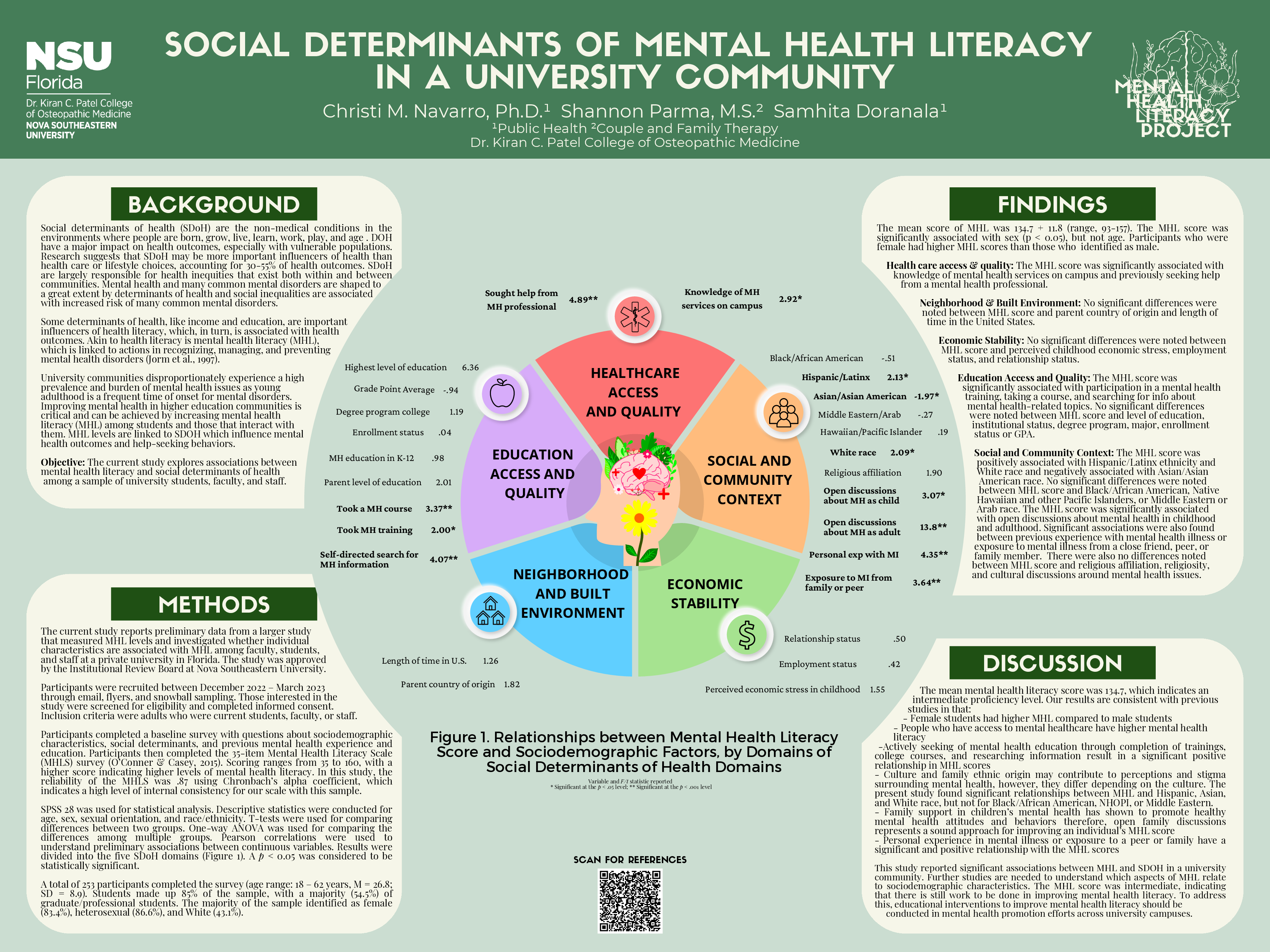
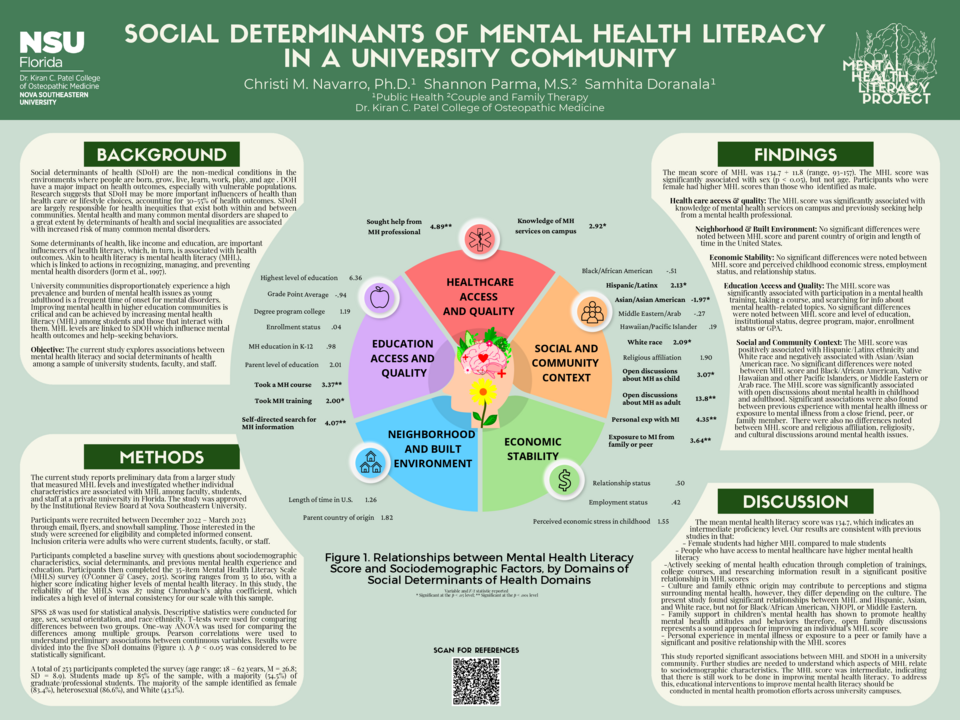
The rate and intensity of mental health needs has escalated. A significant increase in anxiety and depressive disorders has been observed in young adults since the pandemic. University populations disproportionately experience a high prevalence and burden of mental health issues as young adulthood is a frequent time of onset for mental disorders. Improving mental health in higher education communities is critical and can be achieved by increasing mental health literacy (MHL) among students and those that interact with them. MHL levels are linked to many social determinants of mental health (SODMH) which influence mental health outcomes and help-seeking behaviors.
The current interdisciplinary project collaborates with a community partner to provide Mental Health First Aid (MHFA) training on campus. We aim to examine MHL levels before and after the intervention and whether differences exist in socio-ecological factors including race, religion, culture, education, and mental health experience.
The study presents preliminary findings of this project and to identify associations between MHL and social determinants. Emergent themes and trends from this study will be used to develop a body of knowledge that can serve as a model for other institutions. Goals for future practice which have the potential to improve mental health literacy will also be discussed.