Abstract
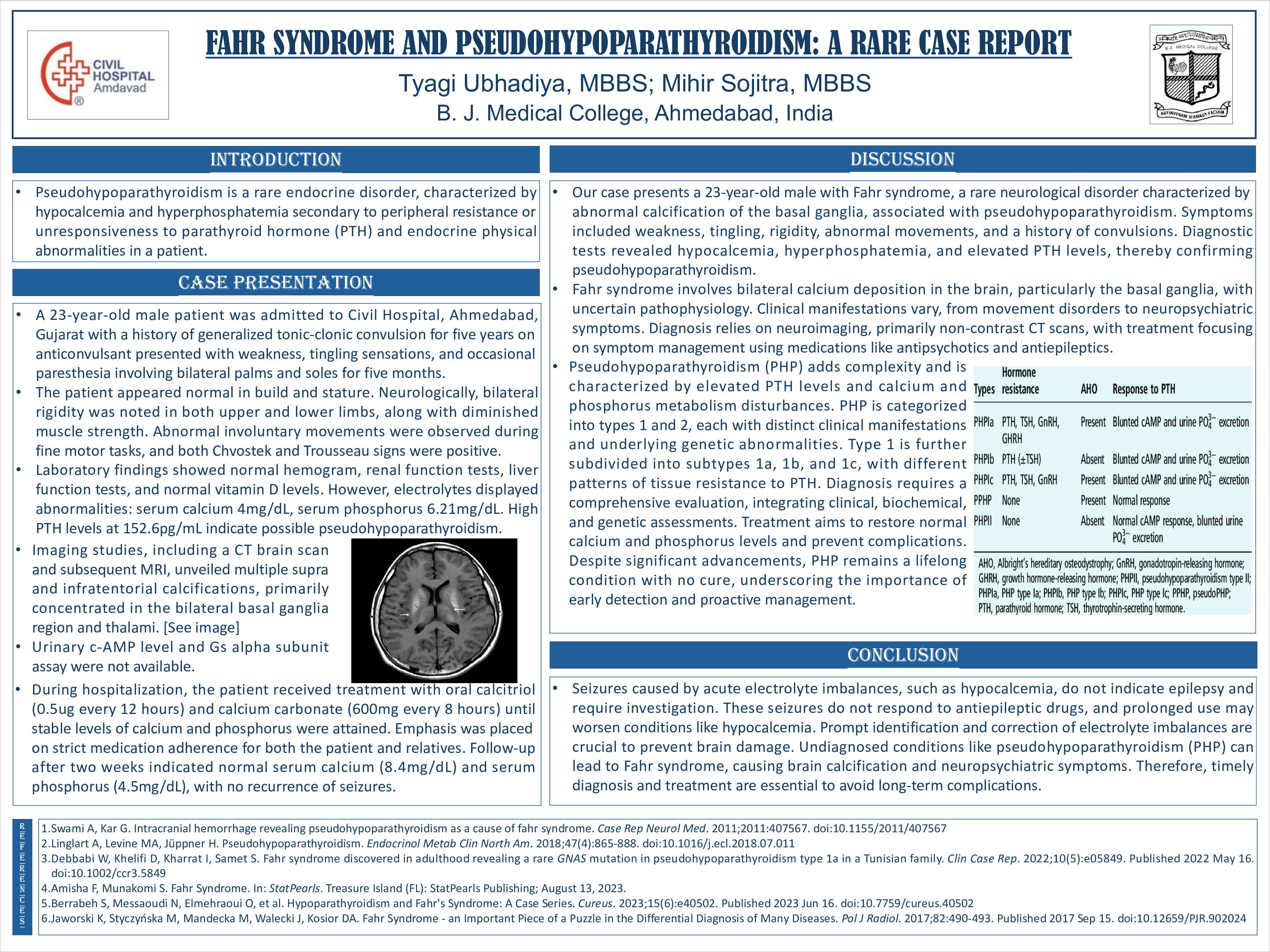
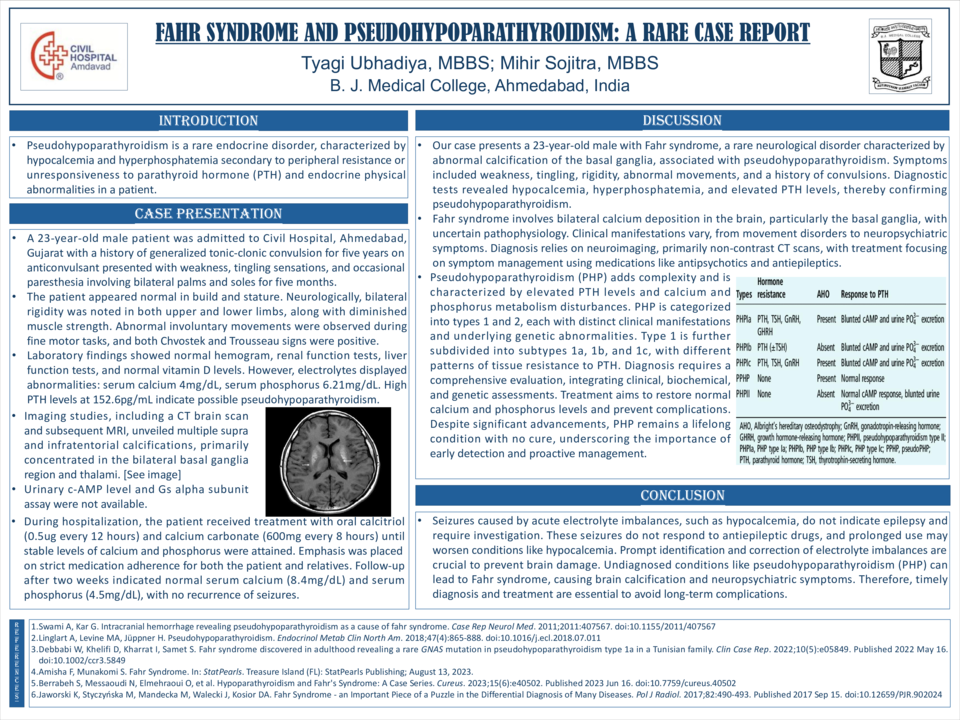
Fahr syndrome, characterized by bilateral basal ganglia calcifications, is a rare neurological condition often associated with metabolic disorders such as pseudohypoparathyroidism (PHP). We present a case report of a 23-year-old male with a history of progressive neurological symptoms including weakness, tingling, pain, rigidity, abnormal movements, and epilepsy. Diagnostic tests revealed hypocalcemia, hyperphosphatemia, and elevated parathyroid hormone levels, indicating pseudohypoparathyroidism. Brain imaging confirmed symmetric basal ganglia calcifications consistent with Fahr syndrome. The patient was treated with antiepileptic medications and calcium supplementation. This case underscores the intricate interplay between neurological and metabolic disorders, highlighting the importance of considering rare conditions in patients with complex presentations. It offers insights into the diagnosis and management of Fahr syndrome secondary to pseudohypoparathyroidism, providing valuable guidance for clinicians encountering similar cases.