Autoantibodies to Cytoplasmic Rod/Ring Structure Targeting CTP/GTP Synthetic Pathway in HCV Patients Treated with Interferon/ribavirin
Abstract
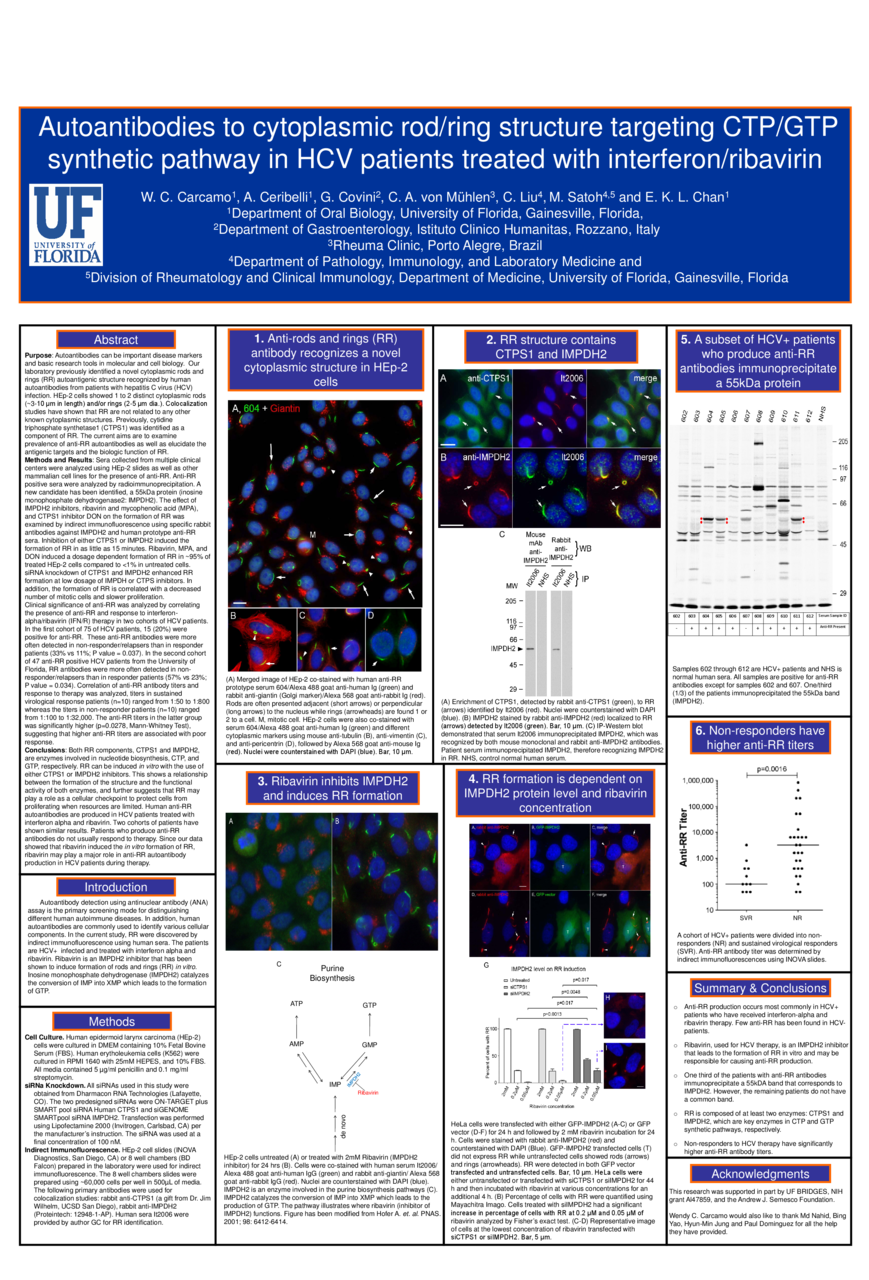
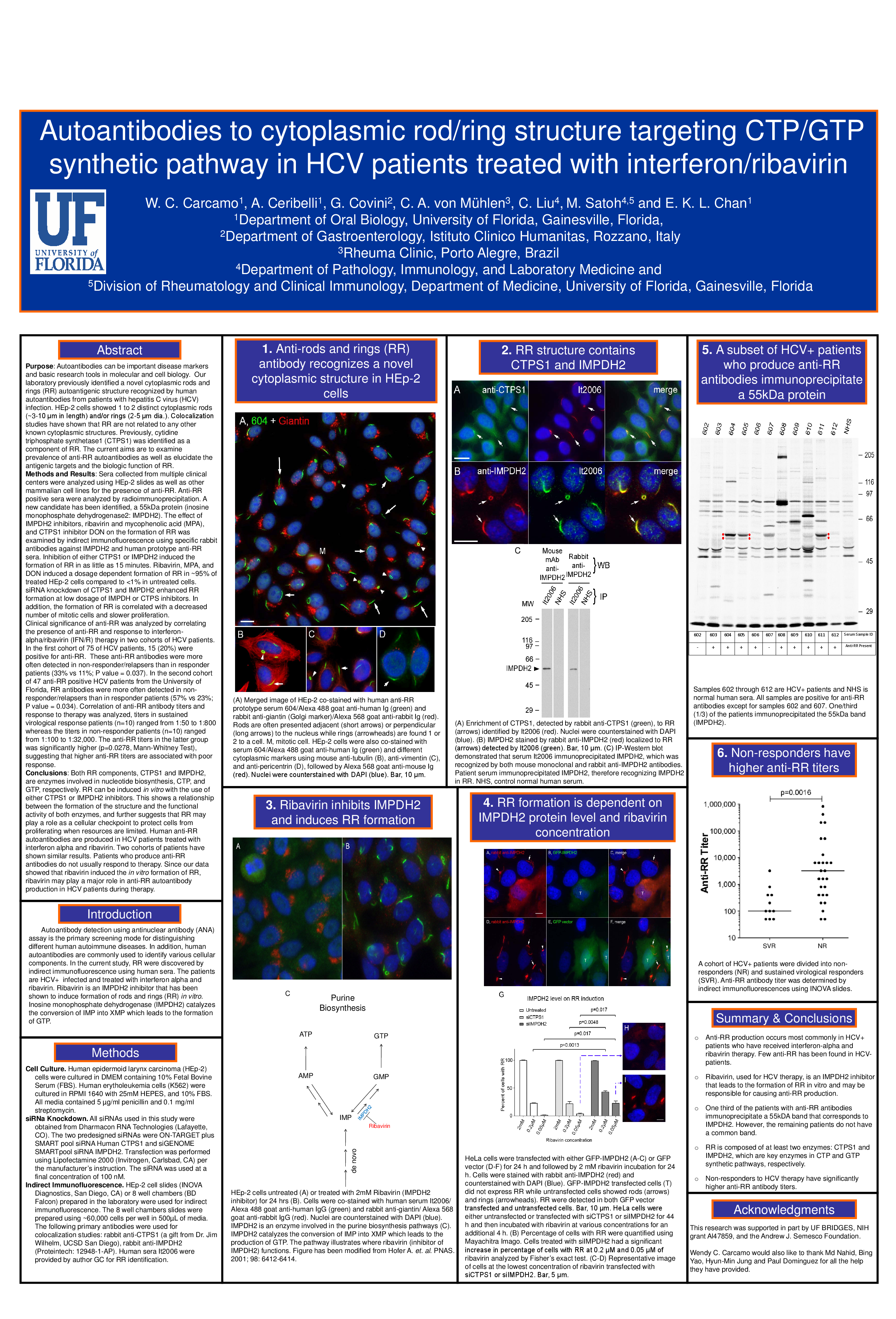
Purpose: Autoantibodies can be important disease markers and basic research tools in molecular and cell biology. Our laboratory previously identified a novel cytoplasmic rods and rings (RR) autoantigenic structure recognized by human autoantibodies from patients with hepatitis C virus (HCV) infection. HEp-2 cells showed 1 to 2 distinct cytoplasmic rods (~3-10 μm in length) and/or rings (2-5 μm dia.). Colocalization studies have shown that RR are not related to any other known cytoplasmic structures. Previously, cytidine triphosphate synthetase1 (CTPS1) was identified as a component of RR. The current aims are to examine prevalence of anti-RR autoantibodies as well as elucidate the antigenic targets and the biologic function of RR.
Methods and Results: Sera collected from multiple clinical centers were analyzed using HEp-2 slides as well as other mammalian cell lines for the presence of anti-RR. Anti-RR positive sera were analyzed by radioimmunoprecipitation. A new candidate has been identified, a 55kDa protein (inosine monophosphate dehydrogenase2: IMPDH2). The effect of IMPDH2 inhibitors, ribavirin and mycophenolic acid (MPA), and CTPS1 inhibitor DON on the formation of RR was examined by indirect immunofluorescence using specific rabbit antibodies against IMPDH2 and human prototype anti-RR sera. Inhibition of either CTPS1 or IMPDH2 induced the formation of RR in as little as 15 minutes. Ribavirin, MPA, and DON induced a dosage dependent formation of RR in ~95% of treated HEp-2 cells compared to <1% in untreated cells. siRNA knockdown of CTPS1 and IMPDH2 enhanced RR formation at low dosage of IMPDH or CTPS inhibitors. In addition, the formation of RR is correlated with a decreased number of mitotic cells and slower proliferation.
Clinical significance of anti-RR was analyzed by correlating the presence of anti-RR and response to interferon-alpha/ribavirin (IFN/R) therapy in two cohorts of HCV patients. In the first cohort of 75 of HCV patients, 15 (20%) were positive for anti-RR. These anti-RR antibodies were more often detected in non-responder/relapsers than in responder patients (33% vs 11%; P value = 0.037). In the second cohort of 47 anti-RR positive HCV patients from the University of Florida, RR antibodies were more often detected in non-responder/relapsers than in responder patients (57% vs 23%; P value = 0.034). Correlation of anti-RR antibody titers and response to therapy was analyzed, titers in sustained virological response patients (n=10) ranged from 1:50 to 1:800 whereas the titers in non-responder patients (n=10) ranged from 1:100 to 1:32,000. The anti-RR titers in the latter group was significantly higher (p=0.0278, Mann-Whitney Test), suggesting that higher anti-RR titers are associated with poor response.
Conclusions: Both RR components, CTPS1 and IMPDH2, are enzymes involved in nucleotide biosynthesis, CTP, and GTP, respectively. RR can be induced in vitro with the use of either CTPS1 or IMPDH2 inhibitors. This shows a relationship between the formation of the structure and the functional activity of both enzymes, and further suggests that RR may play a role as a cellular checkpoint to protect cells from proliferating when resources are limited. Human anti-RR autoantibodies are produced in HCV patients treated with interferon alpha and ribavirin. Two cohorts of patients have shown similar results. Patients who produce anti-RR antibodies do not usually respond to therapy. Since our data showed that ribavirin induced the in vitro formation of RR, ribavirin may play a major role in anti-RR autoantibody production in HCV patients during therapy.
Related articles