Abstract
Introduction
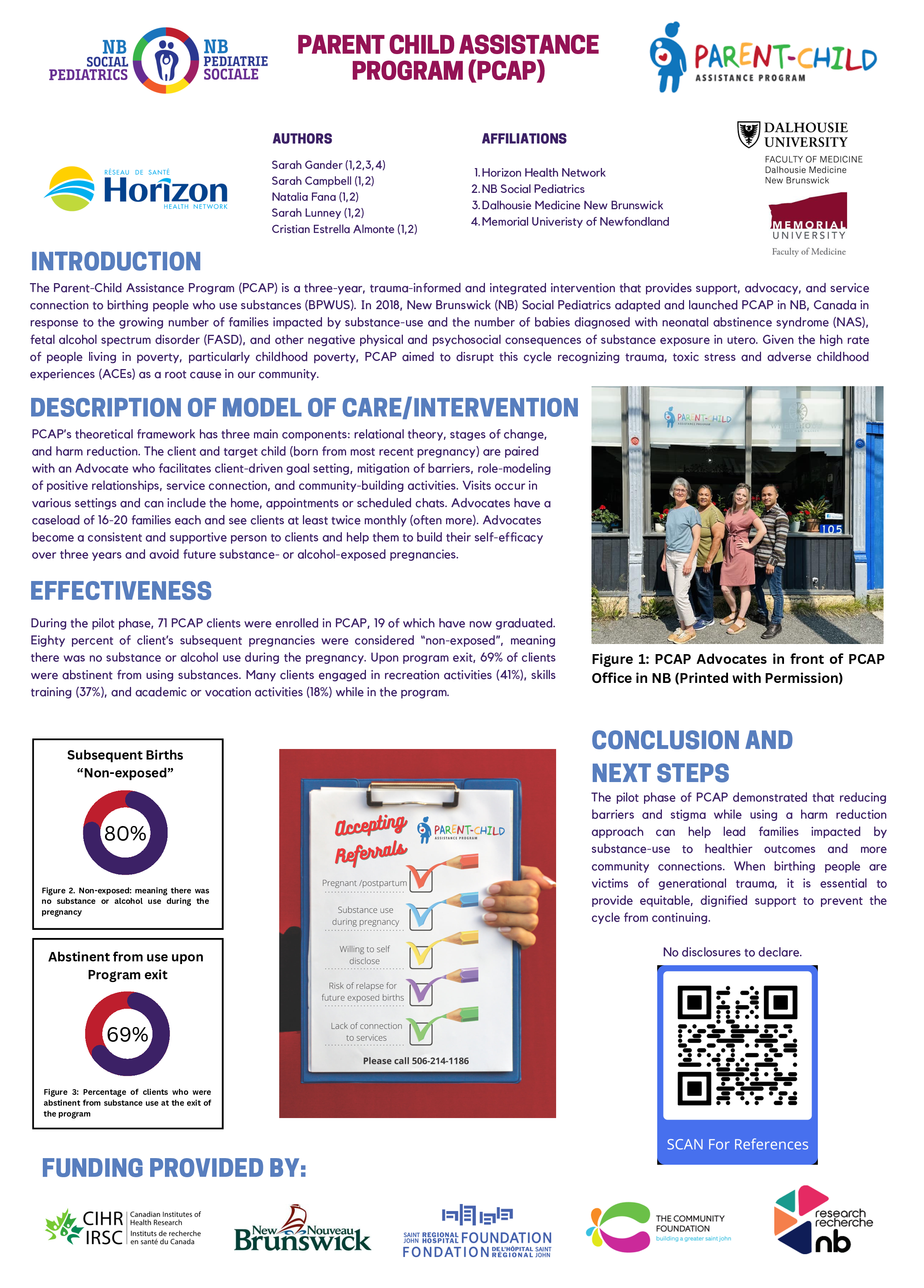
The Parent-Child Assistance Program (PCAP) is a three-year, trauma-informed and integrated intervention that provides support, advocacy, and service connection to birthing people who use substances (BPWUS). In 2018, New Brunswick (NB) Social Pediatrics adapted and launched PCAP in NB, Canada in response to the growing number of families impacted by substance-use and the number of babies diagnosed with neonatal abstinence syndrome (NAS), fetal alcohol spectrum disorder (FASD), and other negative physical and psychosocial consequences of substance exposure in utero. Given the high rate of people living in poverty, particularly childhood poverty, PCAP aimed to disrupt this cycle recognizing trauma, toxic stress and adverse childhood experiences (ACEs) as a root cause in our community.
Description of Intervention
PCAP’s theoretical framework has three main components: relational theory, stages of change, and harm reduction. The client and target child (born from most recent pregnancy) are paired with an Advocate who facilitates client-driven goal setting, mitigation of barriers, role-modeling of positive relationships, service connection, and community-building activities. Visits occur in various settings and can include the home, appointments or scheduled chats. Advocates have a caseload of 16-20 families each and see clients at least twice monthly (often more). Advocates become a consistent and supportive person to clients and help them to build their self-efficacy over three years and avoid future substance- or alcohol-exposed pregnancies.
Effectiveness
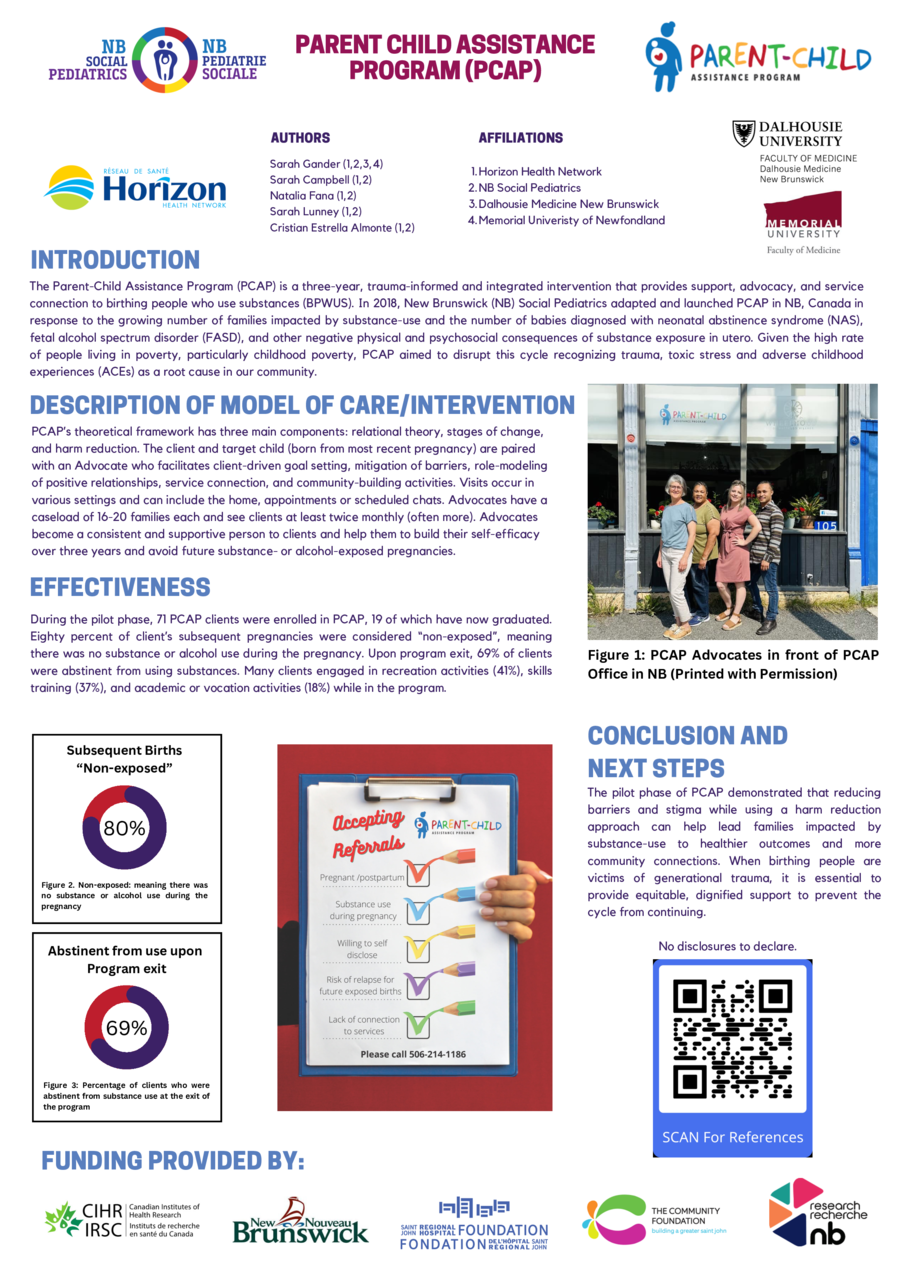
During the pilot phase, 71 PCAP clients were enrolled in PCAP, 19 of which have now graduated. Eighty percent of client’s subsequent pregnancies were considered “non-exposed”, meaning there was no substance or alcohol use during the pregnancy. Upon program exit, 69% of clients were abstinent from using substances. Many clients engaged in recreation activities (41%), skills training (37%), and academic or vocation activities (18%) while in the program.
Conclusion and Next Steps
The pilot phase of PCAP demonstrated that reducing barriers and stigma while using a harm reduction approach can help lead families impacted by substance-use to healthier outcomes and more community connections. When birthing people are victims of generational trauma, it is essential to provide equitable, dignified support to prevent the cycle from continuing.