Abstract
Introduction
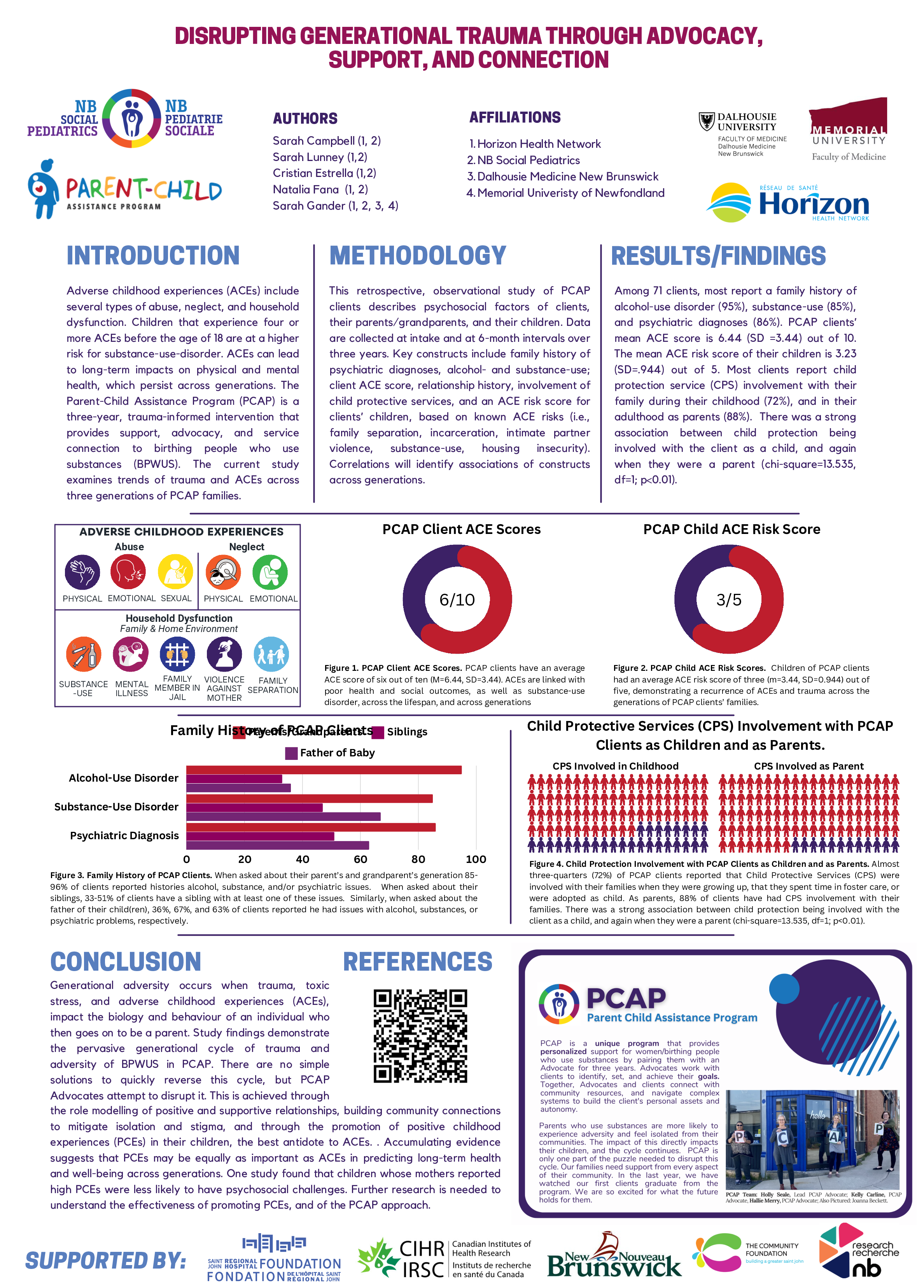
Adverse childhood experiences (ACEs) include several types of abuse, neglect, and household dysfunction. Children that experience four or more ACEs before the age of 18 are at a higher risk for substance-use-disorder. ACEs can lead to long-term impacts on physical and mental health, which persist across generations. The Parent-Child Assistance Program (PCAP) is a three-year, trauma-informed intervention that provides support, advocacy, and service connection to birthing people who use substances (BPWUS). The current study examines trends of trauma and ACEs across three generations of PCAP families.
Methodology
This retrospective, observational study of PCAP clients describes psychosocial factors of clients, their parents/grandparents, and their children. Data are collected at intake and at 6-month intervals over three years. Key constructs include family history of psychiatric diagnoses, alcohol- and substance-use; client ACE score, relationship history, involvement of child protective services, and an ACE risk score for clients’ children, based on known ACE risks (i.e., family separation, incarceration, intimate partner violence, substance-use, housing insecurity). Correlations will identify associations of constructs across generations.
Results
Among 71 clients, most report a family history of alcohol-use disorder (95%), substance-use (85%), and psychiatric diagnoses (86%). PCAP clients’ mean ACE score is 6.44 (SD =3.44) out of 10. The mean ACE risk score of their children is 3.23 (SD=.944) out of 5. Most clients report child protection service (CPS) involvement with their family during their childhood (72%), and in their adulthood as parents (88%). There was a strong association between child protection being involved with the client as a child, and again when they were a parent (chi-square=13.535, df=1; p<0.01).
Conclusion
Generational adversity occurs when trauma, toxic stress, and adverse childhood experiences (ACEs), impact the biology and behaviour of an individual who then goes on to be a parent. Study findings demonstrate the pervasive generational cycle of trauma and adversity of BPWUS in PCAP. There are no simple solutions to quickly reverse this cycle, but PCAP Advocates attempt to disrupt it. This is achieved through the role modelling of positive and supportive relationships, building community connections to mitigate isolation and stigma, and through the promotion of positive childhood experiences (PCEs) in their children, the best antidote to ACEs. . Accumulating evidence suggests that PCEs may be equally as important as ACEs in predicting long-term health and well-being across generations. One study found that children whose mothers reported high PCEs were less likely to have psychosocial challenges. Further research is needed to understand the effectiveness of promoting PCEs, and of the PCAP approach.