Abstract
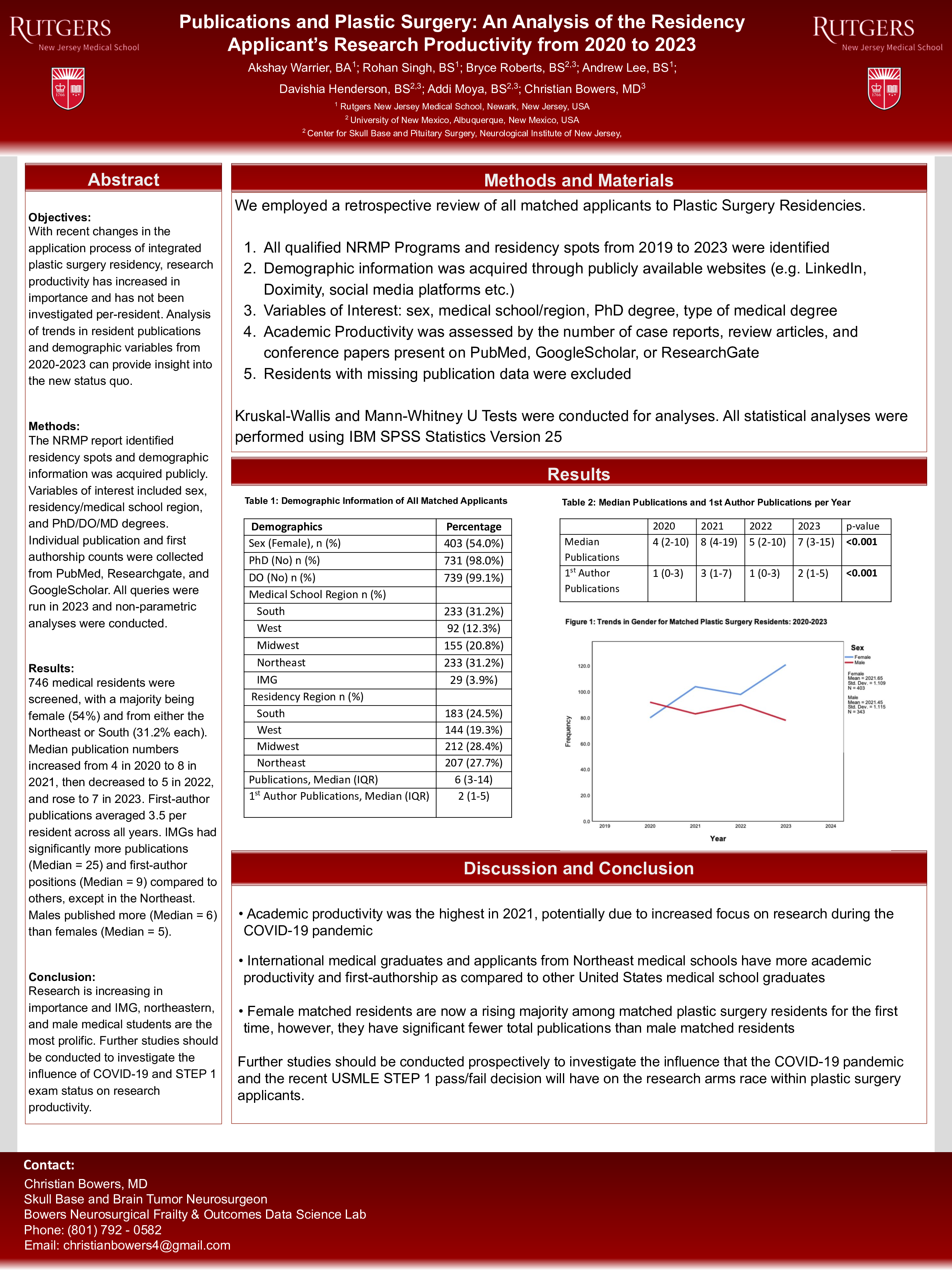
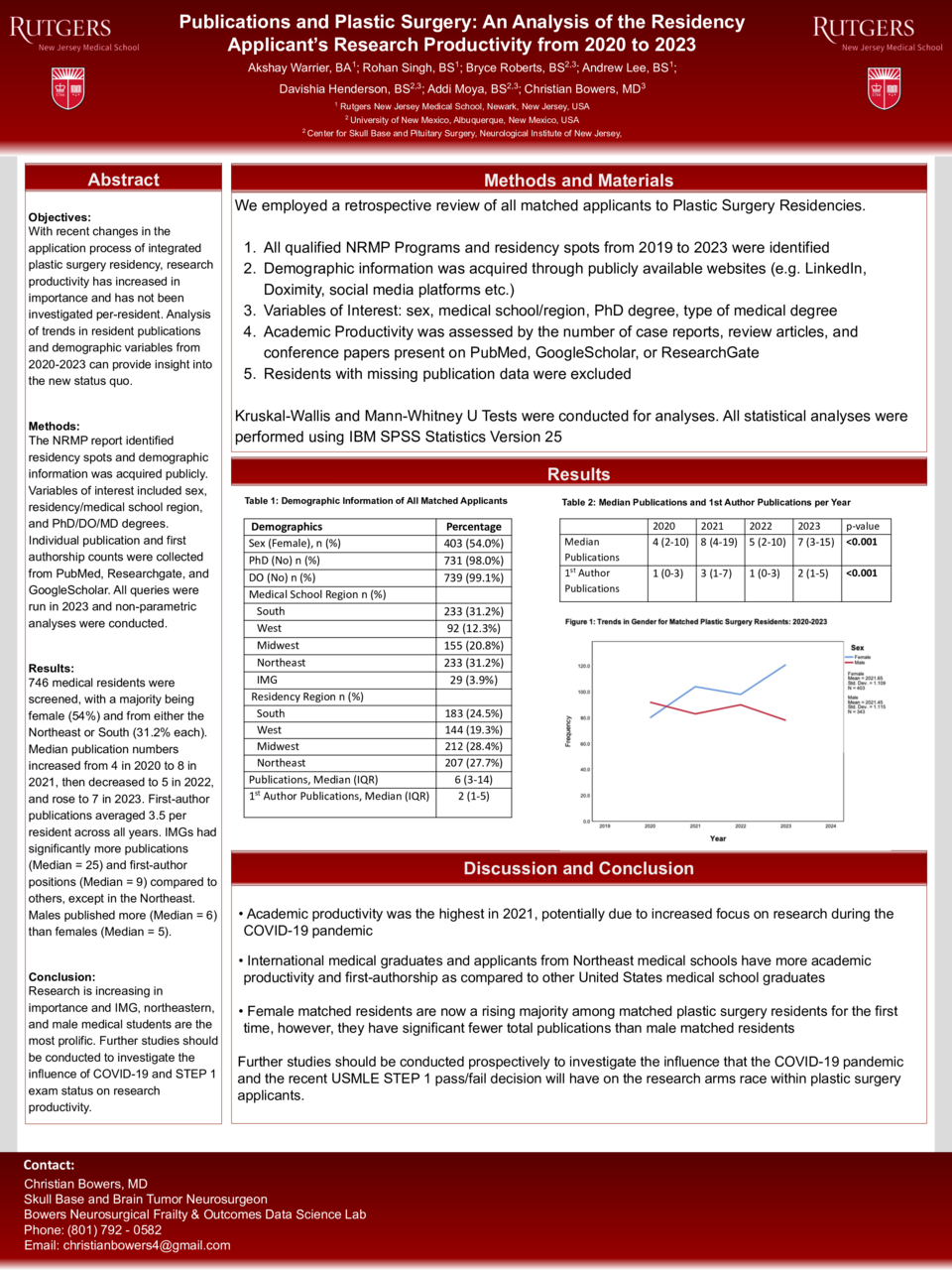
Objectives : With recent changes in the application and acceptance process of integrated plastic surgery residency, research productivity has seen an increase in importance. Research productivity of plastic surgery residents has not been investigated on a per-resident basis, thus trends in academic productivity across variables such as sex, medical school region, and residency region have not been explored. Analysis of trends in resident publications from 2019-2023 can provide insight into the increasing importance of research in the plastic surgery match.
Methods : The National Residency Matching Program (NRMP) report from 2019 to 2023 was used to identify all plastic surgery residency programs and corresponding residency spots. Demographic information for residents was acquired through publicly available websites such as news articles, Doximity, and LinkedIn. Variables of interest included sex, medical school/region, PhD degree, and type of medical degree (DO or MD). Academic productivity was assessed by the number of case reports, review articles, and conference papers that were present on PubMed, Google Scholar, or ResearchGate. First authorship on any publications was recorded. Residents with missing publication data were excluded. Kruskal-Wallis and Mann-Whitney U Tests were conducted for analyses. All statistical tests were performed using IBM SPSS Statistics Version 25 (Armonk, NY).
Results : 746 residents were majority female (n=403), northeast or southern medical students (31.2%, both), and in midwest residencies (28.4%). The median number of publications increased from 2020 (M=4, IQR:2-10) to 2021 (M=8, IQR:4-19, p<0.001), decreased in 2022 (M=5, IQR:2-10, p<0.001), and increased again in 2023 (M=7, IQR:3-15, p=0.009). First-author publications followed the same trend, averaging 3.5/resident across all years. IMG students published (M = 25, IQR 7-58) and were first authors (M=9, IQR:1-18) significantly more than applicants everywhere except the northeast (p<0.001). Males (M =6, IQR 3-15) had more publications than females (M = 5, IQR 3-13, p = 0.045).
Conclusions : Publication trends of plastic surgery residents revealed that academic productivity was highest in 2021, potentially due to increased focus on research during the COVID-19 pandemic, however, productivity is generally increasing. International medical graduates and applicants from northeast medical schools have more academic productivity and first-authorship as compared to other United States medical school graduates, and male applicants have increased publications than female applicants despite a recent majority of female applicants. Further studies should be conducted to investigate the influence of COVID-19 on research productivity across all specialties and publication trends after the USMLE Step 1 pass/fail system takes effect on the residency match.