Abstract
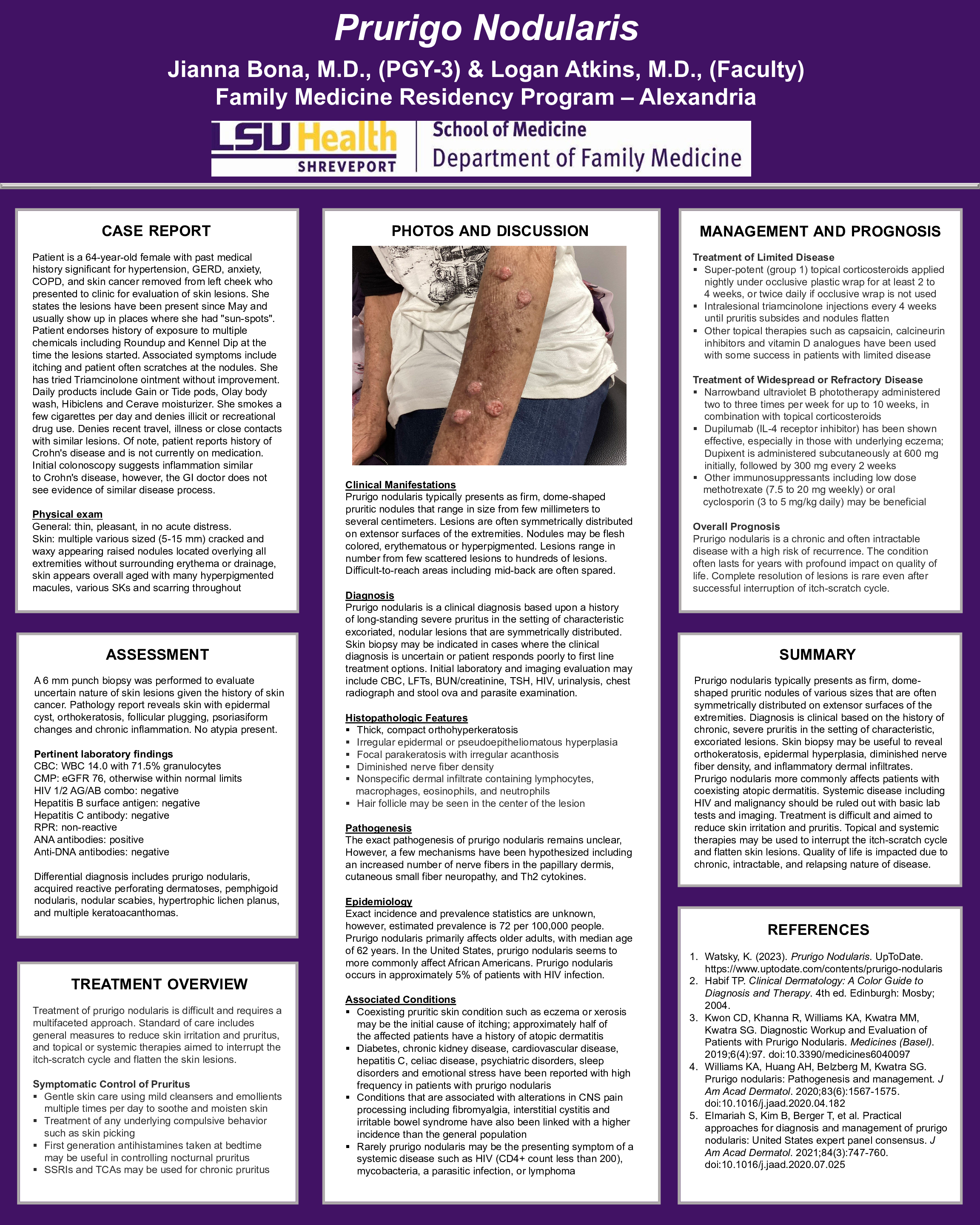
Prurigo nodularis typically presents as firm, domeshaped pruritic nodules of various sizes that are often symmetrically distributed on extensor surfaces of the extremities. Diagnosis is clinically based on the history of chronic, severe pruritis in the setting of characteristic, excoriated lesions. Skin biopsy may be helpful to reveal orthokeratosis, epidermal hyperplasia, diminished nerve fiber density, and inflammatory dermal infiltrates. Prurigo nodularis more commonly affects patients with coexisting atopic dermatitis. Systemic diseases, including HIV and malignancy, should be ruled out with basic lab tests and imaging. Treatment is complex and aimed at reducing skin irritation and pruritus. Topical and systemic therapies may interrupt the itch-scratch cycle and flatten skin lesions. Quality of life is impacted due to the chronic, intractable, and relapsing nature of the disease.