
Abstract
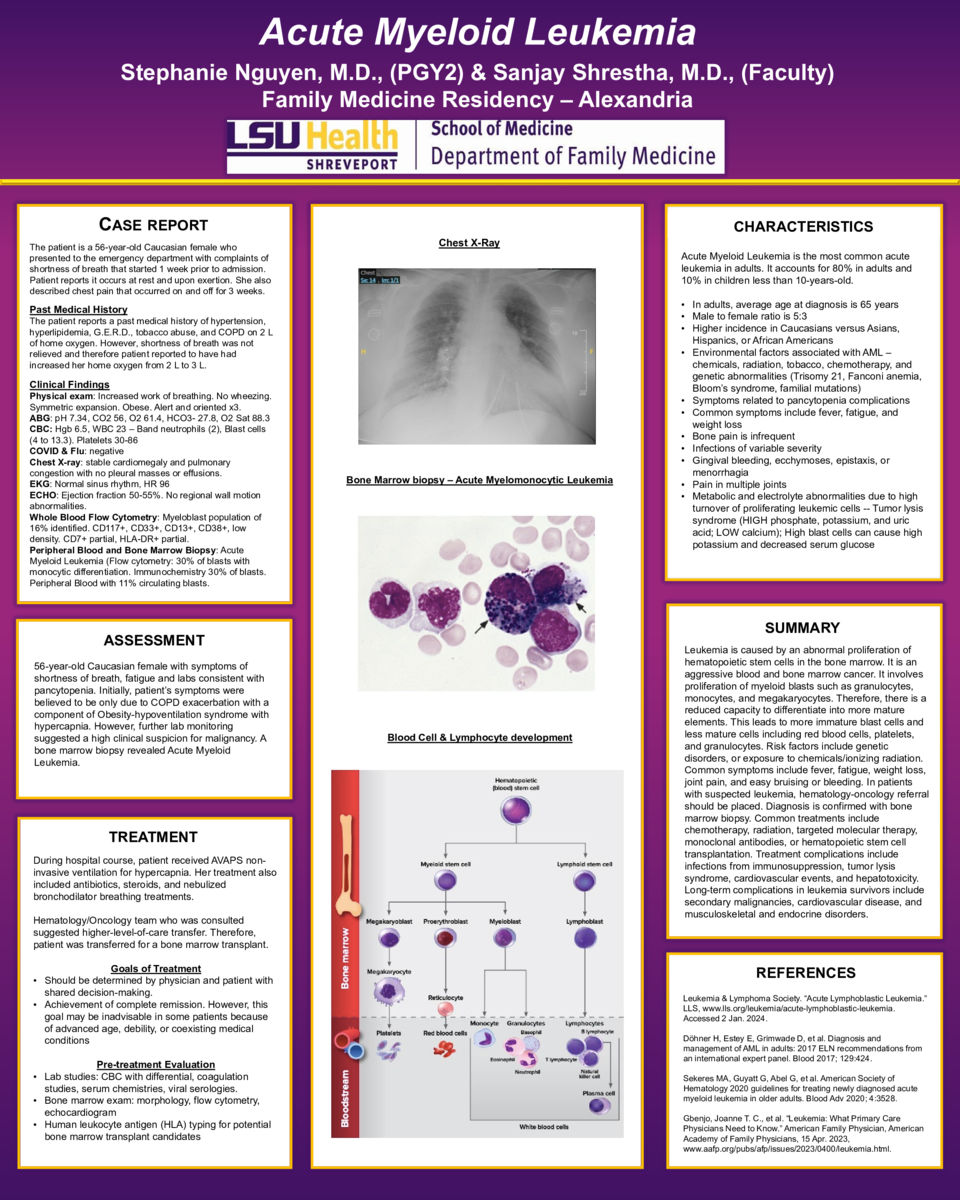
Leukemia is caused by an abnormal proliferation of hematopoietic stem cells in the bone marrow. It is an aggressive blood and bone marrow cancer. It involves the proliferation of myeloid blasts such as granulocytes, monocytes, and megakaryocytes. Therefore, there is a reduced capacity to differentiate into more mature elements. This leads to more immature blast cells and less mature cells, including red blood cells, platelets, and granulocytes. Risk factors include genetic disorders or exposure to chemicals/ionizing radiation. Common symptoms include fever, fatigue, weight loss, joint pain, and easy bruising or bleeding. In patients with suspected leukemia, a hematology-oncology referral should be placed. Diagnosis is confirmed with a bone marrow biopsy. Common treatments include chemotherapy, radiation, targeted molecular therapy, monoclonal antibodies, or hematopoietic stem cell transplantation. Treatment complications include infections from immunosuppression, tumor lysis syndrome, cardiovascular events, and hepatotoxicity. Long-term complications in leukemia survivors include secondary malignancies, cardiovascular disease, and musculoskeletal and endocrine disorders.


