Abstract
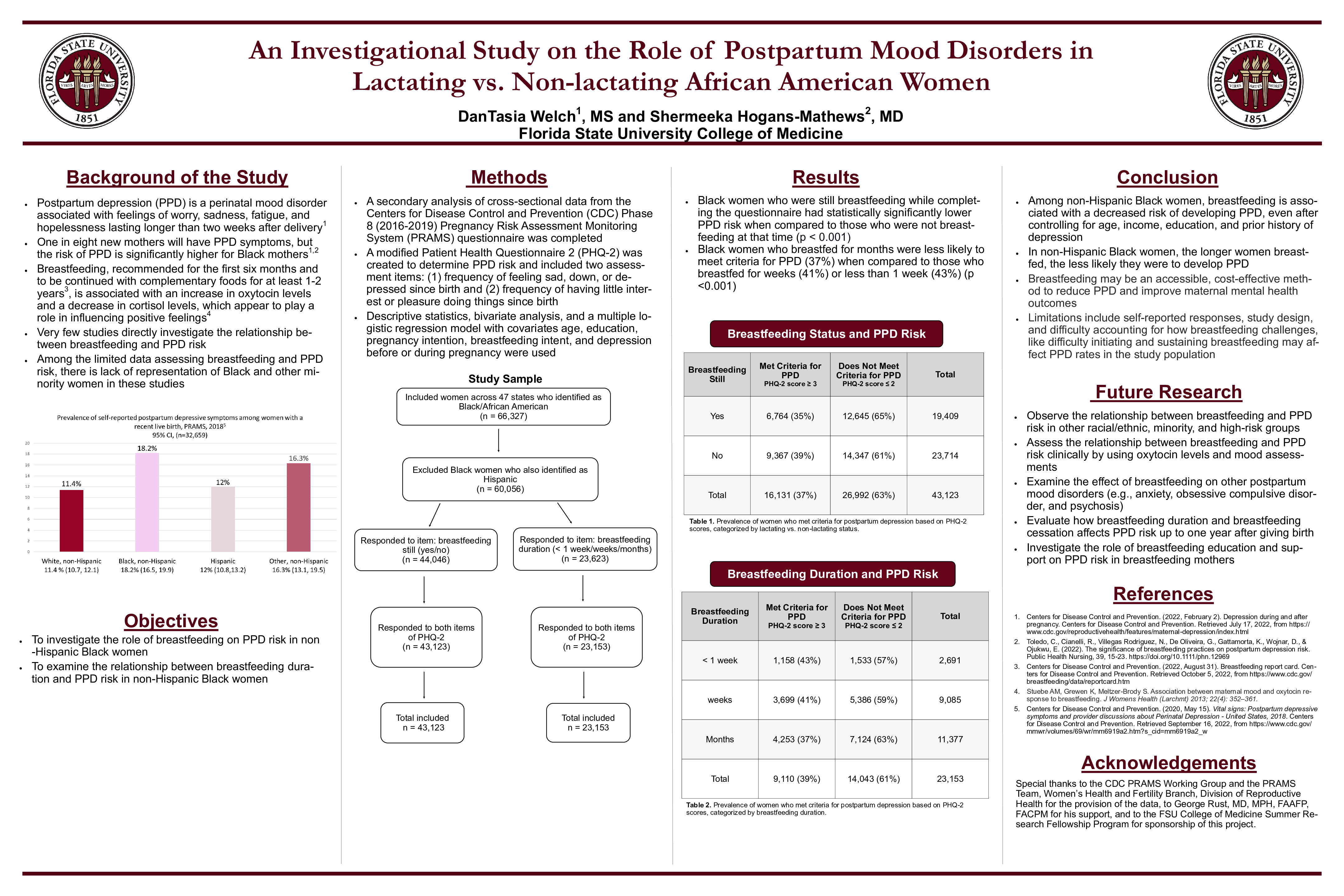
Introduction: One in eight new mothers will have postpartum depression (PPD), but the risk of PPD is significantly higher for Black mothers. Therefore, the increased risk, prevalence, and adverse effects of PPD among women of color warrant the need for accessible, cost-effective preventative interventions. Breastfeeding may be a cost-effective method to reduce PPD and provide additional benefits to the infant and the mother. While various studies highlight the benefits of breastfeeding on infants, very few have examined the impact of breastfeeding on maternal mental health. This study aims to identify the relationship between breastfeeding and PPD risk in Black women. To our knowledge, this study will be the first to examine breastfeeding status in association with PPD risk in Black women using a national population-based dataset.
Methods: All mothers who completed the Phase 8 (2016-2019) Pregnancy Risk Assessment Monitoring System (PRAMS) questionnaire and identified as Black or African American were included in the study. Questions 35, 36, and 37 were used to assess breastfeeding status and duration. Questions 48, 49, and M5 were used to screen for PPD, which was the outcome variable of interest. Age, income, maternal education, and a prior history of depression were used as covariates. Statistical analysis was conducted using a logistic regression model in SPSS statistical software.
Results: Black women who were still breastfeeding while completing the questionnaire had statistically significantly lower PPD risk when compared to those who were not breastfeeding at that time (p < 0.001). Black women who breastfed for months were less likely to meet the screening criteria for PPD (37%) when compared to those who breastfed for weeks (41%) or less than 1 week (43%) (p <0.001)
Conclusion: Among non-Hispanic Black women, breastfeeding is associated with a decreased risk of developing PPD, even after controlling for age, income, education, and prior history of depression. In non-Hispanic Black women, the longer women breastfed, the less likely they were to report signs of PPD. Breastfeeding may be an accessible, cost-effective method to reduce PPD and improve maternal mental health outcomes. A better understanding of mechanisms involved in the relationship between breastfeeding and PPD may allow more accessible prevention of postpartum depression for those at the highest risk.