Abstract
Pemphigus dermatoses belong to a collection of uncommon autoimmune mucocutaneous disorders characterized by acantholysis, or the destruction of cell-to-cell adhesion, leading to the formation of bullae and erosions. Pemphigus dermatoses most commonly affect patients between the ages of 50 and 60, occur worldwide across all ethnicities, but have a higher prevalence
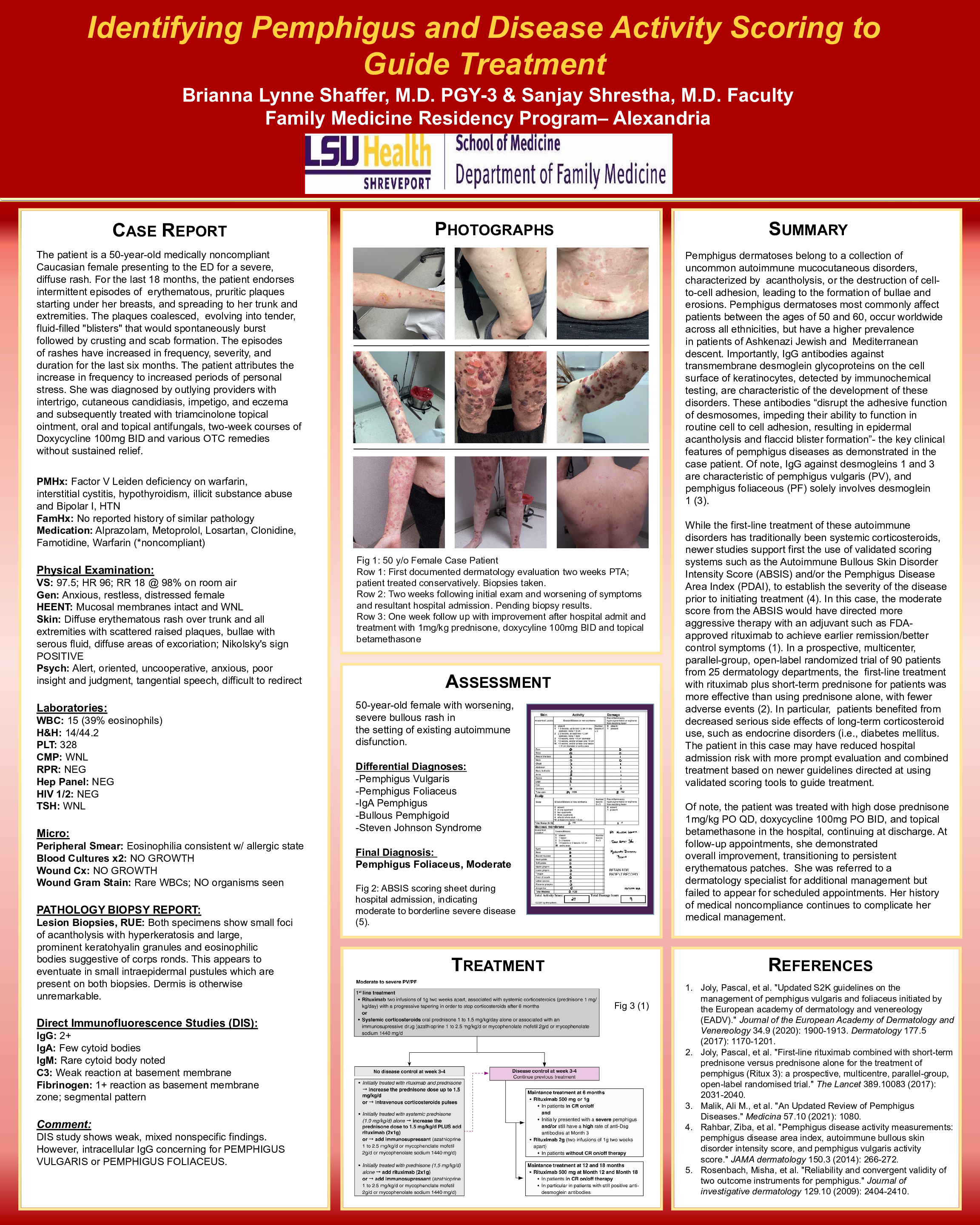
in patients of Ashkenazi Jewish and Mediterranean descent. Importantly, IgG antibodies against transmembrane desmoglein glycoproteins on the cell surface of keratinocytes, detected by immunochemical testing, are characteristic of the development of these disorders. These antibodies “disrupt the adhesive function of desmosomes, impeding their ability to function in routine cell to cell adhesion, resulting in epidermal acantholysis and flaccid blister formation”- the key clinical features of pemphigus diseases as demonstrated in the case patient. Of note, IgG against desmogleins 1 and 3 are characteristic of pemphigus vulgaris (PV), and pemphigus foliaceous (PF) solely involves desmoglein.
While the first-line treatment of these autoimmune disorders has traditionally been systemic corticosteroids, newer studies support first the use of validated scoring systems such as the Autoimmune Bullous Skin Disorder Intensity Score (ABSIS) and/or the Pemphigus Disease Area Index (PDAI), to establish the severity of the disease prior to initiating treatment. In this case, the moderate score from the ABSIS would have directed more aggressive therapy with an adjuvant such as FDA-approved rituximab to achieve earlier remission/better control symptoms. In a prospective, multicenter, parallel-group, open-label randomized trial of 90 patients from 25 dermatology departments, the first-line treatment with rituximab plus short-term prednisone for patients was more effective than using prednisone alone, with fewer adverse events. In particular, patients benefited from decreased serious side effects of long-term corticosteroid use, such as endocrine disorders (i.e., diabetes mellitus. The patient in this case may have reduced hospital admission risk with more prompt evaluation and combined treatment based on newer guidelines directed at using validated scoring tools to guide treatment.
Of note, the patient was treated with high-dose prednisone 1mg/kg PO QD, doxycycline 100mg PO BID, and topical betamethasone in the hospital, continuing at discharge. At follow-up appointments, she demonstrated
overall improvement, transitioning to persistent erythematous patches. She was referred to a dermatology specialist for additional management but failed to appear for scheduled appointments. Her history of medical noncompliance continues to complicate her medical management.