Abstract
Background
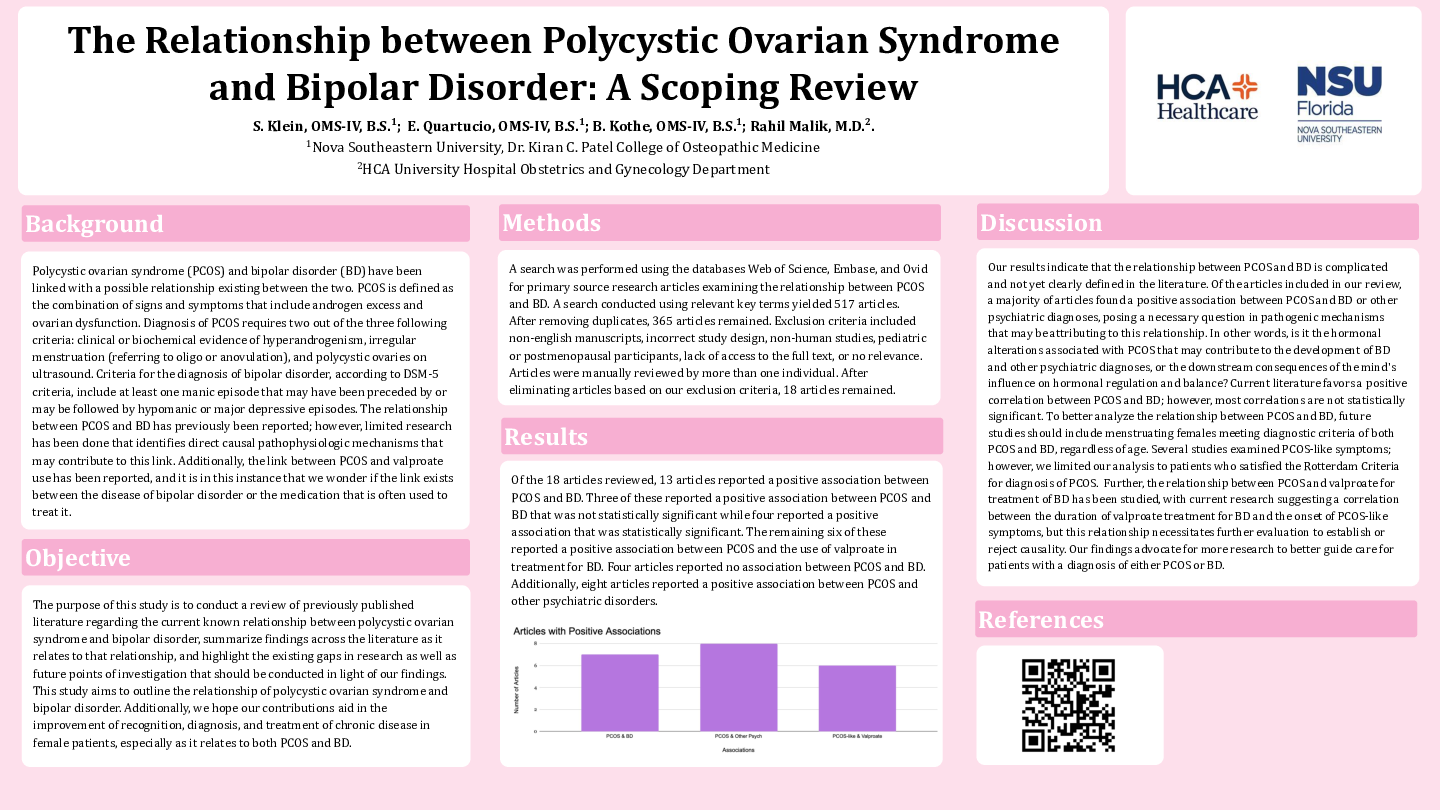
A positive association between polycystic ovarian syndrome (PCOS) and bipolar disorder (BD) has previously been reported in the literature; however, limited research has been done that identifies direct causal pathophysiologic mechanisms that may contribute to this link or establishes if one diagnosis poses a significant risk for the other.
Objective
The purpose of this study is to conduct a review of previously published literature and outline the current known relationship between PCOS and BD and summarize findings, as well as highlight the existing gaps in research and future points of investigation.
Methods
A scoping review was performed using the databases Web of Science, Embase, and Ovid for primary source research articles examining the relationship between PCOS and BD. A search conducted using relevant key search terms yielded 517 articles. After removing duplicates, 365 articles remained. Exclusion criteria included non-english manuscripts, incorrect study design, non-human studies, pediatric or postmenopausal participants, lack of access to the full text, or no relevance. Articles were then each manually reviewed by more than one individual. After eliminating articles based on our exclusion criteria, 18 articles remained for review.
Results
Of the 18 articles reviewed, 12 reported a positive association between PCOS and BD, five of which were related to the use of valproate in treatment. Six articles reported positive associations between PCOS and other psychiatric diagnoses and six reported no positive association between PCOS and BD. Of the seven that reported a positive association between PCOS and BD alone, three yielded statistically significant correlations.
Conclusion
Current literature favors a positive correlation between PCOS and BD; however, most correlations are not statistically significant. To better analyze the relationship between PCOS and BD, future studies should include menstruating females meeting diagnostic criteria of both PCOS and BD, regardless of age. Several studies examined PCOS-like symptoms in subjects without an official diagnosis; however, we limited our analysis to patients with an official diagnosis of PCOS. Further, the relationship between PCOS and valproate for treatment of BD has been studied, with current research suggesting a correlation between the duration of valproate treatment for BD and the onset of PCOS-like symptoms, but this relationship necessitates further evaluation to establish or reject causality. Our findings advocate for more research being needed to better guide care for patients with a diagnosis of either PCOS or BD.