Abstract
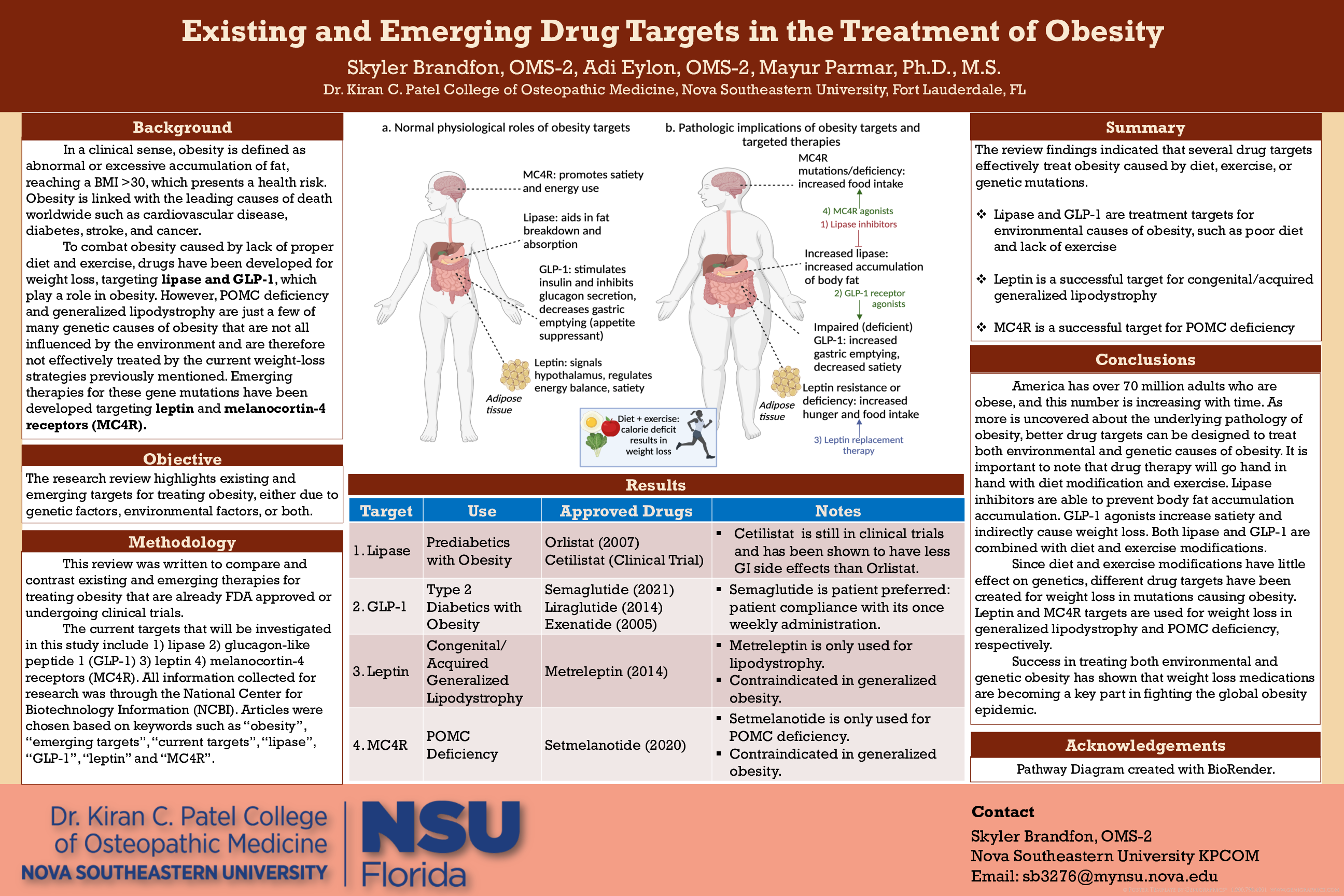
Obesity is a major public health concern linked to health risks such as hypertension, hyperlipidemia, type 2 diabetes, stroke, metabolic syndrome, asthma, and other diseases. Obesity is primarily caused by an unhealthy diet and lack of physical activity, but genetic or hormonal factors may also contribute. Over a third of adults in the U.S. are obese. Pharmacological agents have been designed to reduce weight gain caused by excessive calorie intake and low physical activity. They work by inhibiting the absorption of dietary fat or stimulating the secretion of satiety hormones. These drugs include lipase inhibitors and GLP-1 agonists. However, the current weight-loss strategies do not effectively treat genetic-related diseases, such as generalized lipodystrophy, Bardet-Biedl syndrome, and POMC deficiency. Emerging therapies for these gene mutations have been developed targeting leptin and melanocortin-4 receptors which restore the normal function of leptin or melanocortin-4 receptors, regulating energy balance and appetite. This article provides a comprehensive review of anti-obesity medications. The efficacy, FDA indication, contraindications, and serious side effects of different classes of drugs are discussed, including lipase inhibitors, GLP-1 agonists, leptin analogs, and MC4R agonists.