Abstract
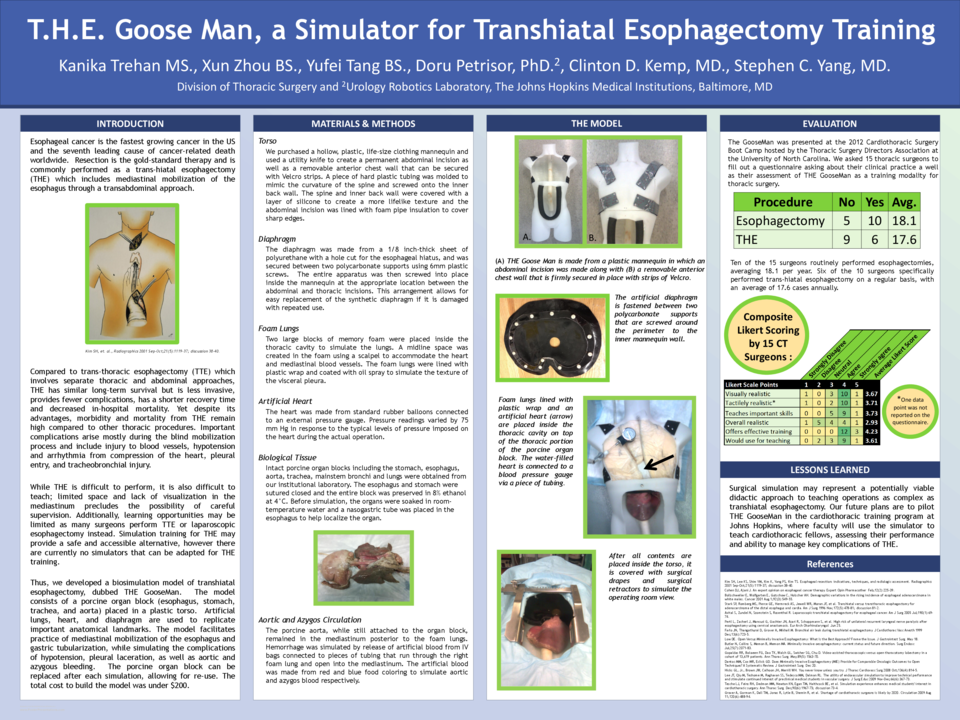
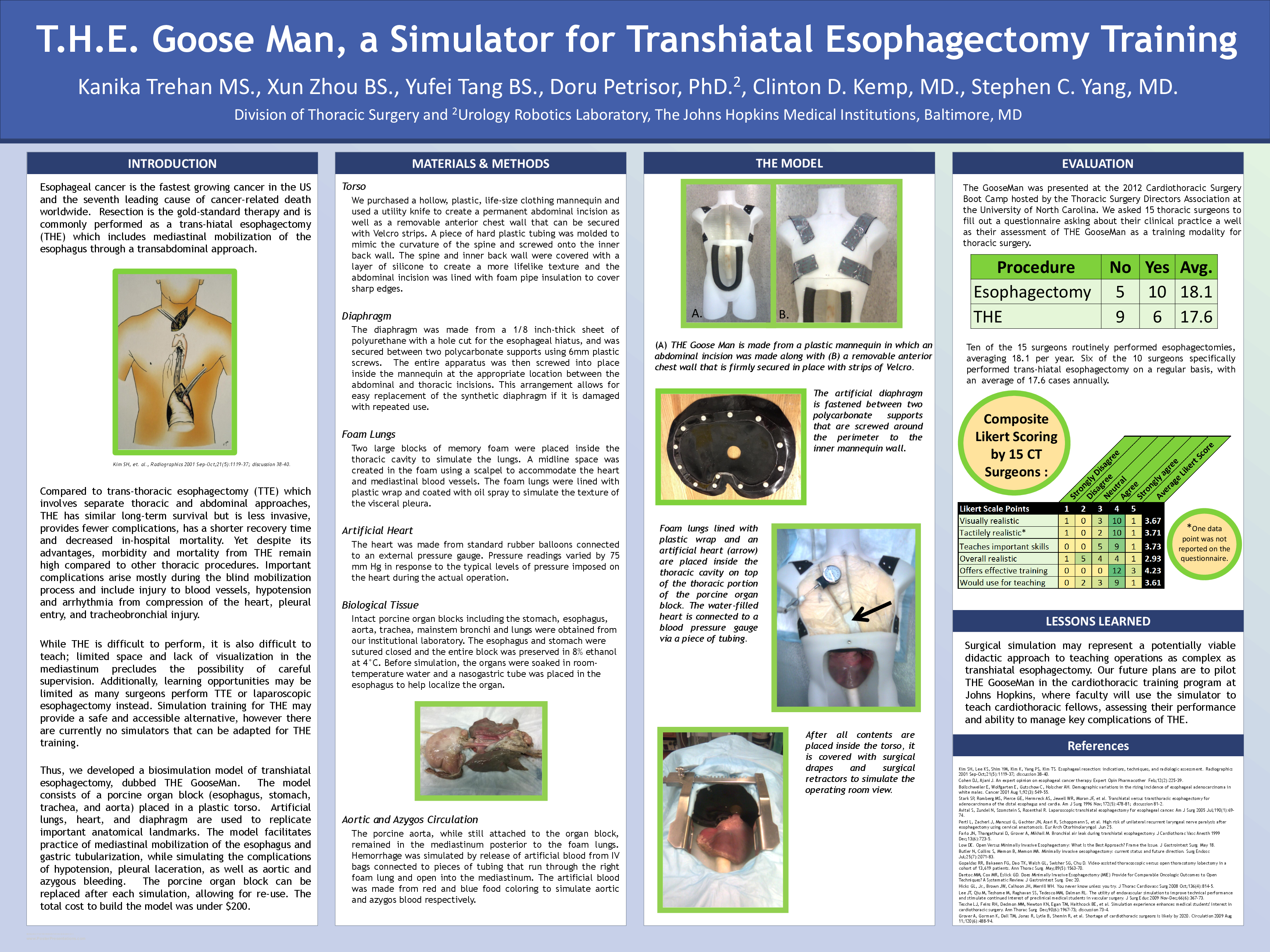
Esophageal cancer is the fastest growing cancer in the US and the seventh leading cause of cancer-related death worldwide. Resection is the gold-standard therapy and is commonly performed as a trans-hiatal esophagectomy (THE) which includes mediastinal mobilization of the esophagus through a transabdominal approach. While THE is difficult to perform, it is also difficult to teach; limited space and lack of visualization in the mediastinum precludes the possibility of careful supervision. Additionally, learning opportunities may be limited as many surgeons perform TTE or laparoscopic esophagectomy instead. Simulation training for THE may provide a safe and accessible alternative, however there are currently no simulators that can be adapted for THE training. Thus, we developed a biosimulation model of transhiatal esophagectomy, dubbed THE GooseMan. The model consists of a porcine organ block (esophagus, stomach, trachea, and aorta) placed in a plastic torso. Artificial lungs, heart, and diaphragm are used to replicate important anatomical landmarks. The model facilitates practice of mediastinal mobilization of the esophagus and gastric tubularization, while simulating the complications of hypotension, pleural laceration, as well as aortic and azygous bleeding. The porcine organ block can be replaced after each simulation, allowing for re-use, and the total cost to build the model was under $200.