Abstract
Purpose
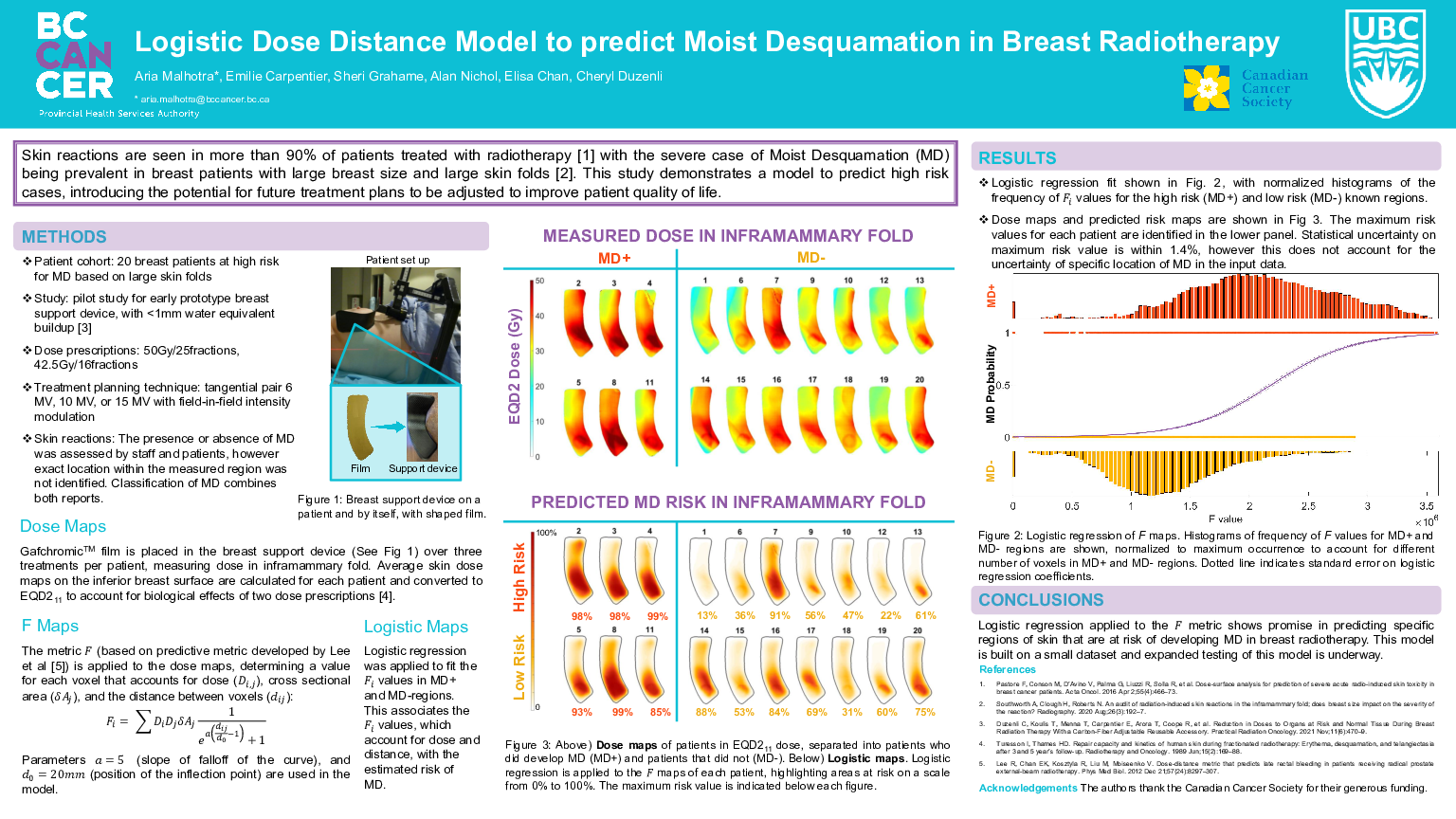
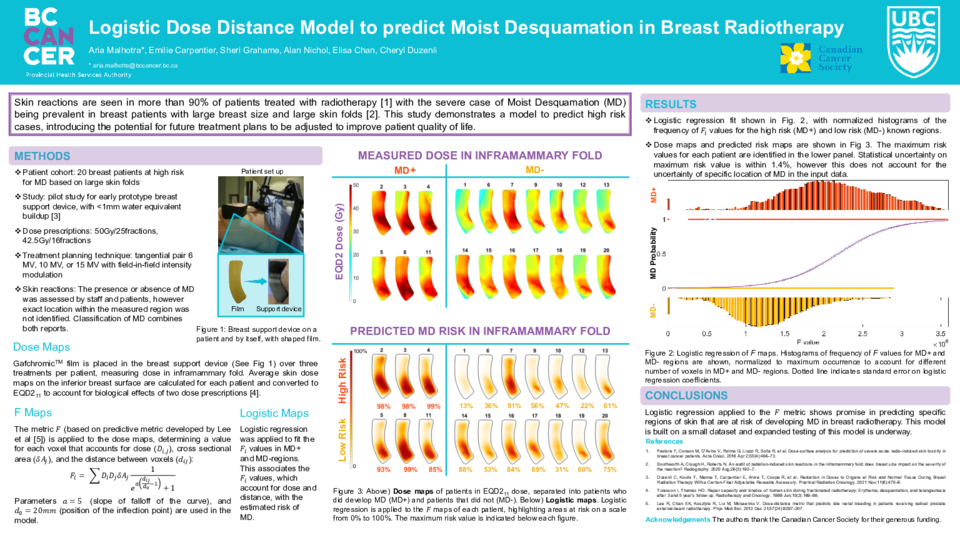
A metric is developed to improve understanding of skin radiobiology and to predict the presence and location of moist desquamation (MD), based on measured dose and skin assessments of a patient population at high risk of developing radiotherapy induced skin reactions.
Materials and Methods
Twenty breast patients participated in a pilot study of a novel carbon fibre breast support device. During treatment, the dose distribution was measured using film in the inframammary fold region. The skin was assessed for MD by staff and patients at regular intervals. With two different dose fractionations used in the pilot study, all doses were corrected with EQD211 to account for biological effects of fractionation. The classification of MD in this study was based on a combination of staff assessments and patient reported outcomes.
A logistic model was modified and developed to predict MD, accounting for the spatial distribution of measured skin dose. Two adjustable parameters define the slope and the inflection point of the function and a normalization value sets the threshold for MD. Parameters were tested by applying the metric on the 20 patient skin dose distributions.
Results
6/20 patients have reports of MD in this study. There were statistically significant differences in the metric between patients who did and did not develop MD with the parameters set to a slope of 5 and an inflection point of 10mm – 30mm. The model indicated specific regions expected to develop MD, correctly classifying all 6 reported cases of MD and 12 of 14 (86%) cases not reporting MD. Pixel clusters with an average contiguous surface area of 14 cm2 having dose > 43Gy (EQD211) were flagged for MD.
Conclusions
This dose-distance metric has been shown to predict specific regions of skin expected to develop MD in breast radiotherapy. Expanded testing of this model is underway.