Abstract
Purpose/Objective:
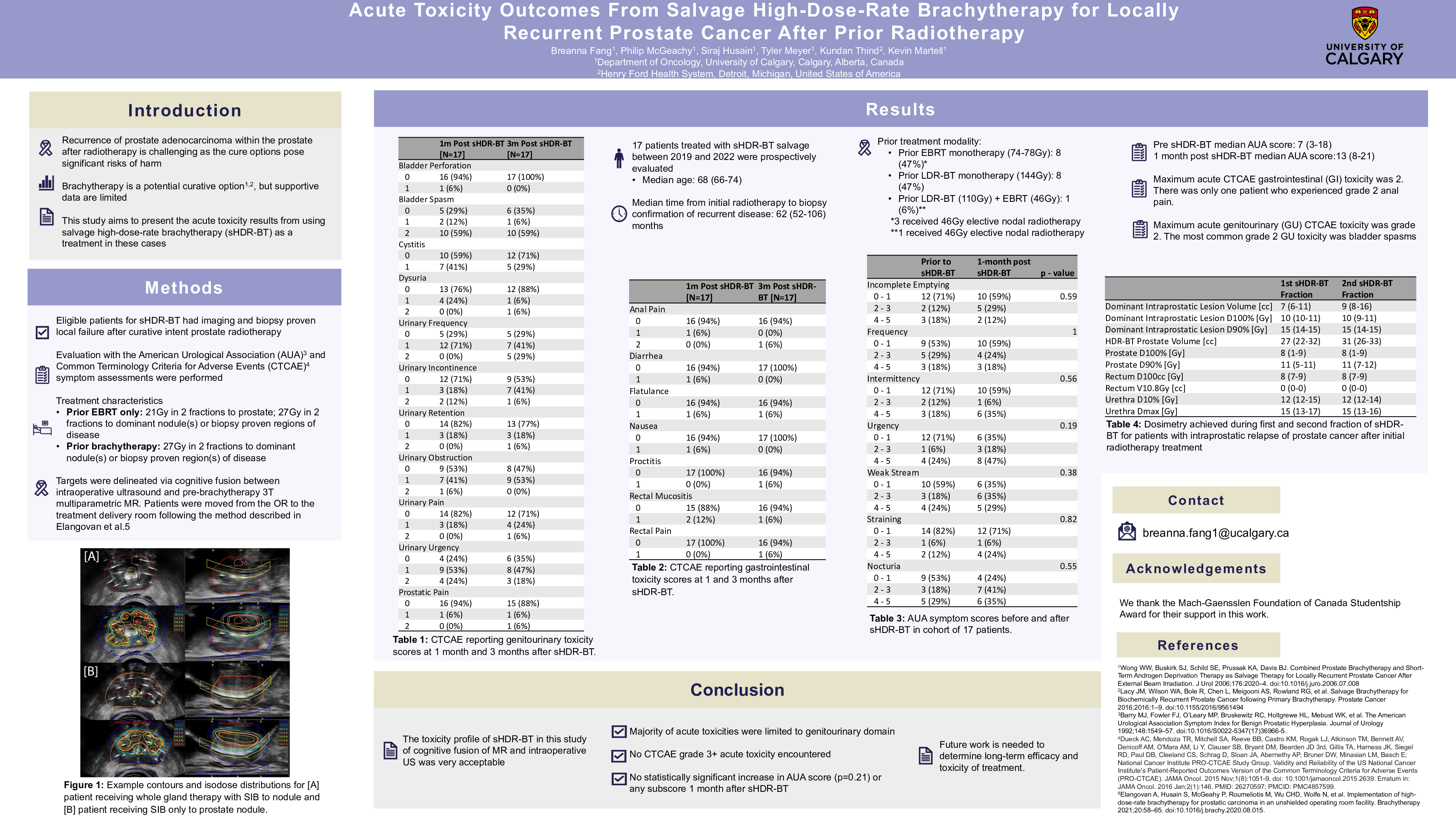
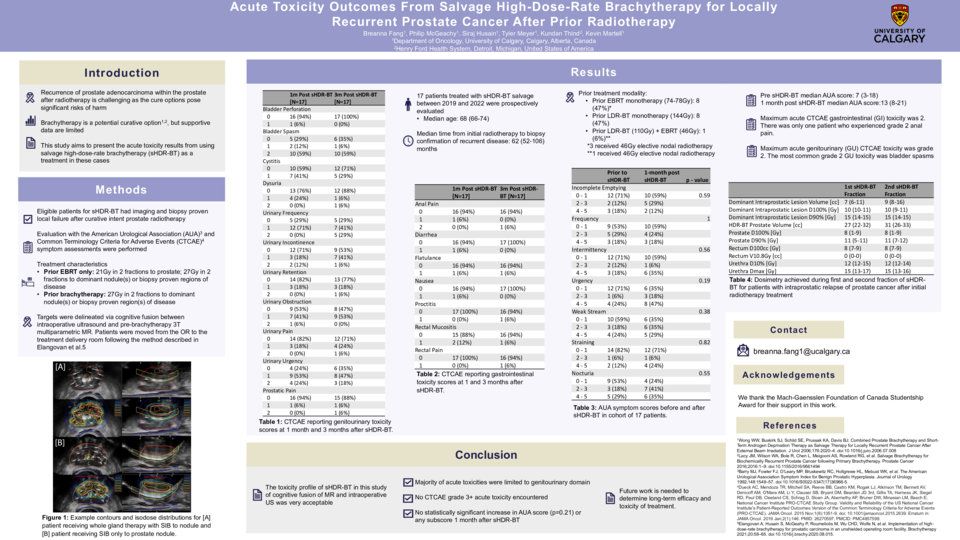
Isolated intraprostatic recurrence of prostate adenocarcinoma after definitive radiotherapy presents a challenging clinical scenario. Salvage options require specialized expertise and pose risks of harm. This study aims to present the acute toxicity results from using salvage high-dose-rate brachytherapy (sHDR-BT) as a treatment in these cases.
Materials and Methods:
Seventeen consecutive patients treated with sHDR-BT salvage between 2019 and 2022 were prospectively evaluated. Eligible patients had to have received curative intent prostate radiotherapy previously and show evidence of new biochemical failure. Evaluation with AUA and CTCAE symptom assessments were performed for each case.
Results:
Median (inter-quartile-range) age prior to salvage treatment was 68 (66-74) years. At baseline prior to sHDR-BT, 8 (47%) patient had significant lower urinary tract symptoms. Median AUA score was 7 (3-18) prior to sHDR-BT. 3 (18%) patients reported irregular bowel function and 2 (12%) reported hematochezia prior to sHDR-BT. 1-month post treatment the median AUA score was 13 (8-21; p=0.21), and using CTCAE scoring, there were no cases of grade 2+ bowel or rectal toxicity and no cases of grade 3+ urinary toxicity. Reported grade 2 urinary toxicities included 10 (59%) cases of bladder spasms, 2 (12%) cases of incontinence, 1 (6%) urinary obstruction and 4 (24%) reports of urinary urgency. All were temporary.
Conclusion:
This study adds to the existing literature by confirming the acute toxicity profile of sHDR-BT is acceptable even without intraoperative MR guidance or image registration. Further study is ongoing to determine long-term efficacy and toxicity of treatment.