Abstract
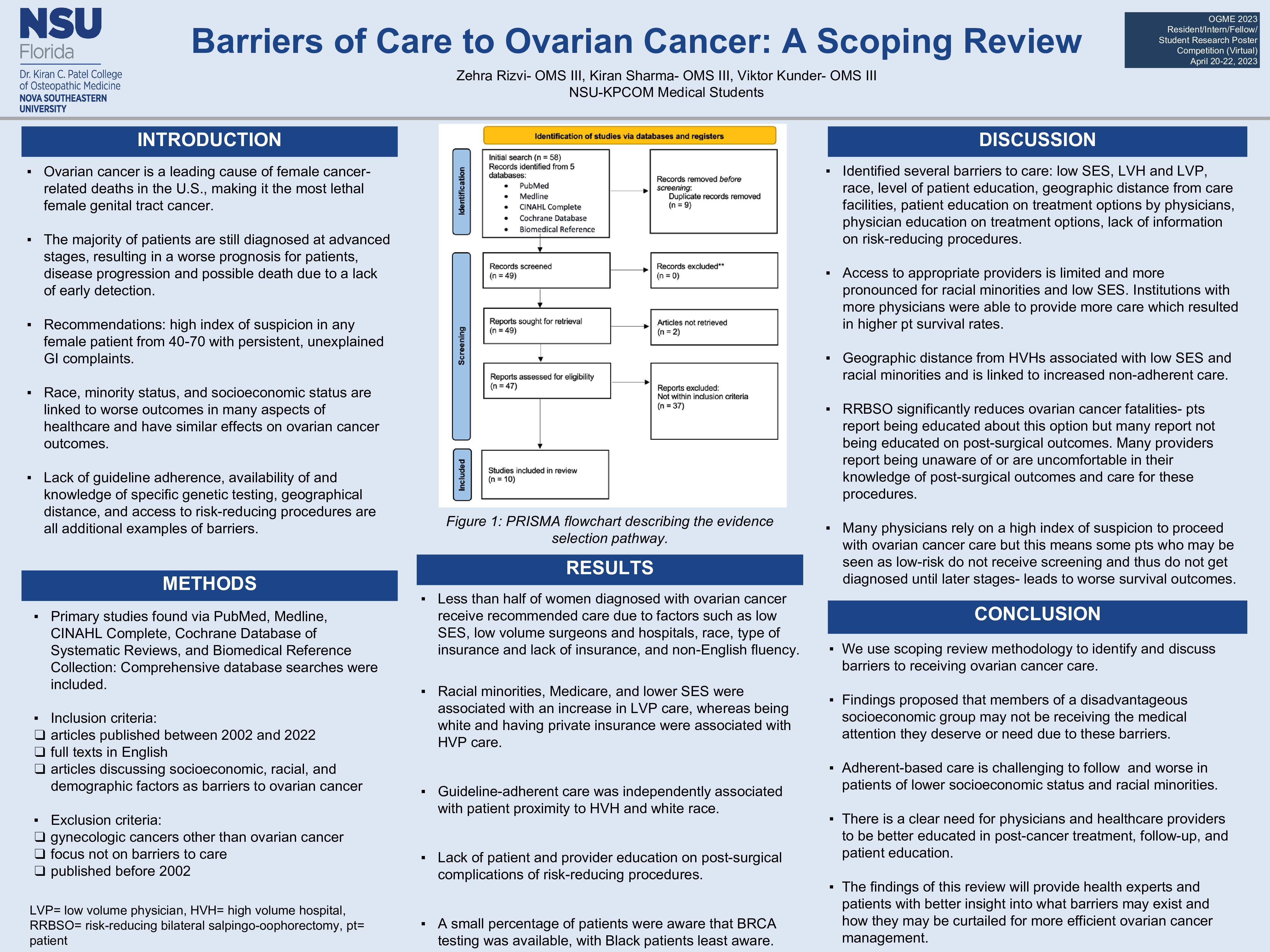
Ovarian cancer is a leading cause of female cancer-related deaths, but patients are being diagnosed late and subjected to disease progression and possible death due to lack of early detection. Previous analysis and research suggest that early stage detection of ovarian cancer could improve survival rates as much as 30%. Early detection and access to care are closely related. However, many barriers to high-quality care exist for patients and a majority of patients do not receive recommended care according to ovarian cancer treatment guidelines. In order to improve care for ovarian cancer patients and decrease healthcare disparities in accessing equitable care, it is important to acknowledge the current gaps in patient knowledge, healthcare availability, and physician practice. This scoping review explores the available evidence on ovarian cancer to identify these barriers to care in the effective treatment of ovarian cancer.
A comprehensive electronic search was conducted to identify articles discussing socioeconomic, racial, and demographic factors as barriers to ovarian cancer. The studies used in this scoping review were found through searches in PubMed, Medline, CINAHL Complete, Cochrane Database of Systematic Reviews, and Biomedical Reference Collection: Comprehensive. The following inclusion criteria were used: (1) articles published between 2002 and 2021, (2) full texts in English, (3) articles discussing socioeconomic, racial, and demographic factors as barriers to ovarian cancer, and (4) articles about barriers to care before diagnosis.
Less than half of women diagnosed with ovarian cancer receive the recommended care due to factors including low socioeconomic status (SES), low volume surgeons and hospitals, race, type of insurance and lack of insurance, and non-English fluency. Non-Hispanic Black race, Hispanic race, unmarried status, Medicaid or no insurance, and low SES all predicted lower patient survival outcomes. Guideline adherent care was independently associated with patient proximity to a high-volume hospital (HVH).
High-risk patients reported being well-informed about cancer risk reduction from risk-reducing bilateral salpingo-oophorectomy (RRBSO), but nearly half of high-risk women were not provided with written resources and there was no clear pathway to standardize who should receive referrals. Medical professionals also requested more information on RRBSO complications, and many healthcare respondents lacked resources for optimizing long-term health. In low-risk individuals, there was no practical method for screening for ovarian cancer.
Findings proposed that members of a disadvantageous socioeconomic group may be left without the medical attention they need. Many reviewed studies also stated that adherent-based care is challenging to follow and worse in patients of lower SES and racial minorities. This review also showed a clear need for physicians and healthcare providers to be better educated in post-cancer treatment, follow-up, and patient education. The findings of this review will provide health experts and patients with better insight into what barriers may exist and how they may be curtailed for more efficient ovarian cancer management.