
Abstract
Introduction: Giardiasis is a parasitic infection caused by the flagellated protozoan Giardia
Lamblia, which can lead to gastrointestinal symptoms such as diarrhea, abdominal pain,
nausea, and vomiting. Heavy rainfall and flooding have been associated with an increased
incidence of giardiasis due to the contamination of water sources.
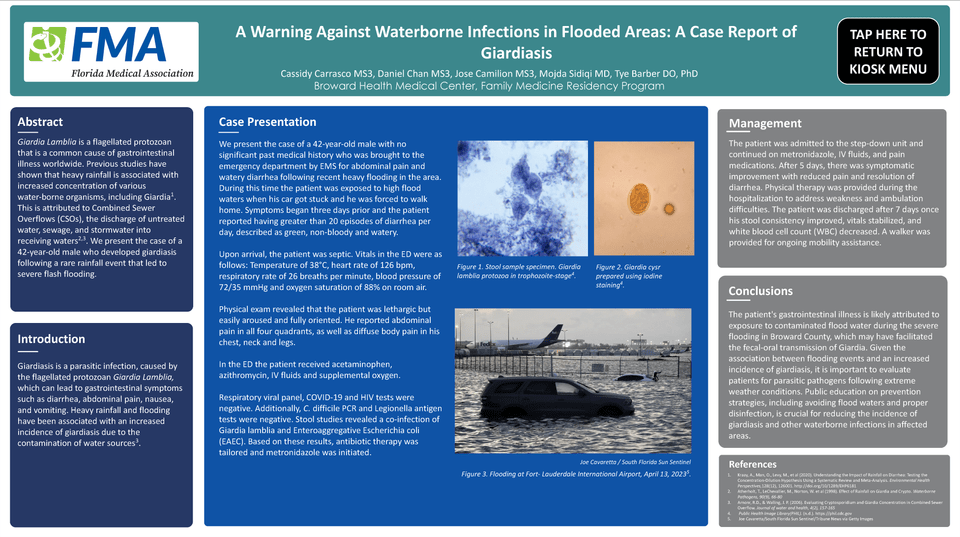
Case Presentation: We present the case of a 42-year-old male with no significant past medical
history who was brought to the emergency department by EMS for abdominal pain and watery
diarrhea following recent heavy flooding in the area. He reported being exposed to high flood
waters during a recent episode of heavy rainfall, as his car got stuck and he was forced to walk
home. Symptoms began three days prior, and the patient reported having greater than 20 episodes of
diarrhea per day, described as green, non-bloody, and watery. Upon arrival, the patient was
septic, hypotensive, tachycardic, and with decreased oxygen saturations. The patient was
started on broad spectrum antibiotics for sepsis and aggressive intravenous fluids in order to
stabilize him. Stool studies revealed a co-infection of Giardia lamblia and enteroaggregative
Escherichia coli (EAEC). Based on these results, the antibiotic therapy was tailored and
metronidazole was initiated. The patient remained hospitalized until his stool consistency
improved, blood pressure stabilized, fever subsided, and white blood cell count began to
decrease. He was discharged home after seven days.
Conclusion: Previous studies have shown that heavy rainfall is associated with increased
concentration of various organisms, including Giardia. This is usually attributed to Combined
Sewer Overflows (CSOs), which refers to the discharge of untreated water, sewage, and
stormwater that flows into receiving waters and is the main reason for water contamination
during floods. The recent severe flash flooding in Broward County, caused by an extremely rare
rainfall event that led to severe flash flooding, likely contributed to the patient’s gastrointestinal
illness. Exposure to the contaminated flood water is thought to have facilitated fecal-oral
transmission of Giardia in our patient. Giardiasis, and other co-infections, should be considered
in patients that present with diarrhea, abdominal pain, and sepsis following heavy rainfall or
flooding. Prompt diagnosis and treatment with appropriate antiparasitic and antimicrobial
therapy can resolve symptoms and eradicate parasitic and bacterial infections. Education on
prevention strategies, such as avoiding contact with flood water and properly disinfecting
surfaces and water sources after flooding, is crucial in reducing the incidence of giardiasis and
other waterborne infections in affected areas. It is important to note that even if no boil water
notice is issued for your area following a flooding event, the risk of contamination from untreated
sewage and other pollutants is still present. Therefore, taking precautions to protect yourself
and your family from exposure to these potential hazards is essential.




