Abstract
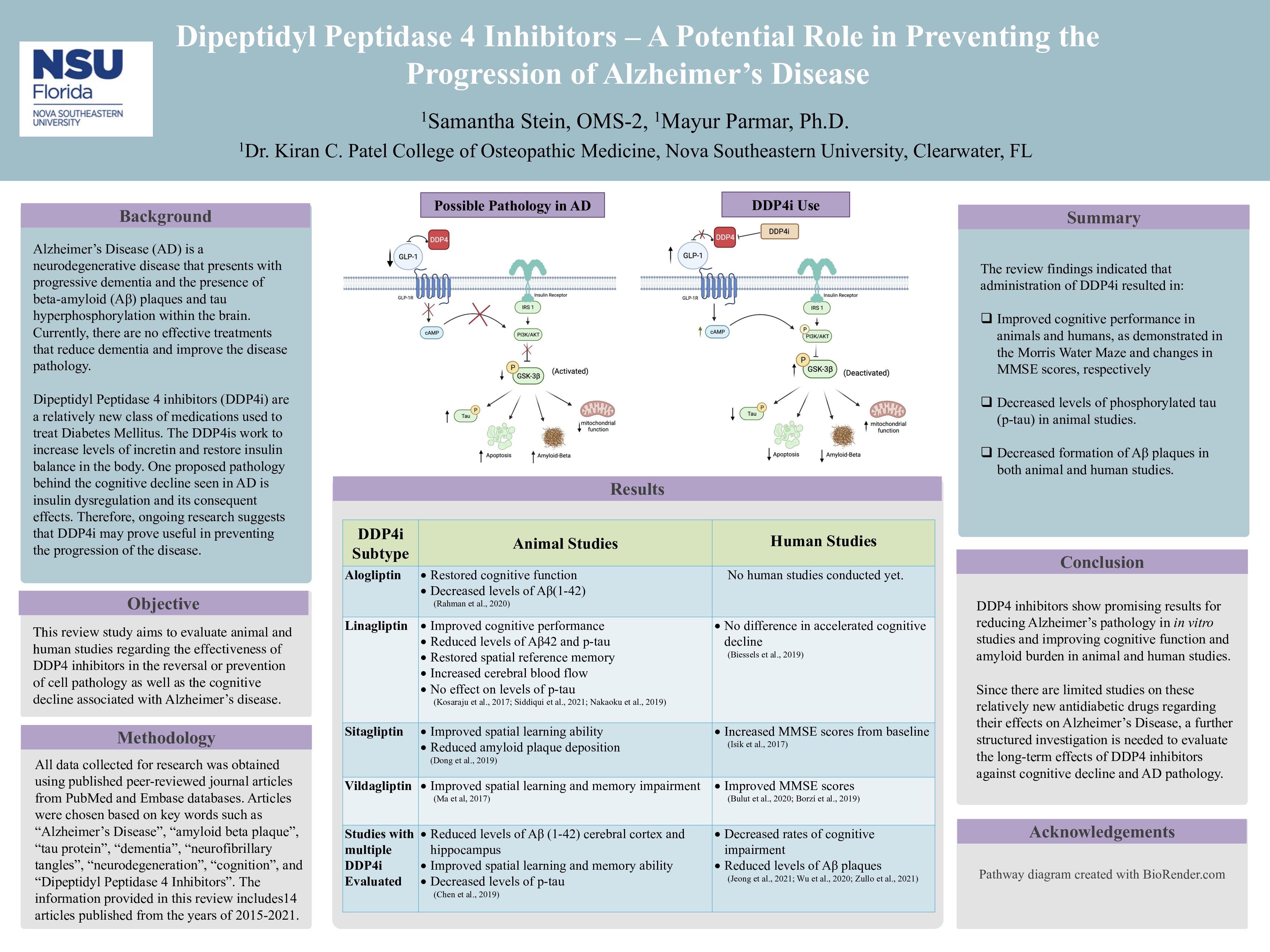
Background: Alzheimer’s is a neurodegenerative disease that presents with progressive dementia and the presence of beta-amyloid plaques and tau hyperphosphorylation within the brain. Currently, there are no effective treatments that reduce dementia and improve outcomes of the disease. Some findings suggest that a relatively new class of antidiabetic medications, Dipeptidyl Peptidase 4 (DDP4) Inhibitors, may prove useful in preventing the progression of the disease.
Objective: This review aims to evaluate in vitro, animal, and human studies regarding the effectiveness of DDP4 inhibitors in the reversal or prevention of cell pathology as well as the cognitive decline associated with Alzheimer’s disease.
Methods: All data collected for research was obtained using published peer-reviewed journal articles from PubMed and Embase databases. Articles were chosen based on key words such as “Alzheimer’s Disease”, “amyloid beta plaque”, “tau protein”, “dementia”, “neurofibrillary tangles”, “neurodegeneration”, “cognition”, and “Dipeptidyl Peptidase 4 Inhibitors”. The information provided in this review includes sources published from the years of 2015-2021.
Results: In vitro studies on Anagliptin and Linagliptin both have shown that these antidiabetics could be used to improve Ab-induced mitochondrial dysfunction and reduce apoptosis in AD model cells. Additionally, the study on Linagliptin exhibited that some DDP4 inhibitors may also have protective effects against tau hyperphosphorylation.
In animal studies, the administration of Alogliptin, Sitagliptin, Linagliptin, Vidagliptin, and Saxagliptin to AD mice all produced a significant decrease in Ab (1-42) plaques as well as improved cognitive function in spatial learning and memory in tasks such as Morris Water Maze and Y-Maze.
As for the effectiveness of DDP4 inhibitors in humans, evidence is limited to retrospective and longitudinal studies. However, many of these studies indicate that the use of DDP4 inhibitors significantly improved MMSE scores, sometimes in as few as 6 months of administration. Additionally, when DDP4 inhibitors were compared to other antidiabetics, such as Metformin, there was also a significant difference in improvement of MMSE scores. Furthermore, one study using F-florbetaben amyloid PET imaging found the use of DDP4 inhibitors were linked to a significant decrease in amyloid beta burden in all regional cortices throughout the brain.
Conclusion: Overall, DDP4 inhibitors show promising results for the reduction of Alzheimer’s pathology in in vitro studies and improvement of cognitive function and amyloid burden in animal and human studies. Since there are limited studies on this relatively new of antidiabetic drugs regarding their effects on Alzheimer’s Disease, further structured investigation is needed to evaluate the long-term effects of DDP4 inhibitors against cognitive decline and AD cell pathology.