Abstract
Background: The gut microbiome has an important role in health by controlling digestion, enhancing the immune system, and supporting metabolism. Both the gut microbiome and sleep contribute significantly to overall health and chronic conditions in adults.
Objectives: This scoping review seeks to establish a relationship between the microbiota composition and quality of sleep assessed by sleep patterns.
Methods: This study was conducted by utilizing the Pubmed, EBSCOhost, and MEDLINE databases. Search terms used to gather data included the following: ((REM cycle) OR (circadian rhythm) OR (sleep cycles) OR (sleep) OR (sleep waves)) AND ((microbiome) OR (gut microbiome) OR (gut composition) OR (gut microbiota) OR (brain gut axis) OR (gut flora) OR (probiotics)) AND ((adults)). The searches yielded 32 articles, 7 of which were included in this review. Publications were eligible for this study if they were primary research articles, non-animal studies, in English, and published between January 1, 2011, and December 31, 2021.
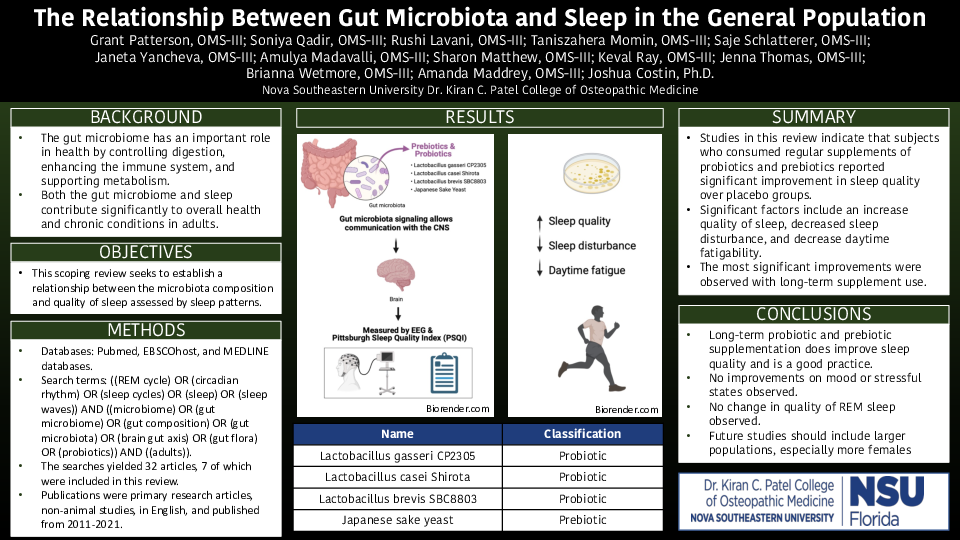
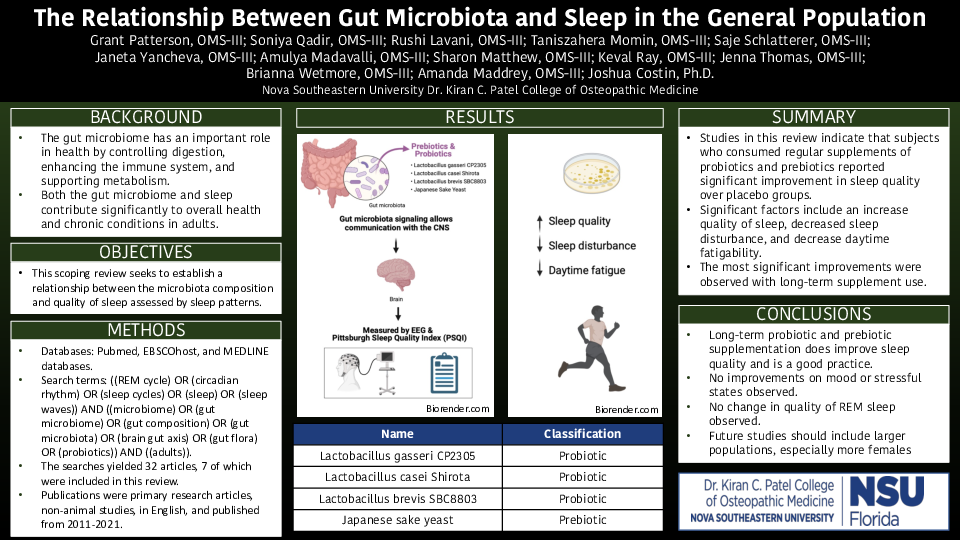
Results: The microbiome can be altered with probiotics (Lactobacillus gasseri CP2305, Lactobacillus casei Shirota, and Lactobacillus brevis SBC8803) and prebiotics (Japanese sake yeast enriched in adenosine analogues) in the diet to increase quality of sleep, decrease sleep disturbance, and decrease daytime fatigability in the general population. Studies in this review indicate that subjects who consumed regular supplements of probiotics and prebiotics reported significant improvement in sleep quality over placebo groups, the most significant improvements being observed with long-term supplement use.
Conclusions: Although the benefits of long-term supplementation with probiotics and prebiotics include increased sleep duration, better sleep quality and less fatigue upon waking and throughout the day, these practices have not shown any significant changes in mood or stressful states. Additionally, population groups from these trials were relatively small and the majority were males, so further research with expanded populations, especially females, would strengthen these findings and make them more useful for the general population. Overall, long-term probiotic and prebiotic supplementation does improve sleep quality and is a good practice.