Abstract
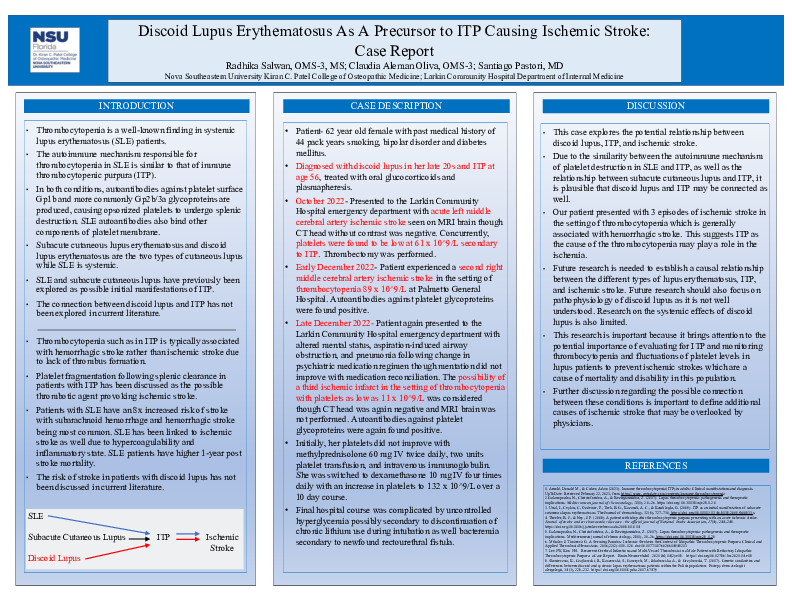
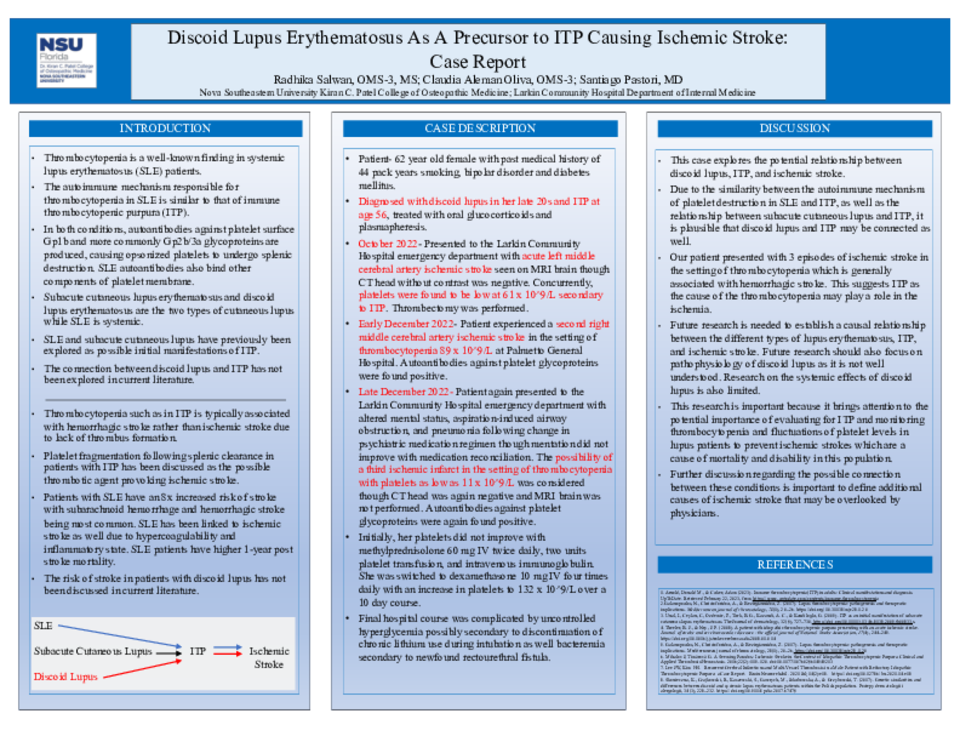
Introduction: Systemic lupus erythematosus (SLE) is a well-known cause of thrombocytopenia. The autoimmune mechanism responsible for thrombocytopenia in SLE is similar to that of immune thrombocytopenic purpura (ITP).
In both conditions, autoantibodies against platelet surface Gp1b and more commonly Gp2b/3a glycoproteins are produced, causing opsonized platelets to undergo splenic destruction. Subacute cutaneous lupus and discoid lupus erythematosus are the two types of cutaneous lupus. SLE and subacute cutaneous lupus have previously been explored as possible initial manifestations of ITP. However, the connection between discoid lupus and ITP has not been explored.
In addition, thrombocytopenia is typically associated with hemorrhagic stroke rather than ischemic stroke due to lack of thrombus formation. Platelet fragmentation following splenic clearance in patients with ITP has been discussed as the possible thrombotic agent provoking ischemic stroke.
Case Description: Our patient is a 62-year-old female with past medical history of 44 pack years smoking, bipolar disorder and diabetes mellitus. She was also diagnosed with discoid lupus in her late 20s and ITP at age 56, treated with oral glucocorticoids and plasmapheresis. The patient presented to the Larkin Community Hospital emergency department in October 2022 with acute left middle cerebral artery ischemic stroke seen on MRI brain though CT head without contrast was negative. Concurrently, platelets were low at 61 x 10^9/L secondary to ITP. Antithrombotic agents, transfusion, and glucocorticoids were not given.
In early December 2022, the patient reportedly experienced a second ischemic stroke in the setting of thrombocytopenia at Palmetto General Hospital, though records are not available for review.
In late December 2022, she again presented to the Larkin Community Hospital emergency department with altered mental status, aspiration-induced airway obstruction, and pneumonia following change in psychiatric medication regimen though mentation did not improve with medication reconciliation. The possibility of a third ischemic infarct in the setting of thrombocytopenia with platelets as low as 11 x 10^9/L was considered though CT head was again negative and MRI brain was not performed. Initially her platelets did not improve with methylprednisolone 60 mg IV twice daily, two units platelet transfusion, and intravenous immunoglobulin. She was switched to dexamethasone 10 mg IV four times daily with an increase in platelets to 132 x 10^9/L over a 10-day course.
Discussion: This case explores the possible relationship between discoid lupus as a precursor to ITP which may be a precursor to ischemic stroke. The patient presented with rare ischemic strokes in the setting of thrombocytopenia which is more commonly associated with hemorrhagic stroke. Future research is needed to establish a causal relationship between the different types of lupus erythematosus, ITP, and ischemic stroke which would aid in developing diagnostic and treatment guidelines in lupus patients to prevent and manage ischemic stroke. Further discussion regarding the possible connection between these conditions is important to define additional causes of ischemic stroke that may be overlooked by physicians.