Abstract
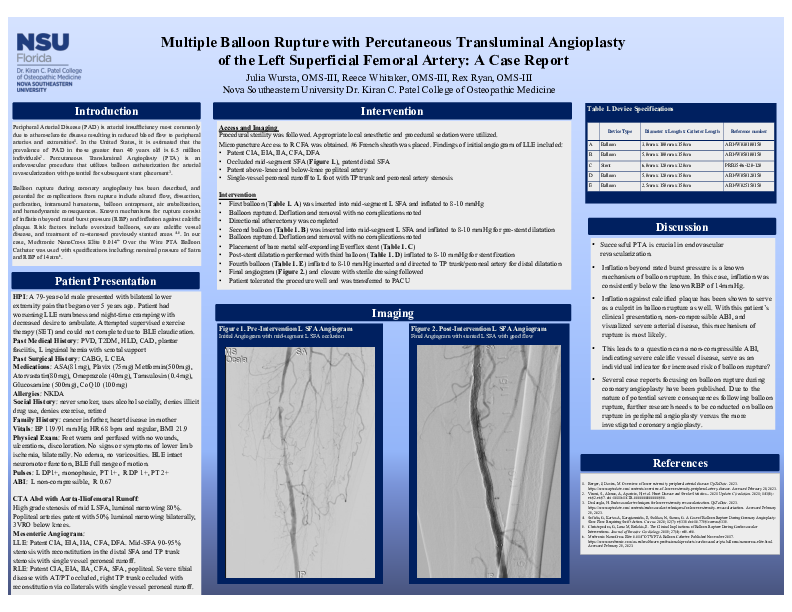
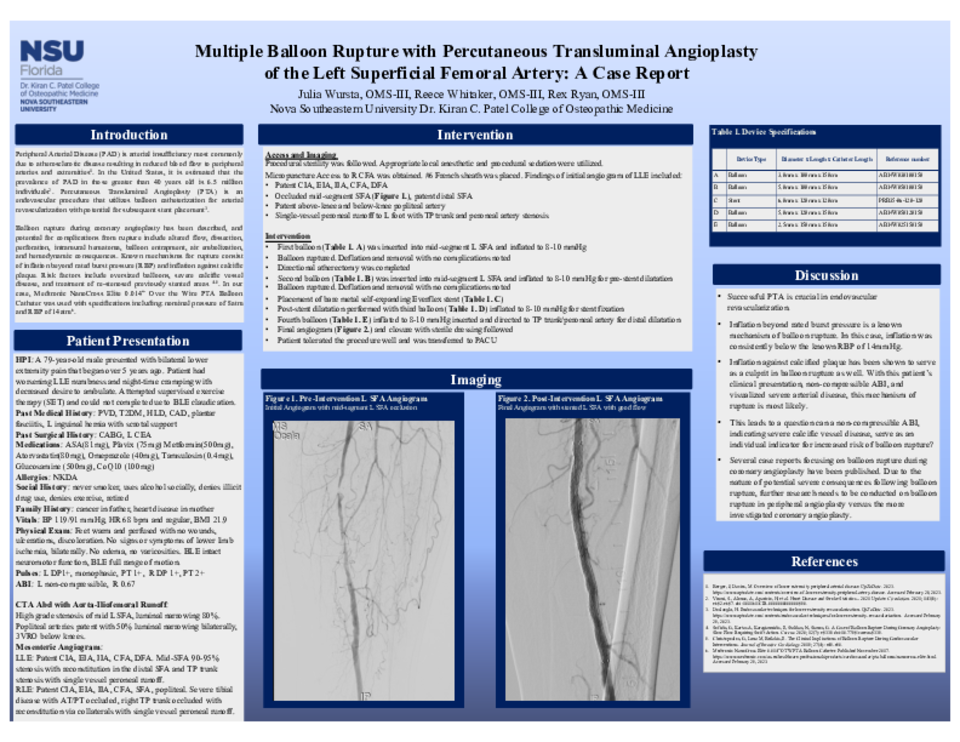
Introduction: Peripheral Arterial Disease (PAD), most commonly due to atherosclerosis, is prevalent in the United States. Percutaneous Transluminal Angioplasty (PTA) is an endovascular procedure that utilizes balloon catheterization for arterial revascularization with potential for subsequent stent placement. Balloon rupture during this procedure has potential for multiple complications. In this case, rupture during PTA occurred twice. We utilized the Medtronic NanoCross Elite 0.014” Over the Wire PTA Balloon Catheter with specifications, including a nominal pressure of 8atm and a rated burst pressure (RBP) of 14atm.
Case Description: A 79-year-old male presented to a vascular surgery clinic with BLE pain with worsening LLE numbness, nighttime cramps, and limited ambulation. Clinically, feet were warm and well-perfused with no wounds, ulcerations, discoloration. Pulses on left were DP 1+ monophasic, PT 1+. Pulses on the right were DP 1+, PT 2+. ABI was non-compressible on the left and 0.67 on the right. Prior Mesenteric Angiogram evidenced LLE mid-SFA 90-95% stenosis, TP trunk stenosis with single vessel peroneal runoff.
Patient consented to Angiogram with possible LLE intervention. Sterile access to R CFA was obtained and followed by initial imaging of LLE. First balloon was inserted into L SFA and inflated below the RBP. Rupture of this balloon was followed by TurboHawk atherectomy. Second balloon was inserted into L SFA and inflated below the RBP for pre-stent dilatation. Rupture of this balloon was followed by Everflex bare metal stent placement. Post-stent dilatation performed with third balloon for fixation. Distal dilatation achieved with fourth balloon at TP trunk/peroneal artery. Final imaging and closure with sterile dressing followed. Patient tolerated the procedure well and was transferred to PACU.
Discussion: Successful PTA is crucial in endovascular revascularization. Possible mechanisms of balloon rupture include inflation beyond rated burst pressure as well as inflation against calcified plaque. This case led to a question regarding the use of clinical indicators for predicting risk of balloon rupture. With potential for dangerous implications, further research needs to be conducted on balloon rupture in peripheral angioplasty versus the more investigated coronary angioplasty.