Abstract
Background: Obesity is one of the biggest health epidemics that society faces in modern day. Using BMI metrics, obesity is defined as greater than or equal to 30 kg/m2. Many health systems are impacted by obesity exhibiting greater effects on the gut microbiome, cardiovascular health, respiratory health and mental health.
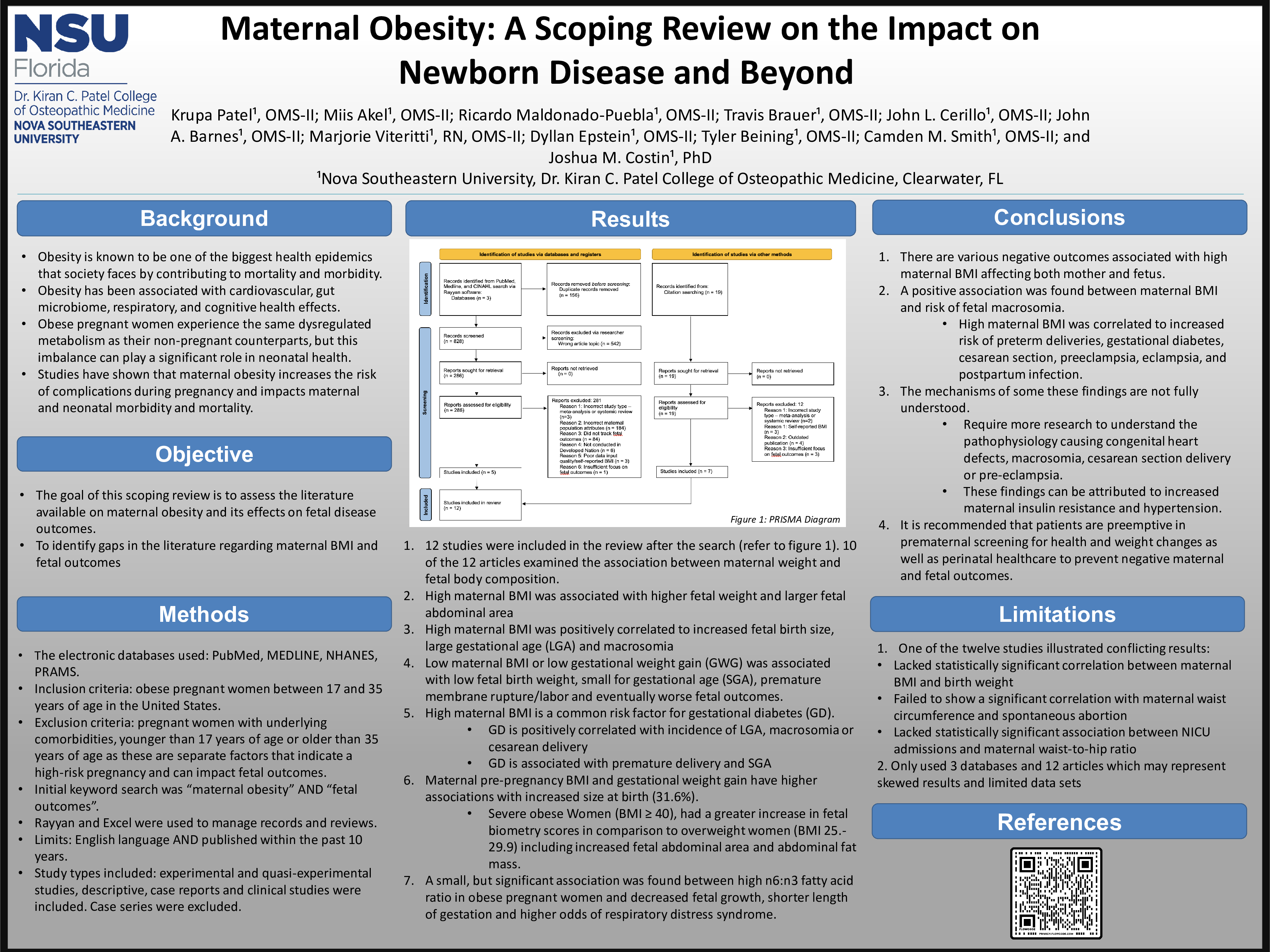
Objective: The main focus of this scoping review is to assess and identify gaps in literature on maternal obesity and its effects on fetal health outcomes.
Methods: This scoping review used PubMed, MEDLINE, NHANES, and PRAMS databases. The search string used was “maternal obesity AND fetal weight OR apgar score OR fetal heart health OR fetal head circumference”. All reviewers screened the same 828 publications, in which twelve articles were finalized. The studies were grouped by fetal outcomes, analyzed and summarized in a table format by the type of outcomes, populations and study design, along with broad findings.
Results: Ten of the twelve research studies examine an association between material weight and body composition through BMI, large gestational age (LGA), and fetal weight. Maternal BMI, indicative of obesity, is associated with fetal adiposity and can predispose the fetus to negative health outcomes. In multiple studies, gestational diabetes (GD) was noted in women with higher BMI, thus making it a common risk factor. The literature also indicated that maternal pre-pregnancy BMI and gestational weight gain have higher associations with increased size at birth. A small, but significant association was found between high n6:n3 fatty acid ratios
in obese pregnant women and decreased fetal growth, shorter length of gestation and, higher odds of respiratory distress syndrome.
Conclusion: The association between maternal obesity and negative fetal health outcomes was shown in eleven of the twelve studies examined. They produced similar results of various negative outcomes that high maternal BMI affects both mother and fetus through risk of fetal macrosomia, increased risk of preterm deliveries, GD, cesarean section, preeclampsia, and postpartum infection. The literature fails to address lack of compliance in screenings or maternal genetic factors that may play a role in offspring health. Additional studies can be conducted that include obstetric care compliance among obese patients and its role on fetal outcomes.