Abstract
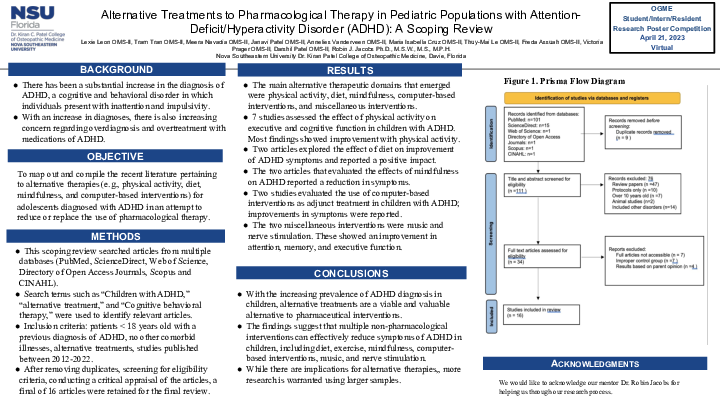
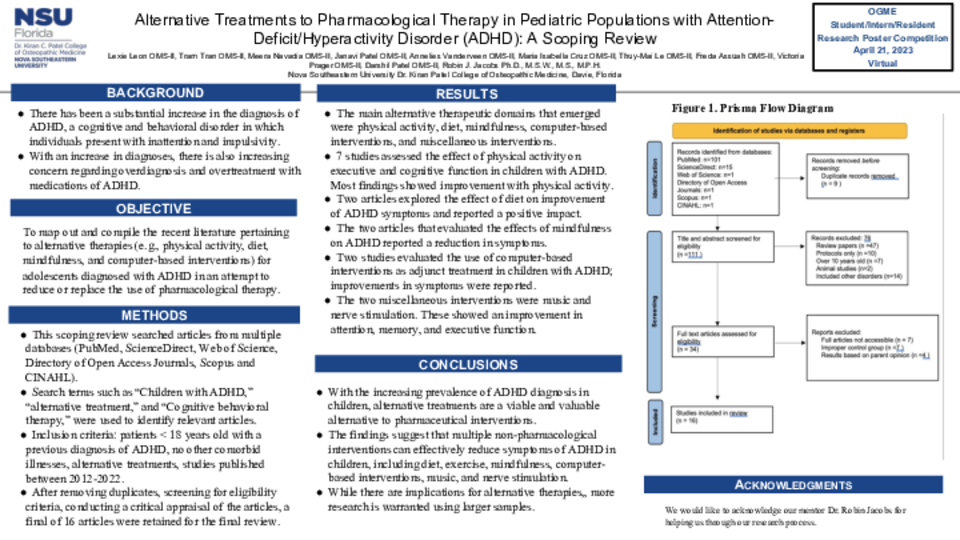
In recent years there has been an increase in prevalence of the diagnosis of attention deficit/hyperactivity disorder (ADHD), a cognitive and behavioral disorder in which individuals present with inattention and impulsivity, in the pediatric population. With an increase in diagnoses, there is also increasing concern regarding overdiagnosis and overtreatment with medications of ADHD. The objective of this study was to map out and compile the recent literature pertaining to alternative therapies (e.g., physical activity, diet, mindfulness, and computer-based interventions) for children and adolescents diagnosed with ADHD in an attempt to reduce or replace the use of pharmacological therapy. This scoping review searched articles from multiple databases (PubMed, ScienceDirect, Web of Science, Directory of Open Access Journals, Scopus and CINAHL). Using search terms “Children with ADHD,” “alternative treatment,” and “Cognitive behavioral therapy,” articles were identified that were specific to the research question. The inclusion criteria included patients under the age of 18 with a previous diagnosis of ADHD, no other comorbid illnesses, alternative treatments, and was limited to studies published between 2012-2022. After removing duplicates, screening for eligibility criteria, conducting a critical appraisal of the articles, a final of 16 articles were retained for the final review. The main alternative therapeutic domains that emerged were (1) physical activity, (2) diet, (3) mindfulness, (4) computer-based interventions and (5) miscellaneous interventions. Seven articles assessed the effect on physical activity on executive and cognitive function in children with ADHD. Most of the findings showed improvement with increased physical activity. Two articles explored the effect of diet on improvement of ADHD symptoms and reported a positive impact. The two articles that evaluated the effects of mindfulness on ADHD symptoms reported a reduction in ADHD symptoms. Two studies evaluated the use of computer-based interventions as adjunct treatment in children with ADHD; improvements in symptoms were reported. The two miscellaneous interventions were music and nerve stimulation. These showed an improvement in attention, memory, and executive function. With increasing prevalence of ADHD diagnosis in children, alternative treatments may be a viable and valuable alternative to pharmaceutical interventions. The findings from this review suggest that there are multiple non-pharmacological interventions that effectively reduce symptoms of ADHD in children, including diet, exercise, mindfulness, computer-based interventions, music, and nerve stimulation. While there are implications for alternatives to be used in the future, more research is warranted using larger samples with controlled trials.