Abstract
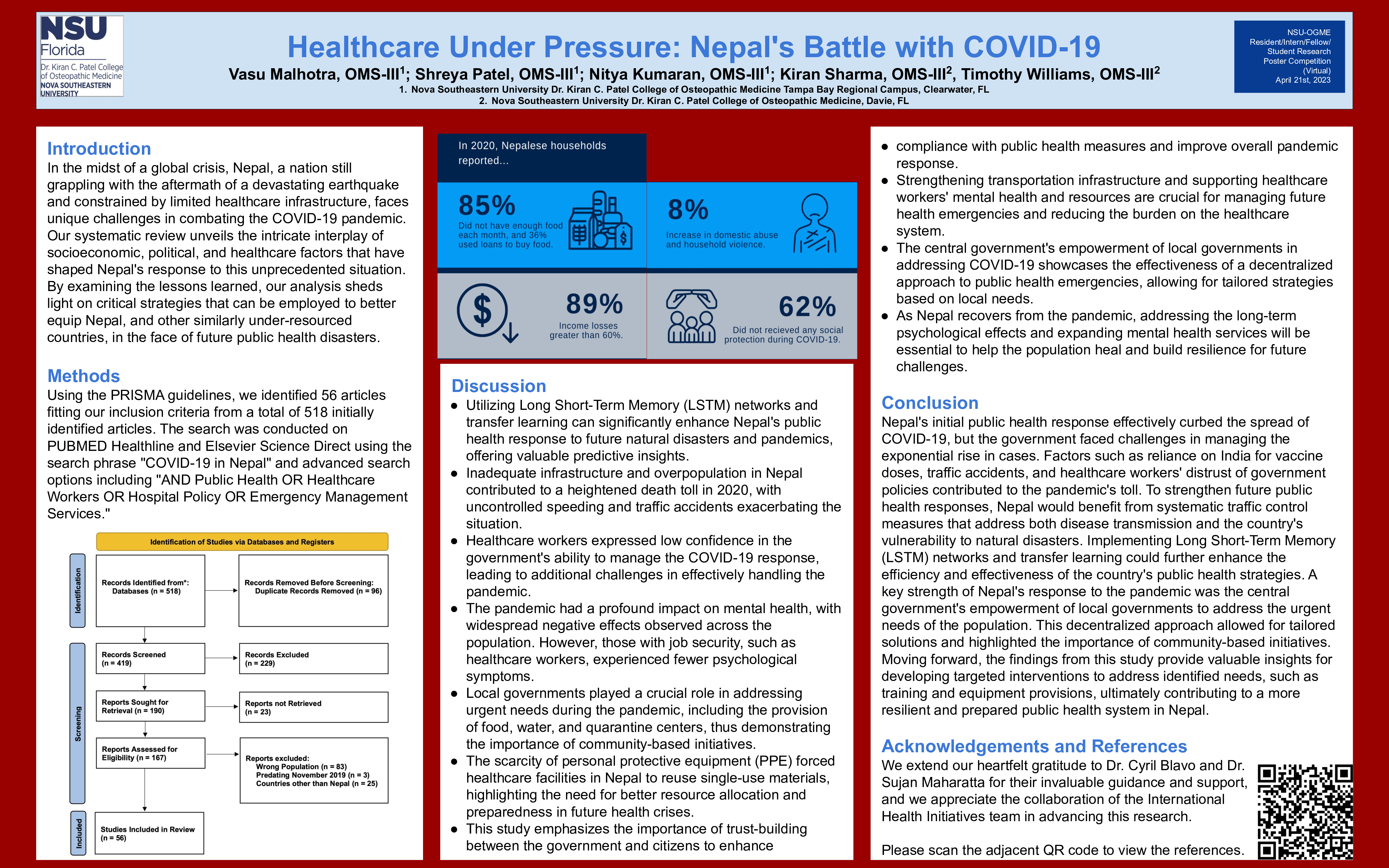
In this study, we explore Nepal's unique challenges and response to the COVID-19 pandemic amidst ongoing recovery from a catastrophic earthquake, limited healthcare infrastructure, and dependency on India for medical supplies. Our systematic literature review, guided by PRISMA, uncovers crucial insights into the country's public health strategies, the role of local governments, and the impact on mental health services, women's health, and cancer care. Findings highlight the potential of Long Short-Term Memory (LSTM) networks and transfer learning for enhancing future public health responses, as well as the importance of strengthening healthcare worker resources, mental health services, and diversifying medical supply sources. By examining Nepal's experience, this study offers valuable lessons for bolstering public health systems worldwide and building resilience against future crises.