Abstract
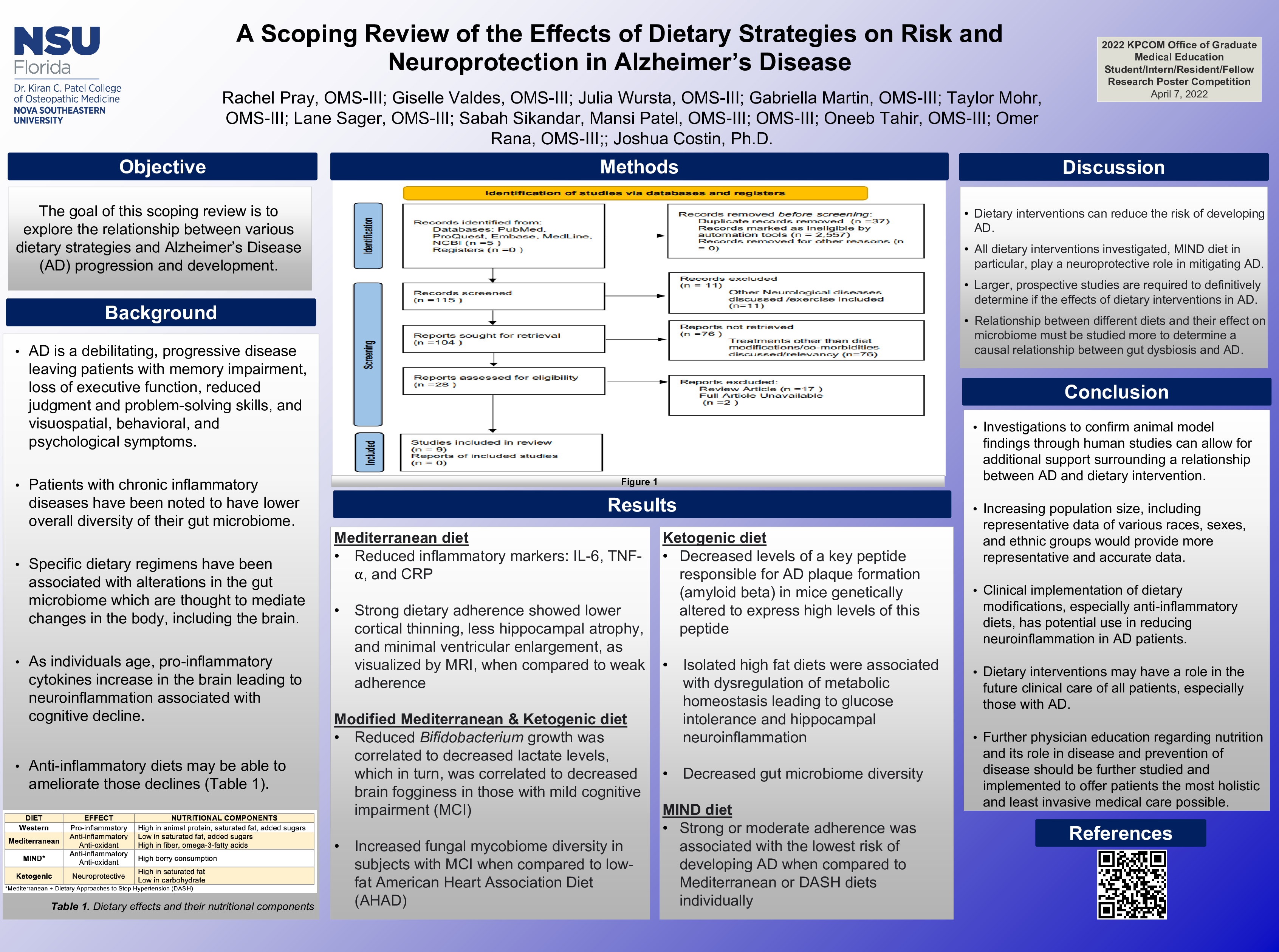
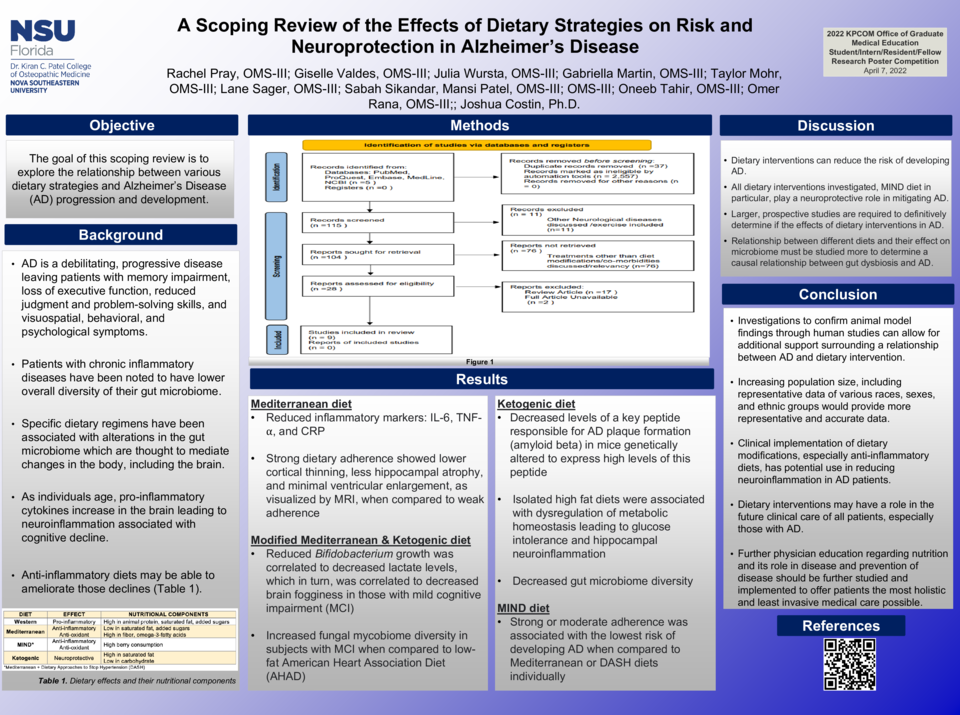
Alzheimer’s disease (AD) is a progressive neurodegenerative disease that is affected by neuroinflammation and increased pro-inflammatory cytokines. Different diets can affect the brain via the brain-gut axis, therefore anti-inflammatory diets may be able to ameliorate the cognitive decline associated with AD. In this scoping review, we searched PubMed, ProQuest, Emboss, MedLine, and NCBI for eligible articles and included 9 studies for this review after performing our outlined screening process. Analysis revealed strong adherence to the Mediterranean diet resulted in lower cortical thinning, less hippocampal atrophy, minimal ventricular enlargement, and lower inflammatory markers when compared to weaker diet adherence. The Modified Mediterranean & Ketogenic Diet resulted in reduced Bifidobacteriaceae growth, which correlated to decreased lactate levels, which was associated with decreased brain fogginess in those with mild cognitive impairment. The Ketogenic Diet was not shown to be protective against memory impairment due to the association of dysregulation of metabolic homeostasis to glucose intolerance and hippocampal neuroinflammation. Strong to moderate adherence to the MIND diet was associated with the lowest risk of developing AD when compared to the Mediterranean or DASH diets. Informing patients about the role of diet in AD can serve to be a useful tool in providing a more holistic approach and an additional avenue as to help mitigate AD’s progression.