Abstract
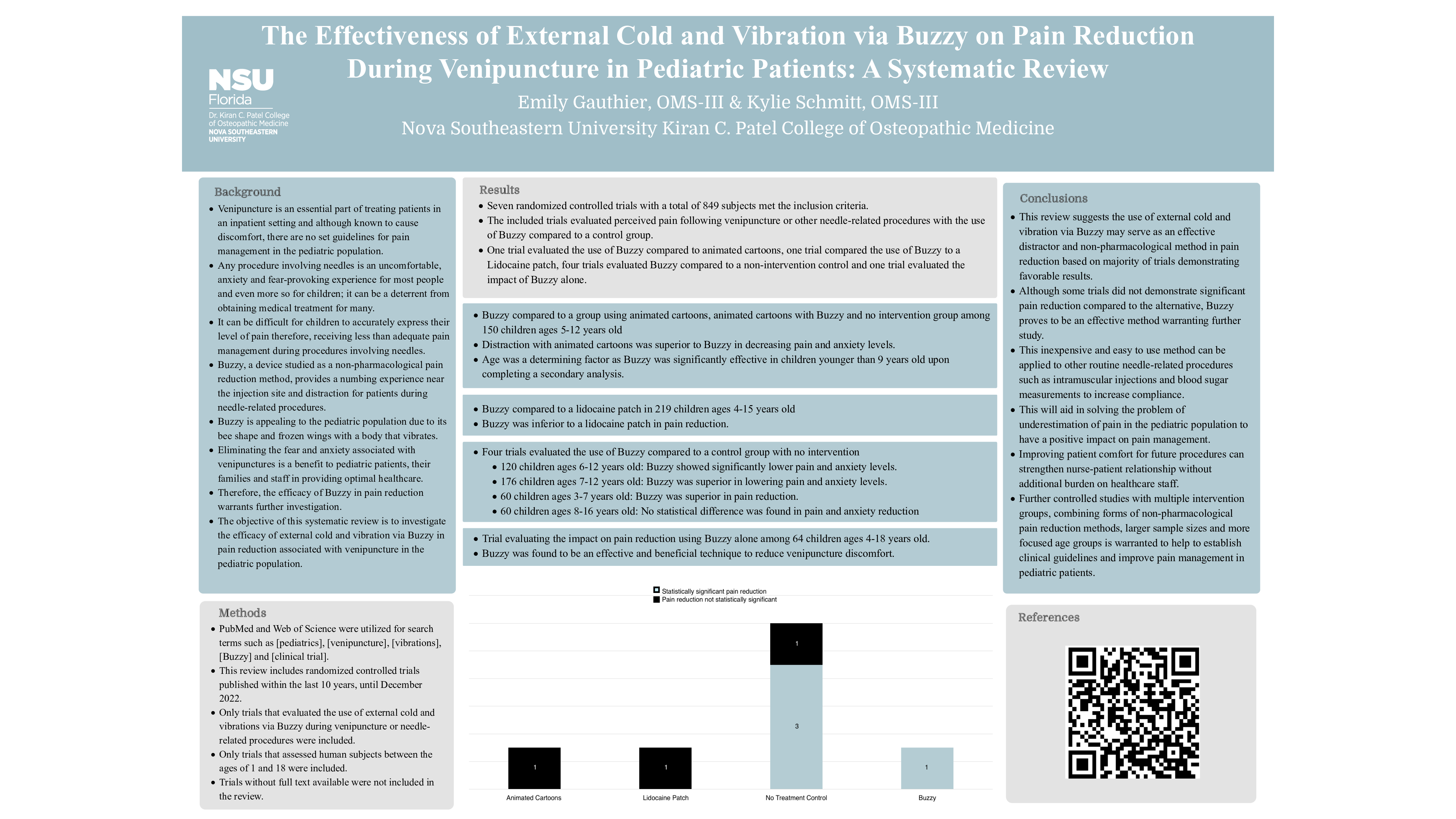
Background: Venipuncture is an essential part of treating patients in an inpatient setting. Any procedure involving needles is an uncomfortable, anxiety and fear-provoking experience for most people and even more so in the pediatric population. Although venipuncture is known to cause discomfort, there are no set guidelines for pain management in this population. Non-pharmacological pain reduction methods include a device called Buzzy that provides a numbing experience near the injection site and distraction for patients during needle related procedures. Buzzy is appealing to the pediatric population due to its bee shape and frozen wings with a body that vibrates. Eliminating the fear and anxiety associated with venipunctures is a benefit to pediatric patients, their families and staff in providing optimal healthcare. Therefore, the efficacy of Buzzy in pain reduction warrants further investigation.
Objective: The objective of this systematic review is to investigate the efficacy of external cold and vibration via Buzzy in pain reduction associated with venipuncture in the pediatric population.
Methods: This systematic review included a database search within PubMed and Web of Science utilizing search terms such as [pediatrics], [venipuncture], [vibrations], [Buzzy] and [clinical trial]. This review includes randomized controlled trials published within the last 10 years, until December 2022. Only trials that evaluated the use of external cold and vibrations via Buzzy during venipuncture or needle-related procedures were included. Only trials that assessed human subjects between the ages of 1 and 18 were included. Trials without full text available were not included in the review.
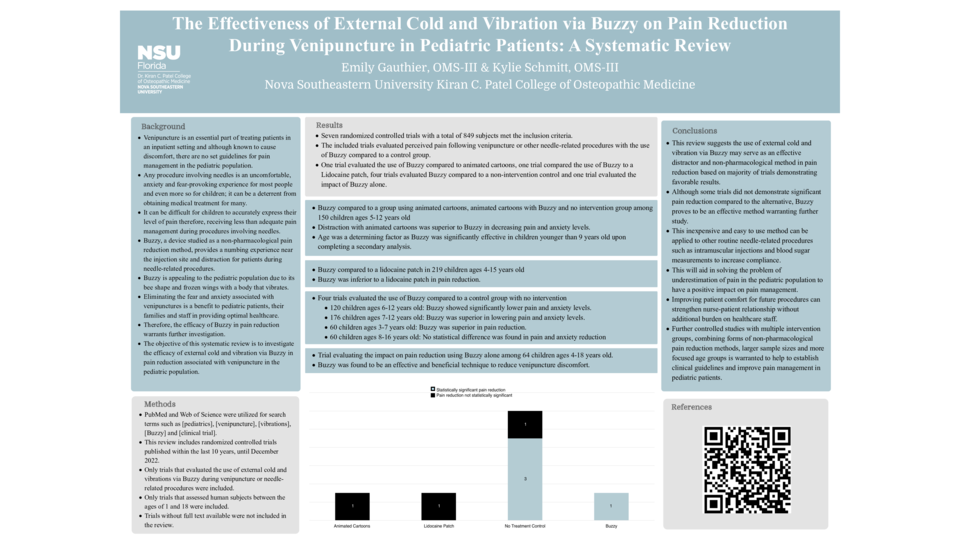
Results: Following a thorough quality assessment, seven randomized controlled trials with a total of 849 subjects met the inclusion criteria. The included trials evaluated perceived pain following venipuncture or other needle-related procedures with the use of Buzzy compared to a control group. One trial evaluated the use of Buzzy compared to animated cartoons, animated cartoons with Buzzy and no intervention. It was found that cartoons were overall superior in decreasing perceived pain. However, the same trial reported that Buzzy was significantly more effective in children under the age of 9. One trial evaluated the use of Buzzy compared to a lidocaine patch and it was found that the lidocaine patch was superior. Four trials evaluated Buzzy compared to a non-intervention control group. Three out of four trials demonstrated that Buzzy was superior in pain reduction. One trial evaluated the impact of using Buzzy alone and it was determined that Buzzy is an effective and beneficial technique to reduce discomfort.
Conclusion: This review suggests the use of external cold and vibration via Buzzy may serve as an effective distractor and non-pharmacological method in pain reduction based on majority of trials demonstrating favorable results. Although some trials did not demonstrate significant pain reduction compared to the alternative, Buzzy proves to be an effective method warranting further study. Further controlled studies with multiple intervention groups, combining forms of non-pharmacological pain reduction methods, larger sample sizes and more focused age groups is warranted to help to establish clinical guidelines and improve pain management in pediatric patients.