Abstract
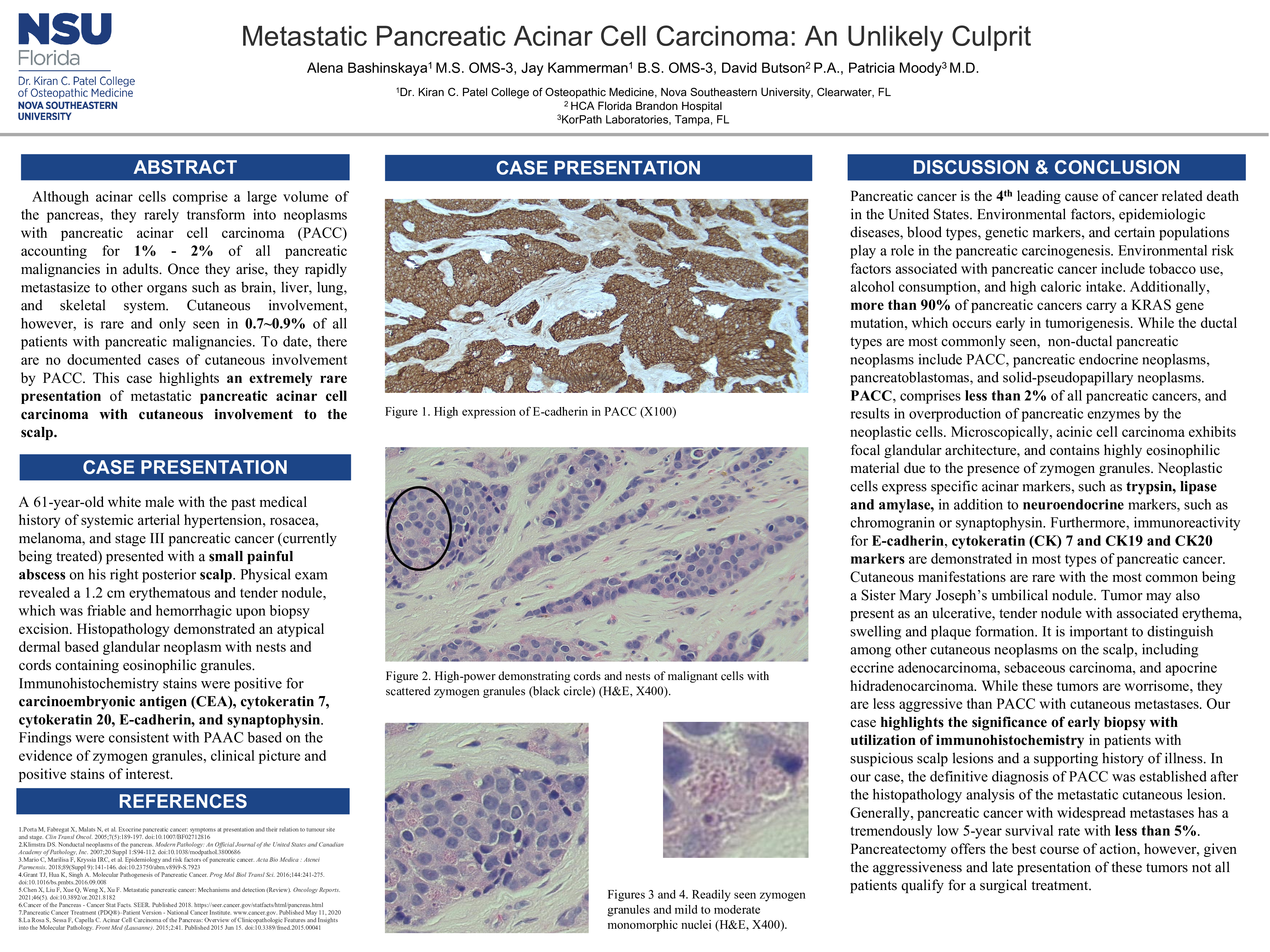
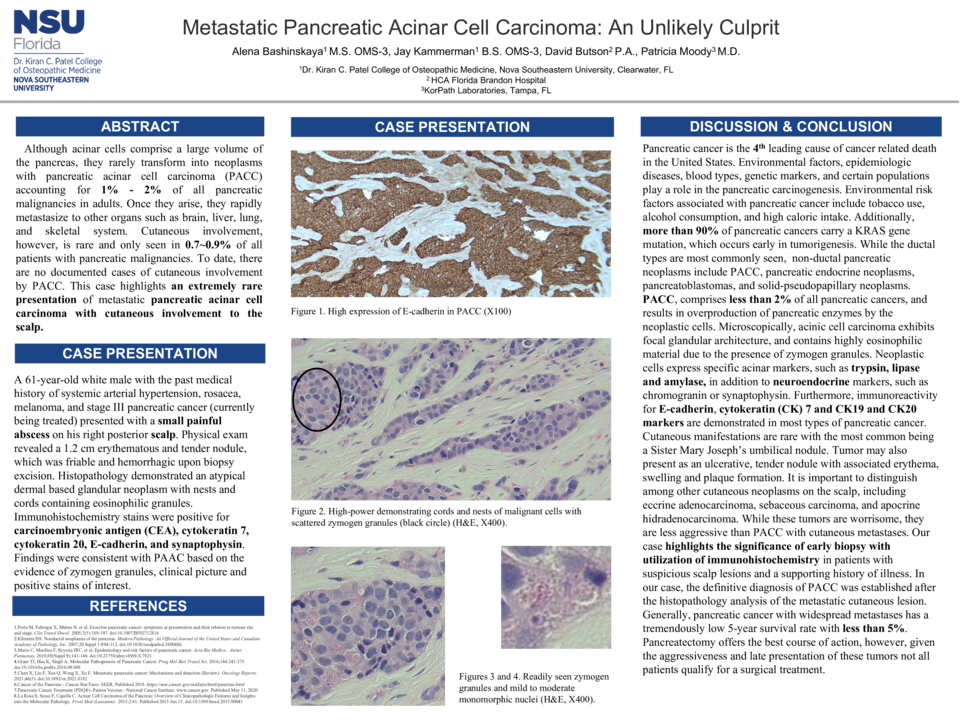
Pancreatic acinar cell carcinoma (PACC) is a rare finding, even though acinar cells make up the majority of pancreas. However, they infrequently transform into neoplasms and if one does form, they rapidly metastasize to other organs, most commonly the brain, liver, lung, and skeletal system. Cutaneous metastases are considered particularly exceptional due to their rarity. The most common one is known as a Sister Mary Joseph’s nodule arising close to the umbilicus. Nonetheless, skin manifestations are occasionally the initial presenting signs of a pancreatic malignancy. Herein, we report an extremely rare presentation of PACC metastases to the patient’s scalp. This challenges the conventional wisdom for metastases of this cancer as there aren’t many cases of cutaneous metastasis of this disease.