Abstract
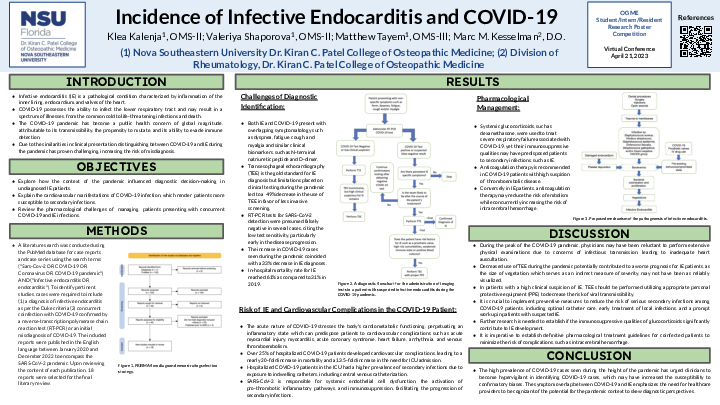
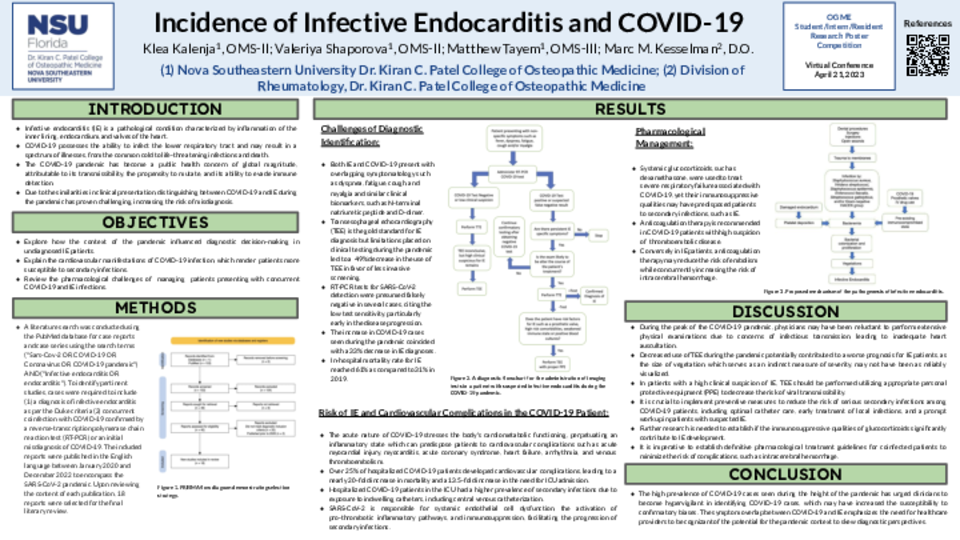
Background: The COVID-19 pandemic has emerged as a complex public health concern of global magnitude, attributable to its extensive transmissibility, propensity to mutate, and ability to evade immune detection. One of the challenges healthcare professionals are facing is the difficulty in distinguishing between COVID-19 and other conditions presenting with similar clinical symptoms, such as infective endocarditis (IE). Additionally, the reverse transcription polymerase chain reaction (RT-PCR) tests used to detect COVID-19 have limited sensitivity, therefore, it is imperative that a high level of clinical suspicion is maintained even in the context of a negative test result. These diagnostic challenges are compounded by the implementation of physical distancing measures, which serve to minimize disease spread, yet have encouraged shortened physical examinations and the use of less invasive screening methods.
Objective: This review aims to evaluate how the context of the COVID-19 pandemic has altered clinical decision-making in undiagnosed IE patients. Additionally, we explore the potential contributions of COVID-19 pathophysiology and pharmacological treatments in predisposing COVID-19 patients to co-infection with IE.
Methods: Literature search was conducted on PubMed utilizing “COVID-19” or “SARS-CoV-2”, as the title word with additional terms such as “Infective endocarditis”, “co-infection”, “secondary infections”, “pathophysiology”, “comorbidities”, “diagnosis”, “treatment”, “echocardiography”, “dexamethasone”, and “anticoagulation therapy”.
Results: The overlapping symptomatology and biomarkers in COVID-19 and IE increases the risk of diagnostic errors. One study found that the rise in COVID-19 cases during the pandemic coincided with a 33% decrease in IE diagnosis. Case reports described undiagnosed IE patients being treated as COVID-19 patients due to RT-PCR tests being presumed as falsely negative. Physical distancing measures have led to shortened physical exams and thereby, inadequate heart auscultation, an essential tool for IE detection. While transesophageal echocardiography (TEE) is the gold standard for IE diagnosis, it was substituted with the less invasive transthoracic echocardiography (TTE) despite its reduced sensitivity. Amongst hospitalized COVID-19 patients, it was reported that over 25% suffered cardiovascular complications which may serve as a predisposing factor to developing IE. Moreover, hospitalized COVID-19 patients had a higher prevalence of secondary infections due to exposure to indwelling catheters, including central venous catheterization while admitted. Additionally, dexamethasone was used to treat the respiratory failure associated with severe COVID-19 infection; yet its immunosuppressive qualities may have played a role in the development of secondary infections in these patients.
Conclusion: The COVID-19 pandemic highlights the need for healthcare providers to be cognizant of the potential for confirmatory bias to skew diagnostic perspectives, leading to premature closure of cases. Early detection using blood cultures, TEE, and comprehensive physical examination may assist in reducing the mortality and morbidity of IE. Moreover, it is imperative to implement preventative measures in hospitalized COVID-19 patients to protect them from infections, such as IE, and identify the optimal treatments for co-infected patients.