Abstract
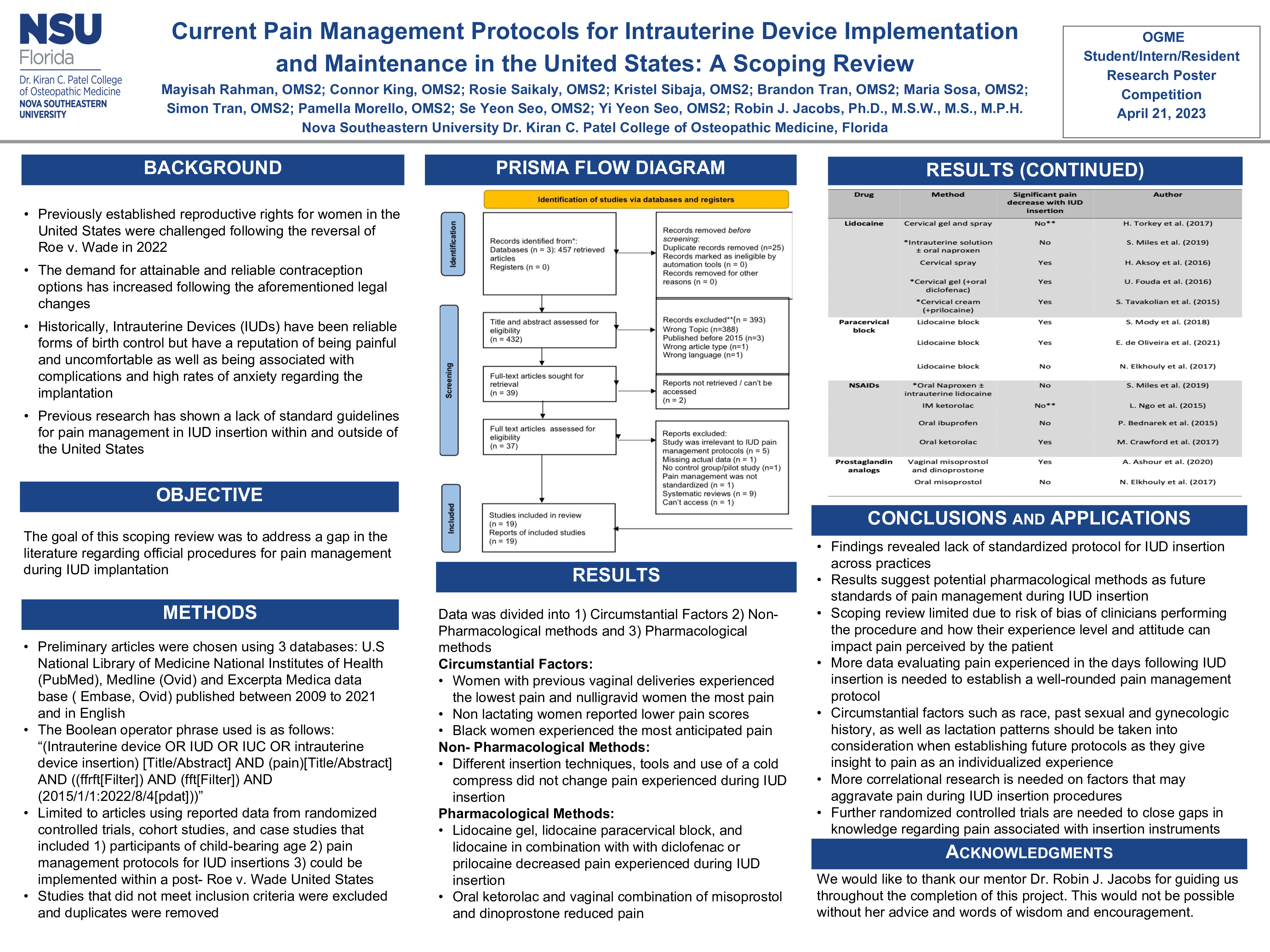
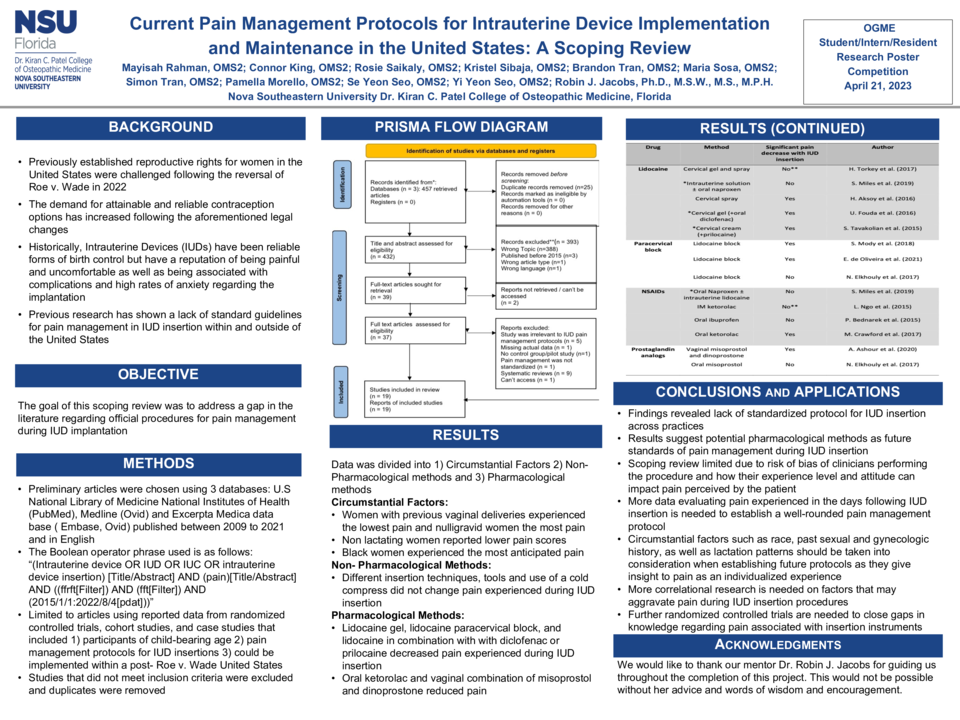
Background: The previously established protection of women's reproductive rights across the United States (U.S.) was challenged in 2022 with the reversal of Roe v. Wade. Following this legal change, the need for attainable birth control options became much more pertinent. Intrauterine devices (IUDs) have been a reliable contraceptive option for women for many years, but they have been known to cause pain and discomfort. Moreover, implementation complications can ensue. Previous studies have shown that anxieties related to the implantation have deterred many women from undergoing the procedure. There is a disconnect in standard guidelines for IUD insertion within and without the U.S.
Objective: The objective of this review was to address a gap in the literature regarding official procedures for pain management during IUD implantation.
Methods: This scoping review was initiated using keywords to extract relevant articles from multiple databases: U.S. National Library of Medicine National Institutes of Health (PubMed), Medline (Ovid), and Excerpta Medica database (Embase, Ovid) databases. Articles were selected that were published 2009-2021 and that were in English. Titles and abstracts were screened by the authors for relevance to the review question. Initially, 457 articles were identified and after a rigorous selection process, 27 articles were chosen to be further assessed to ascertain if they met the study’s inclusion criteria. Those 27 articles were further evaluated fully to check for relevancy. From that process, 19 articles were chosen for the review, and all passed quality assessment evaluations using the JB Appraisal Tools.
Results: To best address the research question, the data from the 19 articles were divided into 3 categories: 1) circumstantial factors, 2) non-pharmacological methods, and 3) pharmacological methods. Circumstantially, women with previous vaginal deliveries experienced the lowest pain during the procedure and nulligravid females experienced the most pain. Lower pain scores were reported by lactating women compared to non-lactating. Black women experienced the most anticipated pain compared to other races. Regarding non-pharmacological methods, different insertion techniques, tools and the use of a cold compress were found to not change the degree of pain during the IUD insertion. Lastly, it was shown that pharmacological methods such as lidocaine gel, lidocaine paracervical block, and lidocaine combined with either diclofenac or prilocaine decreased pain scores at different time stamps of the procedure. Also, oral ketorolac and a vaginal combination of misoprostol and dinoprostone helped reduce pain.
Conclusion: Findings from this scoping review revealed a lack of uniformity across practices when conducting IUD insertions. The findings within the themes may be a large factor contributing to the lack of standardized care. More research is needed regarding the intricacy of pain with IUD insertion. Moving forward, especially following a potential increase in the use of IUDs following the reversal of Roe v. Wade, establishing this gap may lead to a more refined standardized protocol to minimize pain with IUD insertions.