Abstract
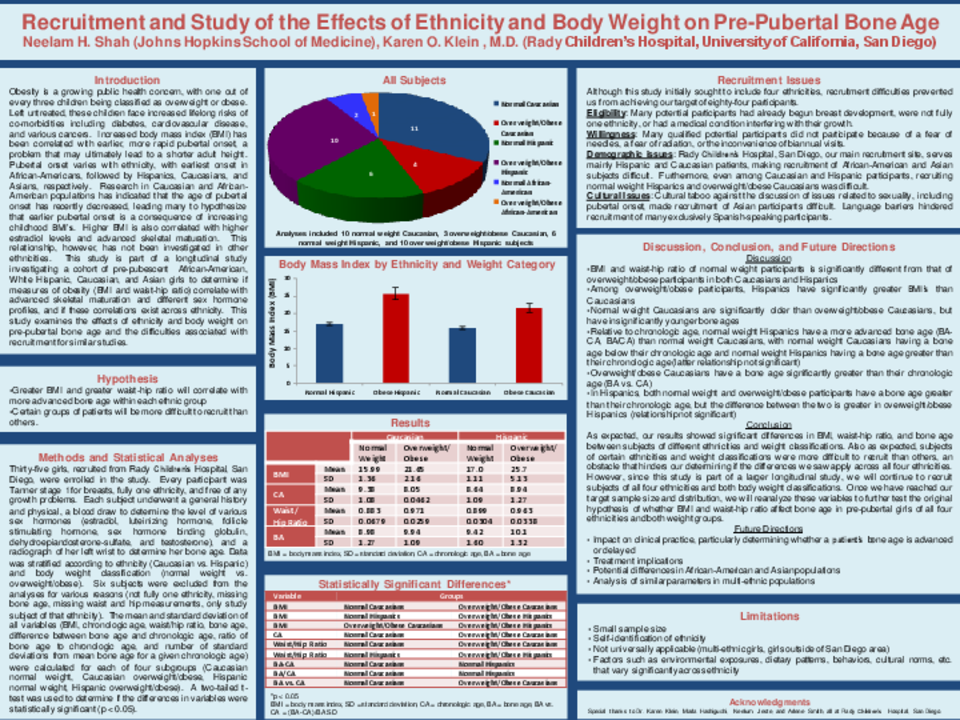
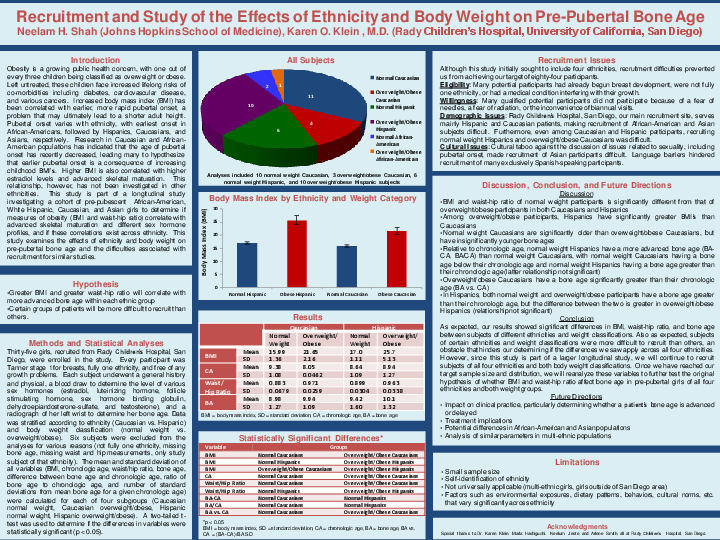
One out of every three children is overweight or obese, a medical problem that predisposes them to an increased risk of co-morbidities including diabetes, cardiovascular disease, a variety of cancers, and earlier pubertal onset. Research in Caucasian and African-American populations has indicated that the age of pubertal onset has recently decreased, potentially as a result of increasing childhood body mass index (BMI). This relationship, however, has not been investigated in other ethnicities. This study examined the effects of body weight and ethnicity on pre-pubertal bone age and the recruitment issues associated with similar studies. Thirty-five girls, (Tanner stage 1 breasts, fully one ethnicity, and free of any growth problems) underwent a general exam, a blood draw, and a bone age exam. A two-tailed t-test was used to determine if variables [BMI, chronologic age (CA), waist/hip ratio (WHR), bone age (BA), difference between bone age and chronologic age (BA-CA), ratio of bone age to chronologic age (BA/CA), and number of standard deviations from mean bone age for a given chronologic age(BA vs. CA)] were significantly different (p < 0.05) across four groups (Caucasian normal weight, Caucasian overweight/obese, Hispanic normal weight, Hispanic overweight/obese). Statistically significant differences were found in BMI between normal weight Caucasians and overweight Caucasians, normal weight Hispanics and overweight Hispanics, and overweight Caucasians and overweight Hispanics. Significant differences in CA were found between normal weight and overweight Caucasians. Significant differences in WHR were found between normal weight and overweight Caucasians and normal weight and overweight Hispanics. Significant differences in BA-CA and BA/CA were found between normal weight Caucasians and normal weight Hispanics. Significant differences in BA vs. CA were found between normal weight and overweight Caucasians. Results showed significant differences in BMI, waist-hip ratio, and bone age between subjects of different ethnicities and weight classifications, indicating a possible effect of both ethnicity and body weight on pre-pubertal bone age. Future studies should examine the impact of these differences on clinical practice and treatment implications, as well as similar relationships in African-American, Asian, and multi-ethnic populations.