Abstract
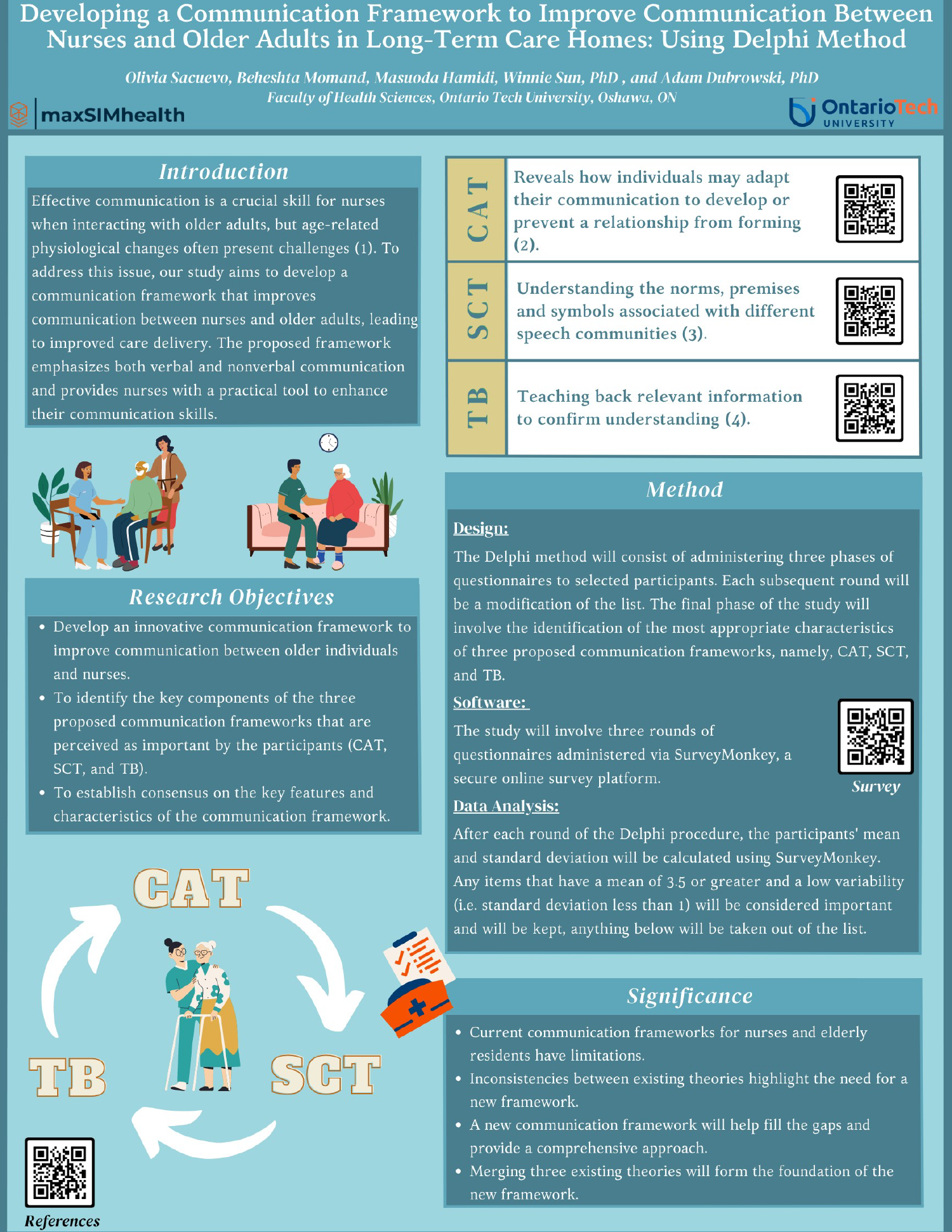
Effective communication between nurses and elderly patients is a critical skill as it strengthens the nurse-patient relationship, initiates trust and improves the quality-of-care elderly patients receive. For successful communication to be achieved, nurses must develop the skills that are essential during communicative interactions (1). One way to achieve this is through utilizing frameworks as training tools that nurses can use to improve their communication techniques. Many nurses lack the ability to communicate effectively, mainly through their use of medical jargon, speaking too fast and inaccurate interpretation of non-verbal cues (2). One study highlighted that nurses had been taught the skills to communicate. However, they do not always use these skills, so it is critical to develop an effective communication tool that nurses will use in the clinical setting (3). Currently, no frameworks help target this lack of communication training for nurses and no solution to improve communication skills. The lack of communication education for nurses makes it difficult for them to cater to the needs of elderly patients and deliver optimal healthcare (2). Therefore, developing a framework that helps fill this communication gap will improve the overall care elderly patients receive.
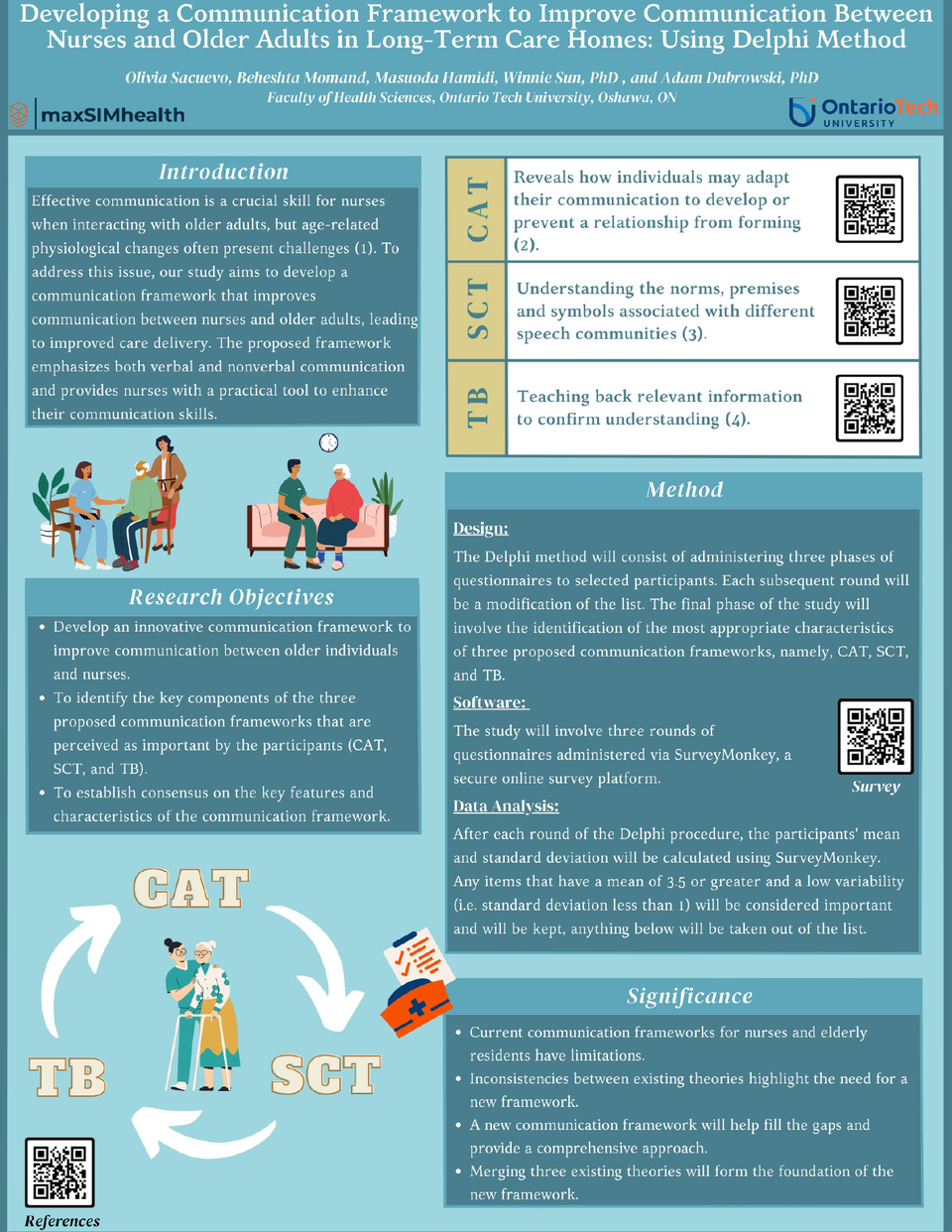
In order to address this issue, the development of a new communication framework will utilize the Delphi method, which consists of three rounds of questionnaires that incorporate three existing theories essential for communicative interactions. Doing this would create a research tool that reduces the gap between each framework and reduces inconsistencies. The theories include communication/accommodation, speech codes, and teach-back theories. The Delphi method is intended to gain insight and opinions on nurse educators, simulation and communication experts that will inform the development of a new communication framework.
The Delphi method will consist of administering three rounds of questionnaires, with each subsequent round taking the most appropriate and applicable characteristics of each framework and modifying the list further. The results will include the most appropriate characteristics that will lead the development stage of the new communication framework. Ultimately, this communication tool will give nurses the resources and ability to learn new skills to converse more effectively and appropriately with older adults. Not only will it help the current nurses, but it will also lead future nurses' development, which will aim to improve the healthcare system as a whole.
References
- Kourkouta, L., & Papathanasiou, I. V. Communication in Nursing Practice. Mater Sociomed. 2014 Feb 20; 26(1):65-67. Available from: https://www.ncbi.nlm.nih.gov/pmc/articles/PMC3990376/
- Momand, B., Barth, B., Sun, W., & Dubrowski, A. Bridging the gap in health personnel and elderly communication training: What can we learn from speech codes theory. Cureus. 2022 Jan 27; 14(1):e21659. Available from: https://www.ncbi.nlm.nih.gov/pmc/articles/PMC8881906/
- Norouzinia, R., Aghabarari, M., Shiri, M., Karimi, M., & Samami, E. Communication barriers perceived by nurses and patients. Glob J Health Sci. 2015 Sep 28; 8(6):65-74. Available from: https://www.ncbi.nlm.nih.gov/pmc/articles/PMC4954910/