Abstract
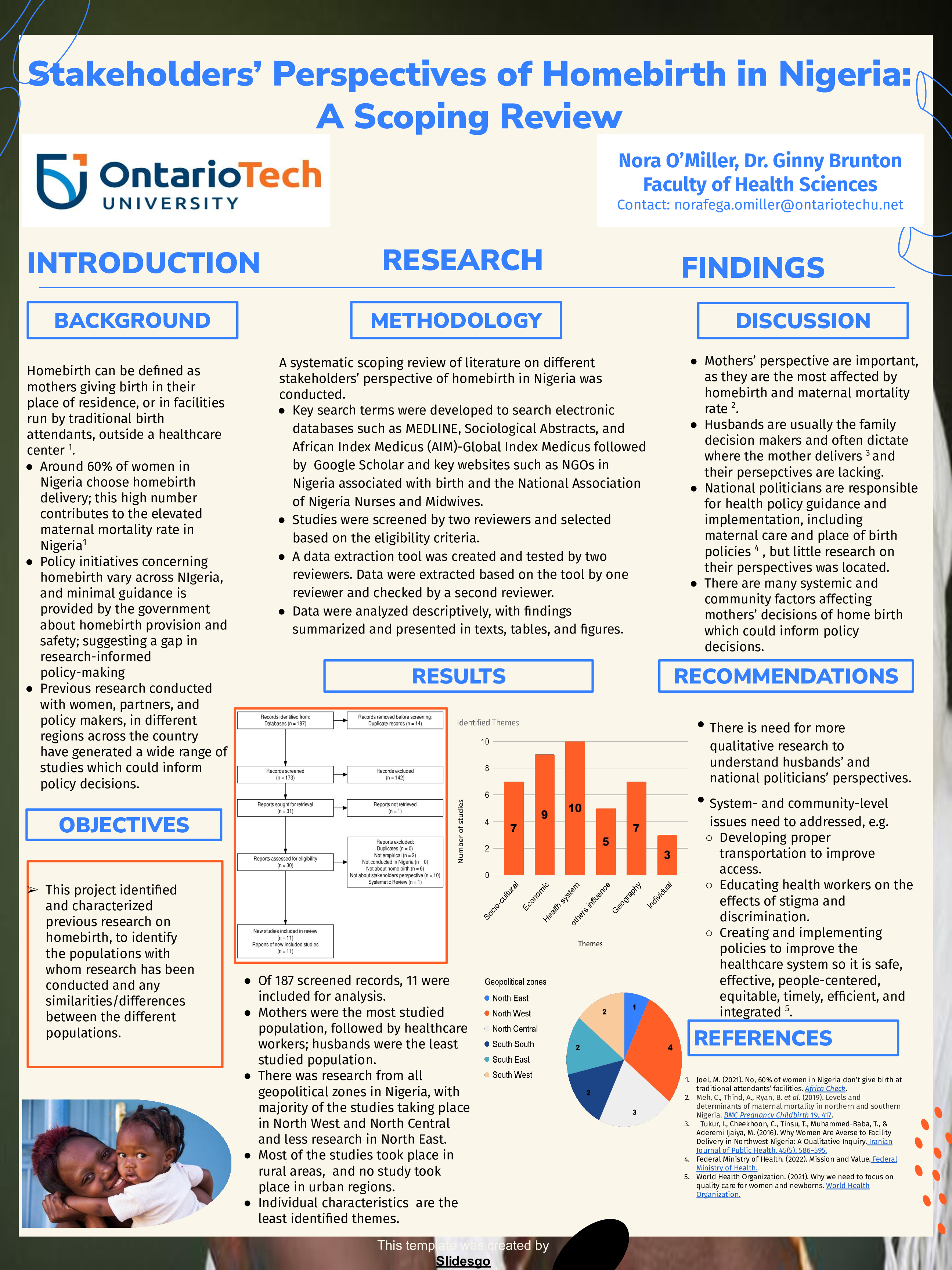
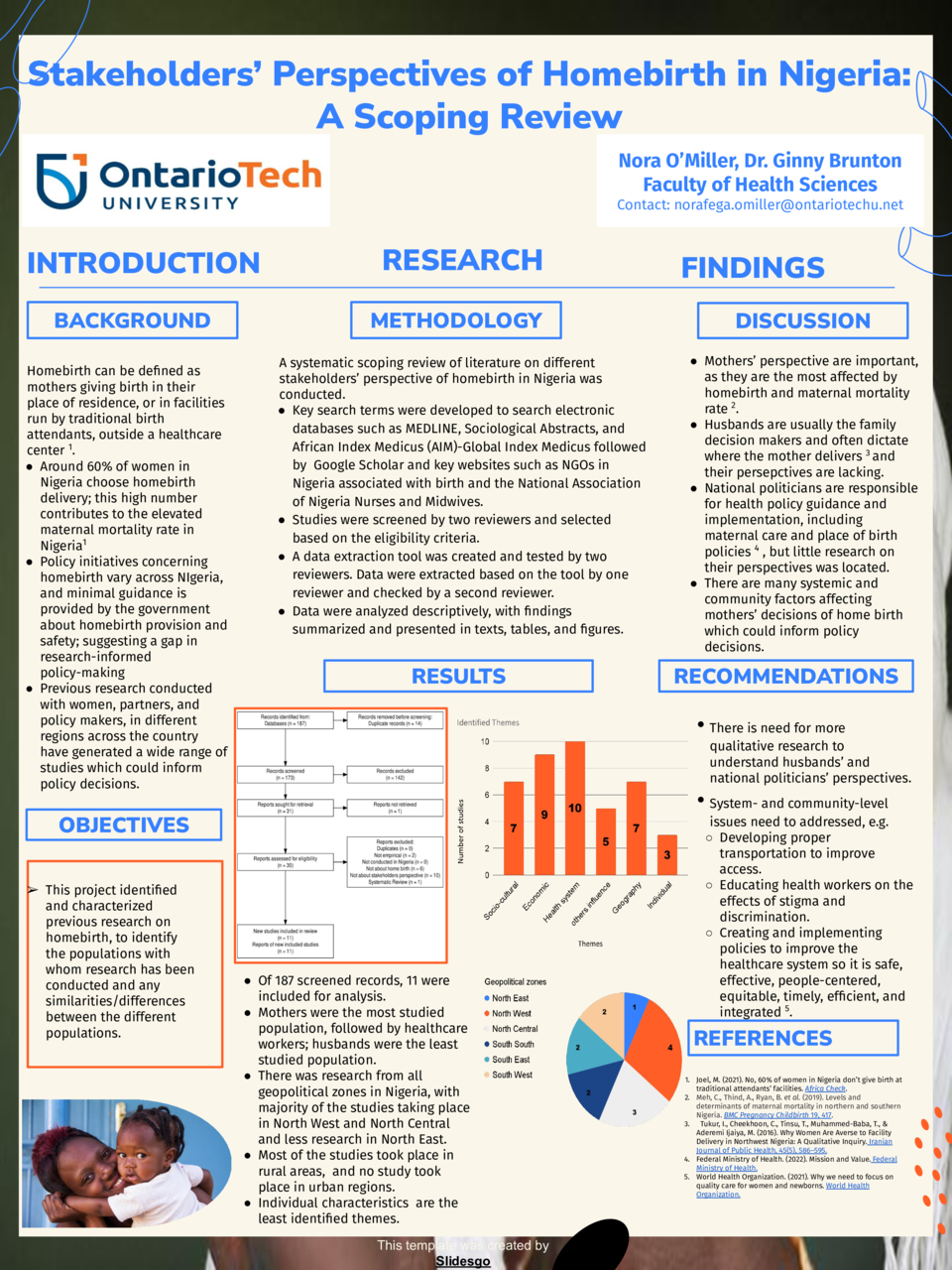
Introduction: Homebirth is defined as a mother giving birth in her residence, outside a health care center. It also includes women delivering at a facility run by traditional birth attendants (TBAs). Many women in developing countries like Nigeria, deliver at home, assisted by TBAs who are often unskilled 1. About 60% of women in Nigeria choose to deliver at home. This is a substantial proportion of home birth and it contributes to the increased mortality in Nigeria 1. Minimal guidance is provided by the Nigerian government concerning home birth provision and safety, and policy initiatives vary across the country; portraying a gap in research synthesis. Previous research has generated a wide range of studies concerning different stakeholders’ perspectives of home birth in Nigeria, conducted on different populations, e.g.women, partners, and policymakers, and in different regions across the country. This research aimed to identify and characterize previous research in home birth which enabled us identify the populations on whom research has been conducted and the similarities and differences between the different populations. We conducted a systematic scoping review of the literature on different stakeholders’ perspectives of home birth in Nigeria.
Methodology: Key search terms were developed to search electronic databases such as MEDLINE, Sociological Abstracts, and African Index Medicus (AIM)-Global Index Medicus. We also searched Google Scholar and key websites such as NGOs in Nigeria associated with birth and the National Association of Nigeria Nurses and Midwives. Studies were screened by two reviewers and selected based on the eligibility criteria. A data extraction tool was created and tested by two reviewers, and data were extracted based on the tool by one reviewer and checked by a second reviewer. Data will be analyzed descriptively, findings from the characteristics will be added up and results will be presented in texts, tables, and figures.
Results: Searching identified 187 references. 31 studies were retrieved after the title and abstract screening, and 11 studies were included after screening the full text. A total of 175 references were excluded: 14 were duplicates, 10 were not empirical, 13 were not conducted in Nigeria, 68
were not about home birth, 69 were not about stakeholders’ perspectives, and 1 was a systematic review. 1 of the studies retrieved for full-text screening was not available, hence, it was not included.
Discussion and Conclusions: The findings suggest a gap in research in. the perspectives of husbands, and national politicians. It also shows a wide range of systemic and community factors such as transportation, culture, and discrimination from health workers, that lead to homebirth and prevent mothers from delivering in health centers. More research needs to be done that address the gap. More health centers and effective transportation routes are needed in rural areas, and health workers need to be properly educated about the effects of stigmas and discrimination on the healthcare system.
References
- Joel, M. (2021). No, 60% of women in Nigeria don’t give birth at traditional attendants’ facilities. Africa Check.