Abstract
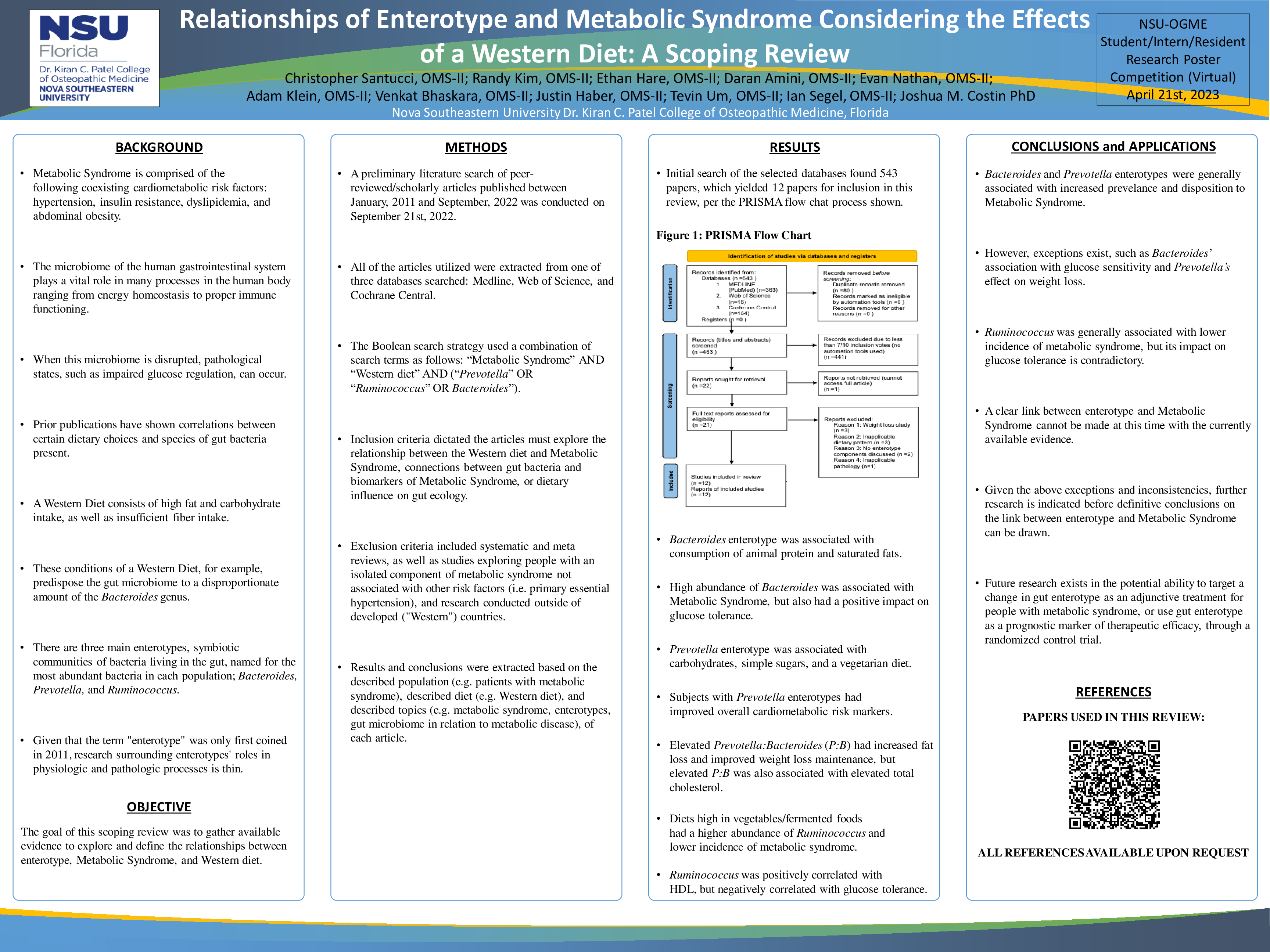
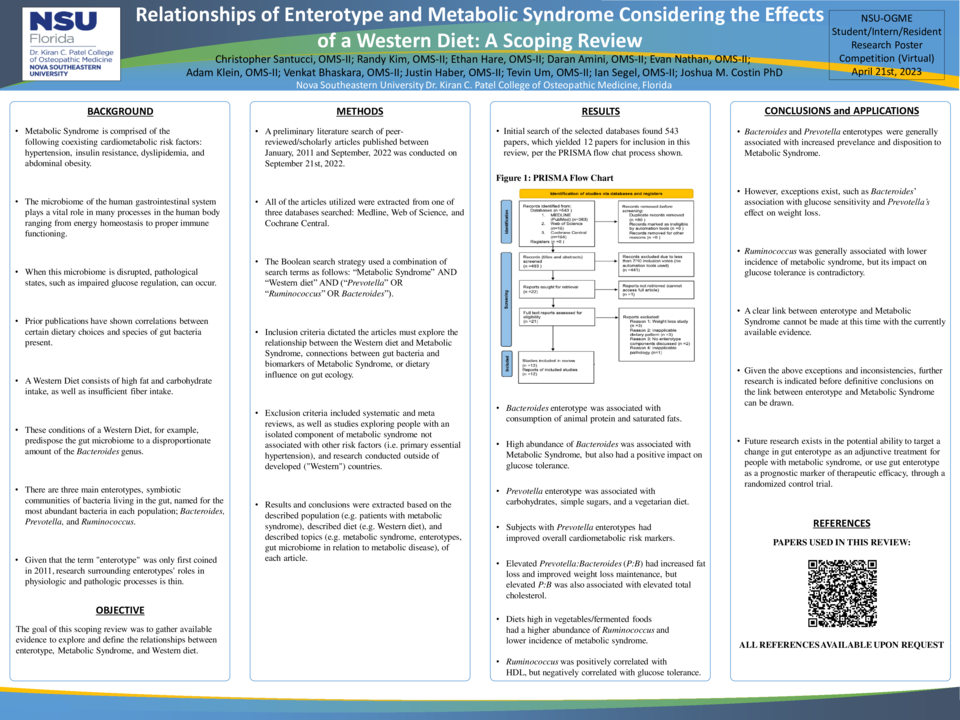
Background: Metabolic Syndrome is defined as a cluster of coexisting cardiometabolic risk factors: hypertension, insulin resistance, dyslipidemia, and abdominal obesity (1). The human gut microbiome has significant implications for energy homeostasis and can contribute to the pathology of Metabolic Syndrome. With a continued interest in understanding the role of the gut microbiome in human health and disease, different symbiotic populations of microbiomes have been determined, termed enterotypes. The three accepted enterotypes - Bacteroides, Prevotella, and Ruminococcus- are named for the most abundant bacteria in the group. Previous literature has shown correlations between these conserved groupings of bacteria and different dietary tendencies as well as their association with metabolic health.
Objective: To define the relationship of enterotype, Metabolic Syndrome, and Western diet.
Methods: The authors conducted a literature search of peer-reviewed/scholarly articles published between January 2011 and September 2022 using search terms as follows: “metabolic syndrome” AND “Western diet” AND (“Prevotella” OR “Ruminococcus” OR Bacteroides”). Articles were extracted from Medline, Web of Science, and Cochrane Central. For an article to meet inclusion criteria, it must have explored the relationship between “western” diet and Metabolic Syndrome, connections between gut bacteria and biomarkers of Metabolic Syndrome, or dietary influence on gut ecology. Exclusion criteria consisted of systematic and meta reviews, studies exploring isolated components of metabolic syndrome that may not be attributed to other risk factors, and research not conducted in developed countries.
Results: We identified 543 studies (with 80 duplicates) of which 12 studies met the inclusion criteria. Bacteroides enterotype was associated with consumption of animal protein and saturated fats and high abundance of Bacteroides was associated with Metabolic Syndrome, but also had a positive impact on glucose tolerance. Low Bacteroides abundance in microbiomes showed improved response to fiber supplementation. Prevotella enterotype was associated with carbohydrates, simple sugars, and a vegetarian diet, and subjects with Prevotella enterotypes had improved overall cardiometabolic risk markers. Elevated Prevotella: Bacteroides (P:B) had increased fat loss and improved weight loss maintenance, but elevated P:B was also associated with elevated total cholesterol. Diets high in vegetables/fermented foods had a higher abundance of Ruminococcus and lower incidence of metabolic syndrome. Additionally, Ruminococcus was positively correlated with HDL, but negatively correlated with glucose tolerance.
Conclusion: Bacteroides and Prevotella were generally associated with Metabolic Syndrome, but exceptions exist, such as Bacteroides’ association with glucose sensitivity and Prevotella’s effect on weight loss. Ruminococcus was associated with lower incidence of metabolic syndrome, but its impact on glucose tolerance is contradictory. A clear causal link between gut enterotype and Metabolic Syndrome cannot be made at this time with the currently available studies.