Abstract
Background: The recruitment and retention of healthcare workers in the long-term care sector have been an ongoing challenge. The rising demands of healthcare workers have been exacerbated by the COVID-19 pandemic. This study aims to conduct a pilot study of nursing students and a rapid literature review that will answer the research question: What are the perceptions of nurses working in the long-term care sector, and what job attributes and work environments contribute to, or are barriers to, the recruitment and retention of nurses to the long-term care sector?
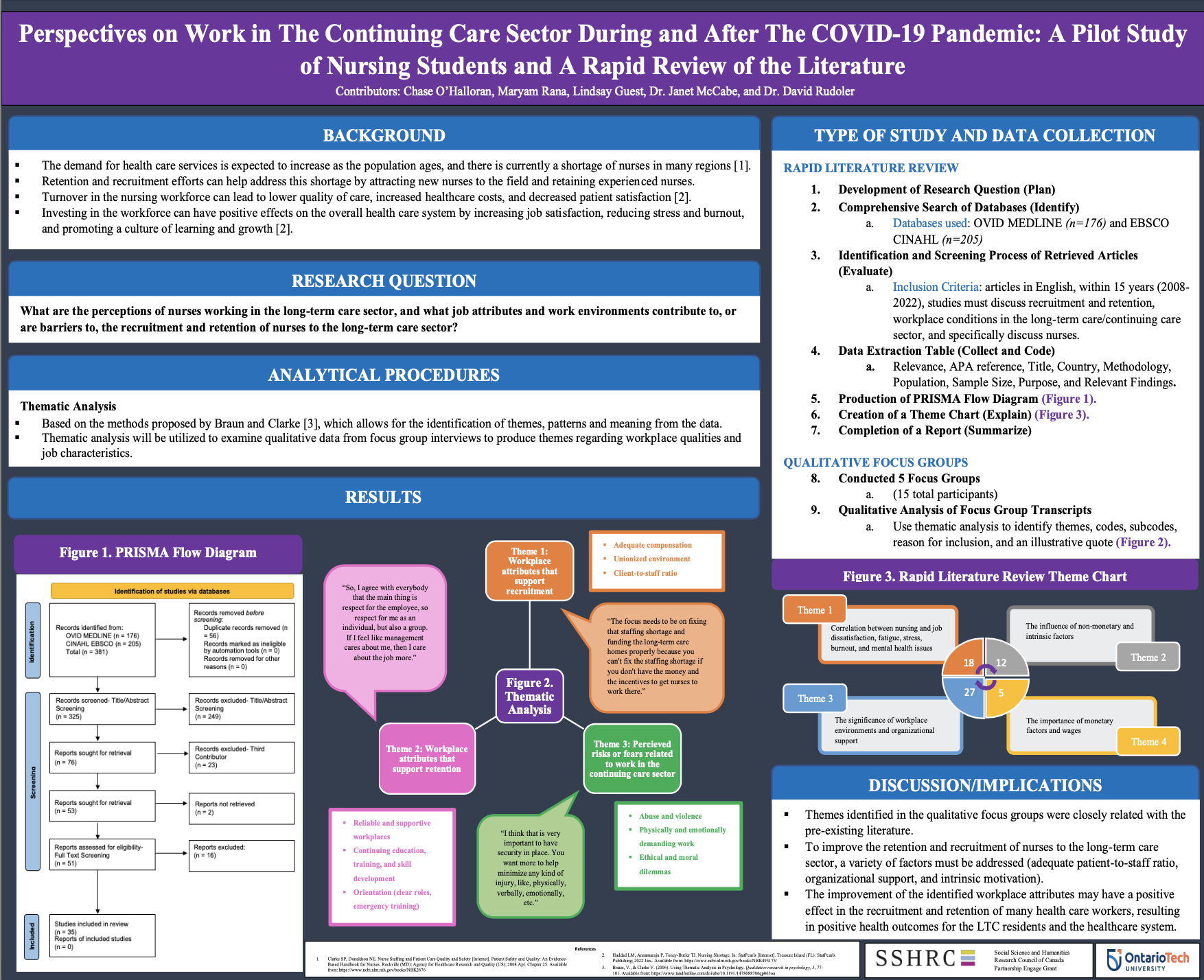
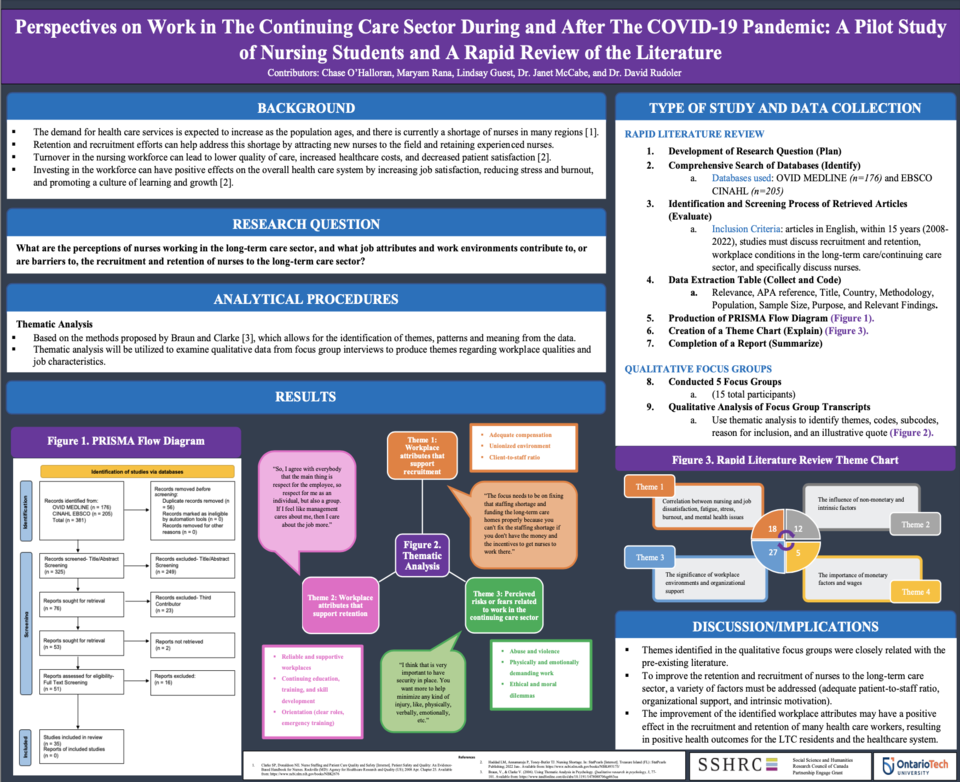
Methods: A literature search was conducted using OVID MEDLINE and EBSCO CINAHL databases. Search terms included long-term care, job satisfaction, burnout, personnel turnover, recruitment, retention, nurses, and other relevant keywords. Peer-reviewed articles published in English from 2008-2022 were retrieved for title/abstract and full-text screening. A PRISMA flow diagram (Figure 1) was created to capture the screening process of the literature review, and themes from 35 relevant articles were highlighted in a theme chart (Figure 3). The pilot study of nursing students consisted of 5 focus groups with 15 participants in total. Thematic analysis (Figure 2) was used to evaluate focus group transcripts for themes, codes, and subcodes. Illustrative quotes from nursing students were provided for a better understanding of nursing students’ attitudes and perceptions of working in the continuing care sector.
Results: Of the 35 relevant articles, the rapid literature review identified four key themes: (1) a positive correlation between increasing workloads and increasing job dissatisfaction (2) the significance of non-monetary factors (3) the contribution of workplace environments, and (4) the importance of monetary factors. Additionally, from the thematic analysis of focus group transcripts, three themes were discovered. The first theme was workplace attributes that supported recruitment. A few codes from this theme included adequate compensation, a unionized environment, and client-to-staff ratios. The second theme identified was workplace attributes that supported retention. A few codes from this theme included reliable and supportive workplaces, continuing education, training, and skill development, as well as orientation, where roles were clearly defined for nurses, and emergency training was provided. The last theme was perceived risks or fears related to work in the continuing care sector. A few codes from this theme included abuse and violence, physically and emotionally demanding work, and ethical and moral dilemmas.
Discussion: The themes identified from the qualitative focus groups were closely related to the themes identified through a rapid review of the literature. Four key considerations were identified and may aid in the in recruitment and retention efforts of nurses in the LTC sector. First, it is essential to improve workload and working conditions to reduce turnover rates from physical and emotional burdens. Second, it is crucial to increase the number of staff in the LTC in order to provide adequate care for patients and improve their quality of life. Third, supportive work environments must be created and maintained to include effective leadership, communication, and teamwork. Lastly, the LTC sector is encouraged to provide meaningful opportunities for learning and career development to help workers feel valued and more confident in their positions.