Abstract
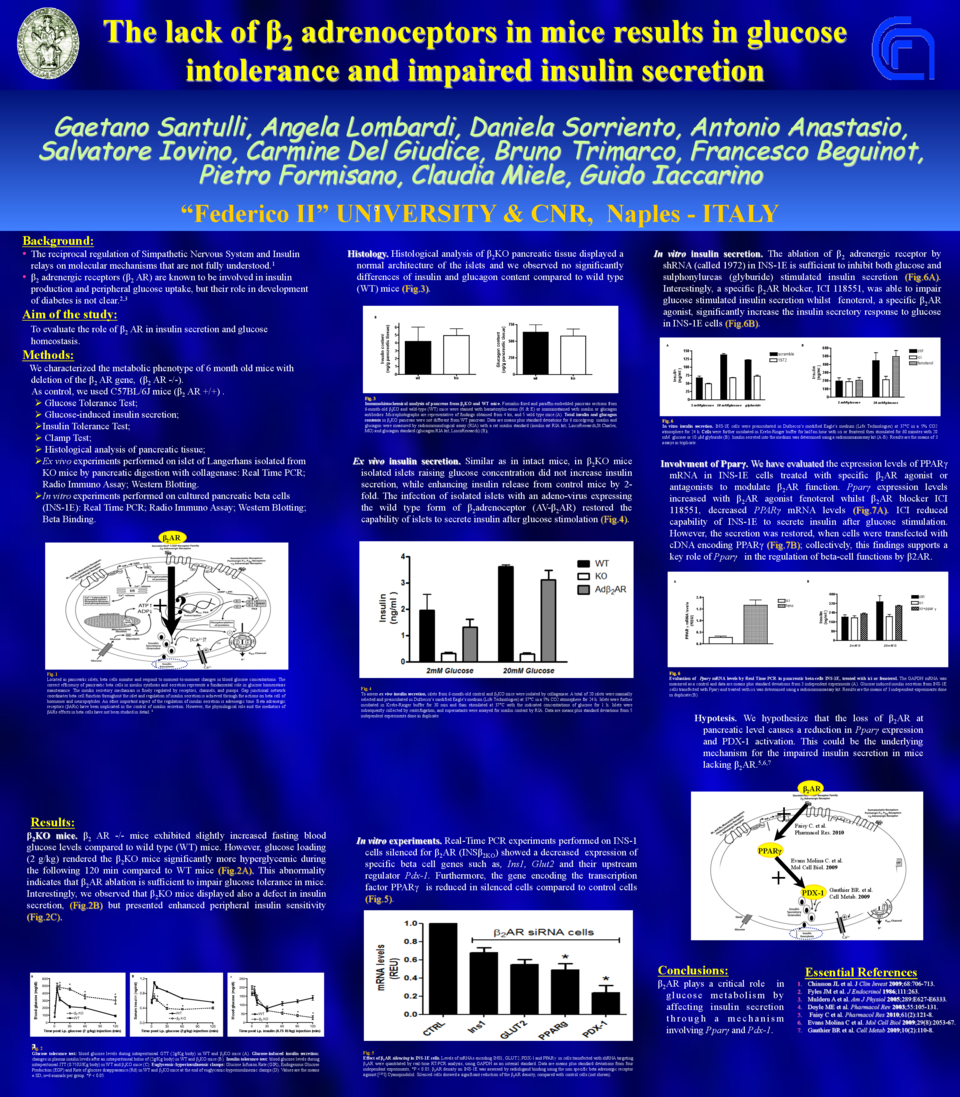
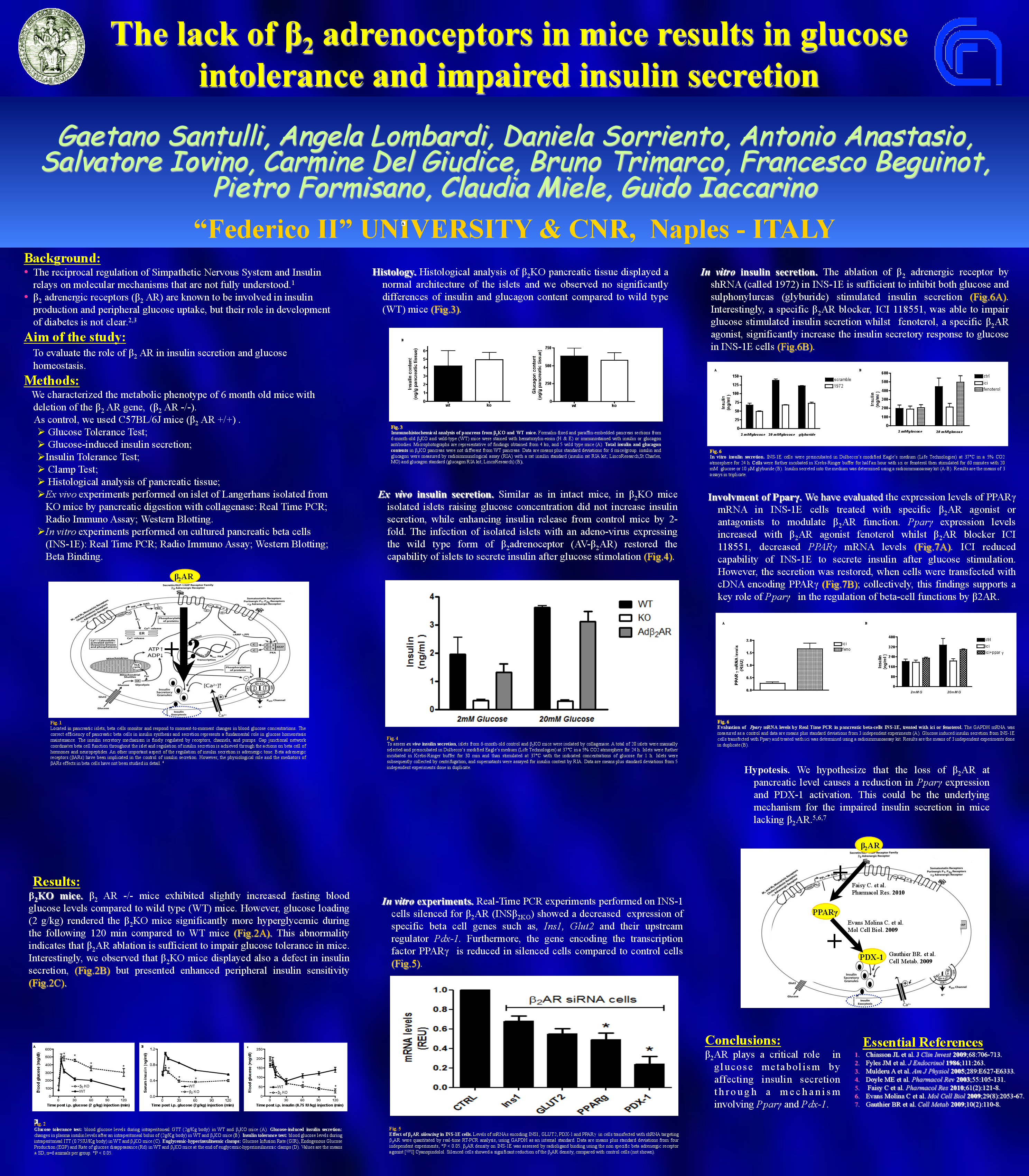
Aging is associated with a progressive diminished capacity of pancreatic β-cells to secrete insulin. Furthermore, the density of β adrenergic receptors (βARs), particularly the β2AR, decreases with aging in several districts. To investigate the role of β2AR in insulin release and glucose homeostasis we characterized the metabolic phenotype of mice with deletion of β2AR (β2AR-/-). Intriguingly, the pancreatic density of β2AR decreased over time in β2AR+/+ littermate mice. Moreover, β2AR-/- at 6 months displayed an impaired insulin release and were glucose intolerant, anticipating features observed in 20-month-old β2AR+/+. Adenoviral infection of β2AR rescued both these responses. These findings were confirmed ex vivo in isolated islets. Finally, to gain further inside into the mechanism leading to impaired insulin secretion, we performed experiments in vitro using β-cells silenced for the β2AR. Our results establish that β2AR-/- mice, recapitulating the metabolic characteristics of old β2AR+/+ animals, represent a model of aging induced diabetes.