Abstract
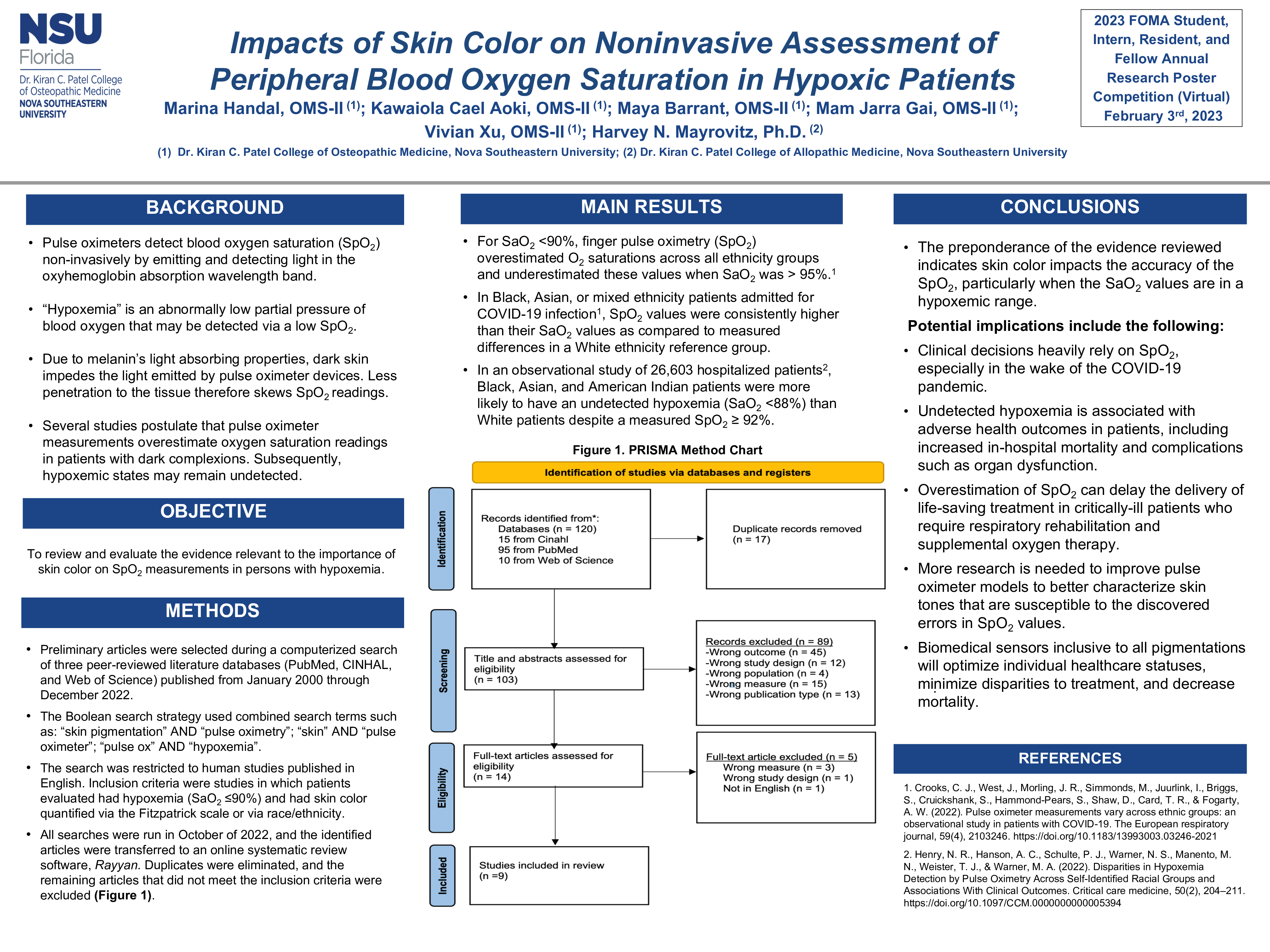
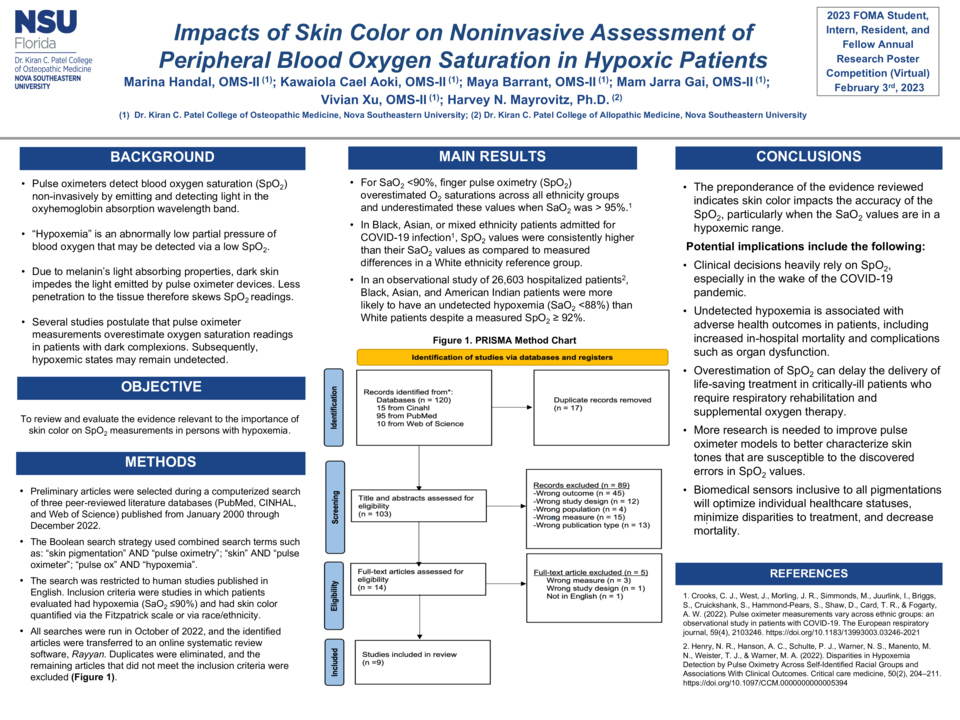
Background: Peripheral blood oxygen saturation (SpO2) measured with pulse oximetry is used as an indicator of arterial blood oxygen saturation (SaO2). However, some studies have reported that dark pigmentation of the skin has led to failures to detect low oxygen levels in hypoxemic patients. COVID-19 infection is an example in which SpO2 has been overestimated in hypoxemic Asian, Black, and Hispanic patients. Such errors impact patient treatment in both acute and chronic settings. Presently, the literature reveals there are insufficient standards addressing this issue that systematically consider races and ethnicities. Such considerations would seem to be important for optimizing the quality of care in patients so impacted.
Objective: The objective of this scoping review was to assess and evaluate the impact of skin properties and color on noninvasively determined SpO2 as measured using pulse oximetry.
Methods: This study was designed as a scoping review. Electronic databases CINAHL (EBSCOhost), PubMed, and Web of Science were accessed. Original, peer-reviewed articles, including retrospective and prospective studies, published in English between 2002 and 2022 involving human studies were eligible for inclusion. Articles considered for final analysis required that the study include patients with hypoxemia (SaO2 ≤90%) and measurements of skin color and properties via the Fitzpatrick scale or indirectly via race/ethnicity.
Results: So far, a total of 120 articles have been identified with nine studies satisfying the eligibility requirement that were of good quality with low-risk bias being included in the final review and analysis. The data collected thus far are consistent with the presence of the suspected SpO2 measurement errors associated with skin color differences.
Conclusions: Patients who receive an inaccurate SpO2 reading have an increased risk of complications and mortality and poorer healthcare outcomes altogether. The preliminary results of this study better define the inherent error in pulse oximeter measurements in assessing peripheral blood oxygen saturation across various skin pigmentations and properties. Such biases occur due to darker skin pigmentations, along with faulty pulse oximeter probes, and iatrogenic causes including drug ingestion or viral and bacterial infections. This study suggests the need for a more quantitative assessment of an individual’s susceptibility to the SpO2 measurement errors and possibly the development of newer pulse oximeter technologies in which there is less dependence on skin color.