The Pathogenicity of Interleukin-21 in Inflammatory Bowel Disease
Abstract
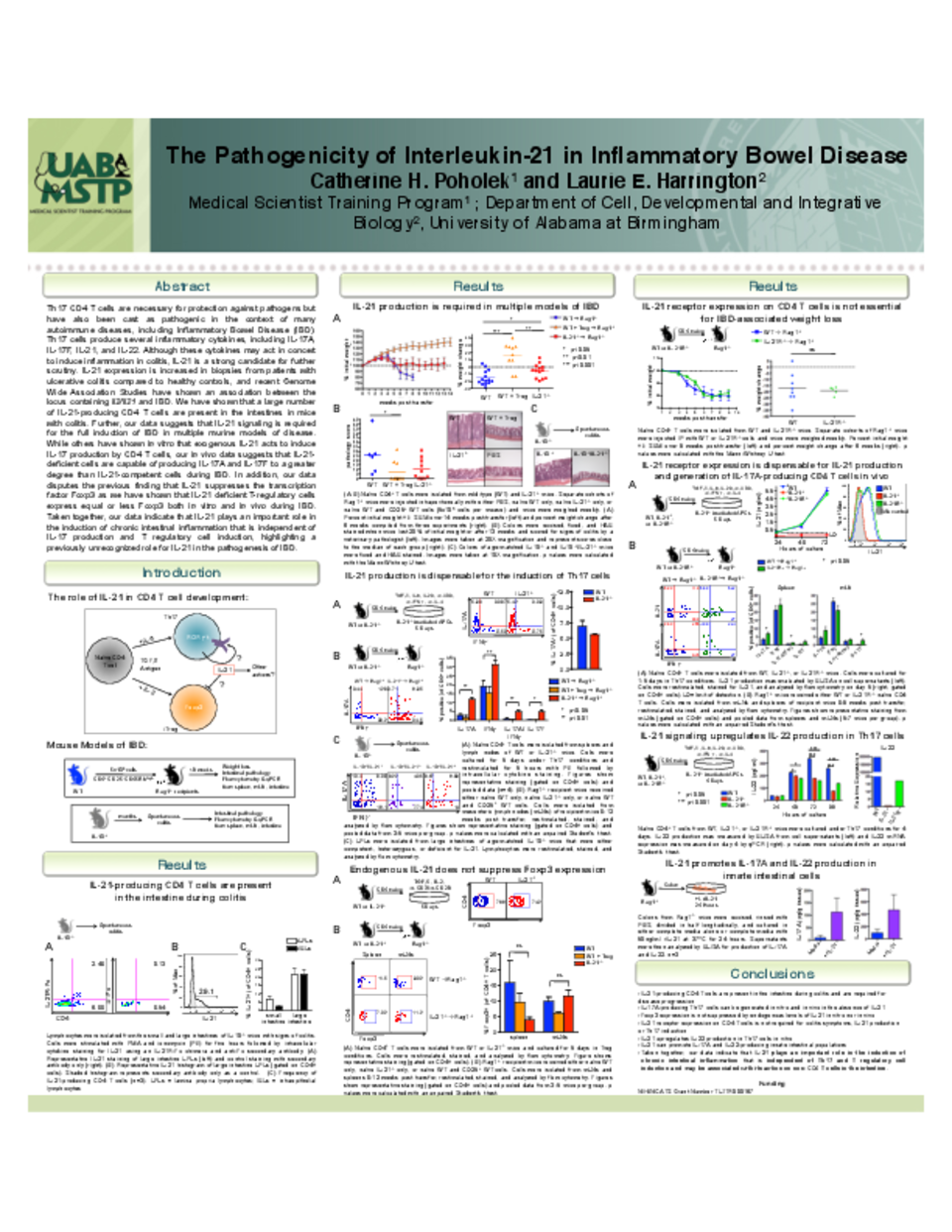
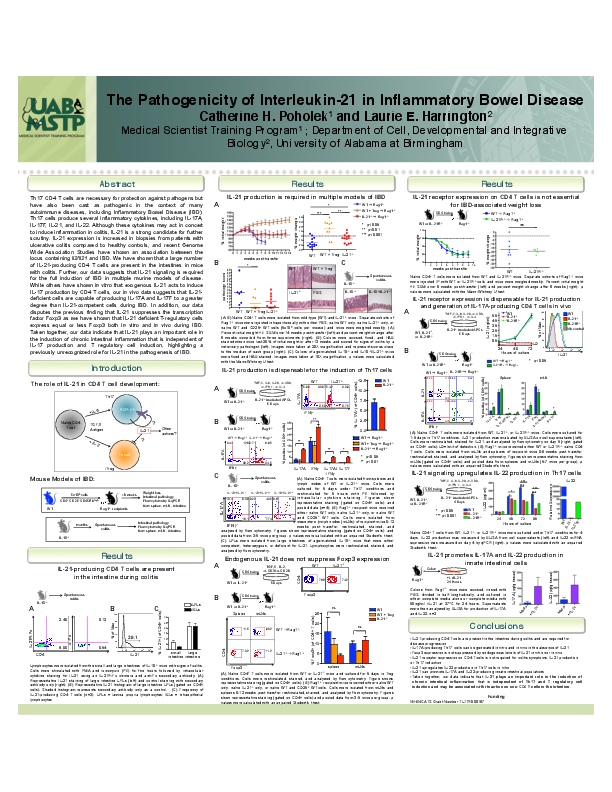
Th17 CD4 T cells are necessary for protection against pathogens but have also been cast as pathogenic in the context of many autoimmune diseases, including Inflammatory Bowel Disease (IBD). Th17 cells produce several inflammatory cytokines, including IL-17A, IL-17F, IL-21, and IL-22. Although these cytokines may act in concert to induce inflammation in colitis, IL-21 is a strong candidate for further scrutiny. IL-21 expression is increased in biopsies from patients with ulcerative colitis compared to healthy controls, and recent Genome Wide Association Studies have shown an association between the locus containing il2/il21 and IBD. We have shown that a large number of IL-21-producing CD4 T cells are present in the intestines in mice with colitis. Further, our data suggests that IL-21 signaling is required for the full induction of IBD in multiple murine models of disease. While others have shown in vitro that exogenous IL-21 acts to induce IL-17 production by CD4 T cells, our in vivo data suggests that IL-21-deficient cells are capable of producing IL-17A and IL-17F to a greater degree than IL-21-competent cells during IBD. In addition, our data disputes the previous finding that IL-21 suppresses the transcription factor Foxp3 as we have shown that IL-21 deficient T-regulatory cells express equal or less Foxp3 both in vitro and in vivo during IBD. Taken together, our data indicate that IL-21 plays an important role in the induction of chronic intestinal inflammation that is independent of IL-17 production and T regulatory cell induction, highlighting a previously unrecognized role for IL-21 in the pathogenesis of IBD.
Related articles