Abstract
Introduction: Mucous membrane pemphigoid (MMP) is a rare and chronic group of autoimmune immuno-bullous diseases that affects the mucosal surfaces of the body. It occurs most commonly between the ages of 60-70 years old. An autoimmune disease is when the body mistakenly attacks normal cells. This occurs when the body's natural defense system can't tell the difference between your cells and foreign cells. Many conditions appear similar, and therefore MMP cannot be diagnosed solely on clinical appearances. The diagnosis is confirmed by specific antibody testing associated with MMP and/or observing the blistered tissue under a microscope. A potentially serious complication known as ocular cicatricial pemphigoid does not occur in all people with MMP, but it may cause scarring and can affect vision. Scarring may also affect the throat and the genitalia and may be very serious if the larynx is affected.
Aim: Our goal was to alert clinicians to diagnose Mucous membrane pemphigoid (MMP) early to prevent threatening and fatal complications that would require advanced management.
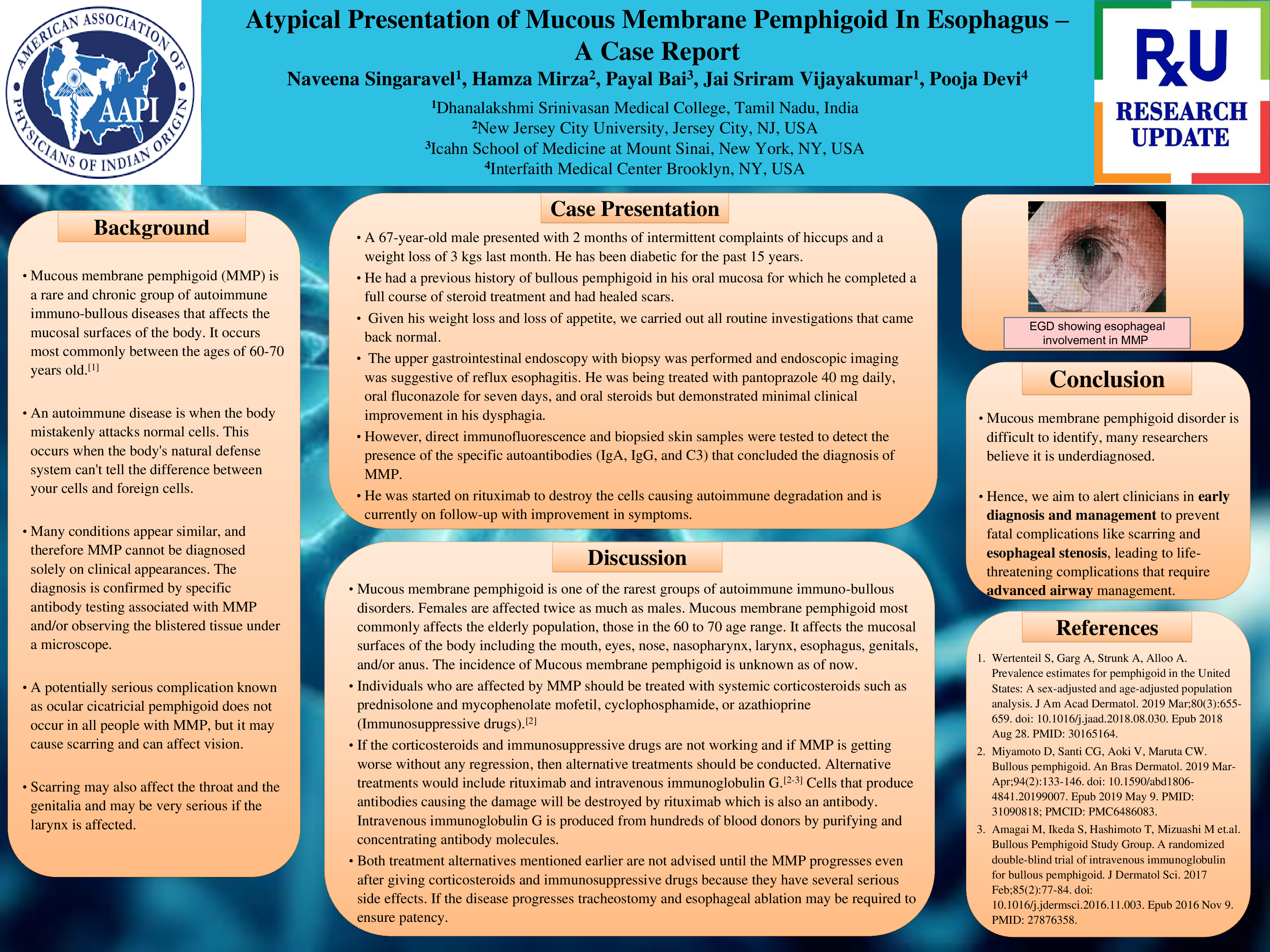
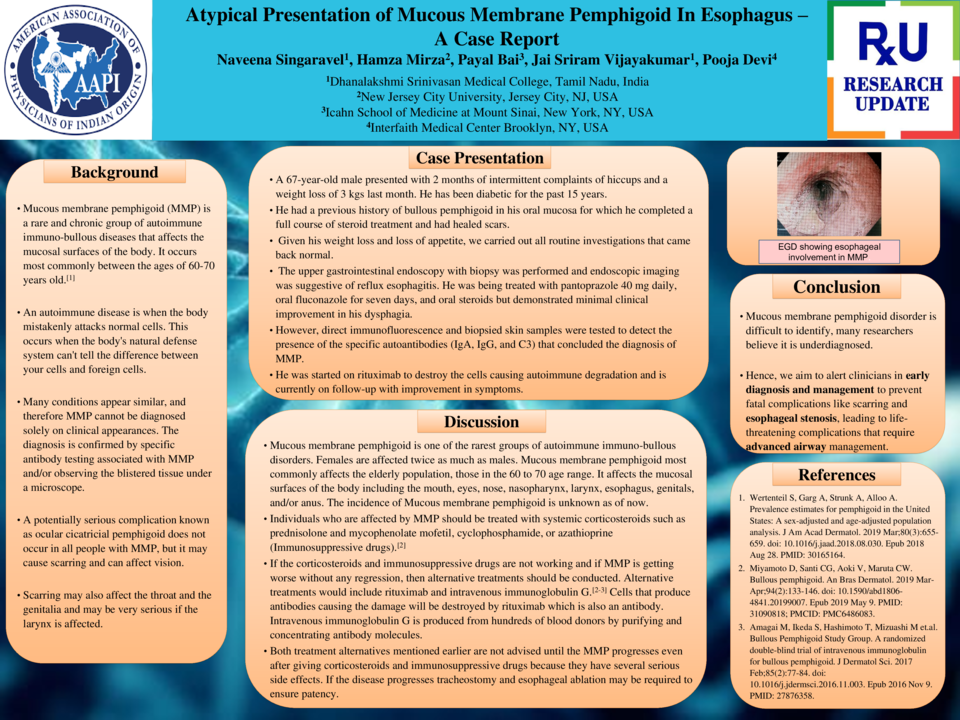
Case report: A 67-year-old male presented with 2 months of intermittent complaints of hiccups and a weight loss of 3 kgs last month. He has been diabetic for the past 15 years. He had a previous history of bullous pemphigoid in his oral mucosa for which he completed a full course of steroid treatment and had healed scars. Given his weight loss and loss of appetite, we carried out all routine investigations that came back normal. The upper gastrointestinal endoscopy with biopsy was performed and endoscopic imaging was suggestive of reflux esophagitis. He was being treated with pantoprazole 40 mg daily, oral fluconazole for seven days, and oral steroids but demonstrated minimal clinical improvement in his dysphagia. However, direct immunofluorescence and biopsied skin samples were tested to detect the presence of the specific autoantibodies (IgA, IgG, and C3) that concluded the diagnosis of MMP. He was started on rituximab to destroy the cells causing autoimmune degradation and is currently on follow-up with improvement in symptoms.
Conclusion: Mucous membrane pemphigoid disorder is difficult to identify, many researchers believe it is underdiagnosed. Hence, we aim to alert clinicians in early diagnosis and management to prevent fatal complications like scarring and esophageal stenosis, leading to life-threatening complications that require advanced airway management.