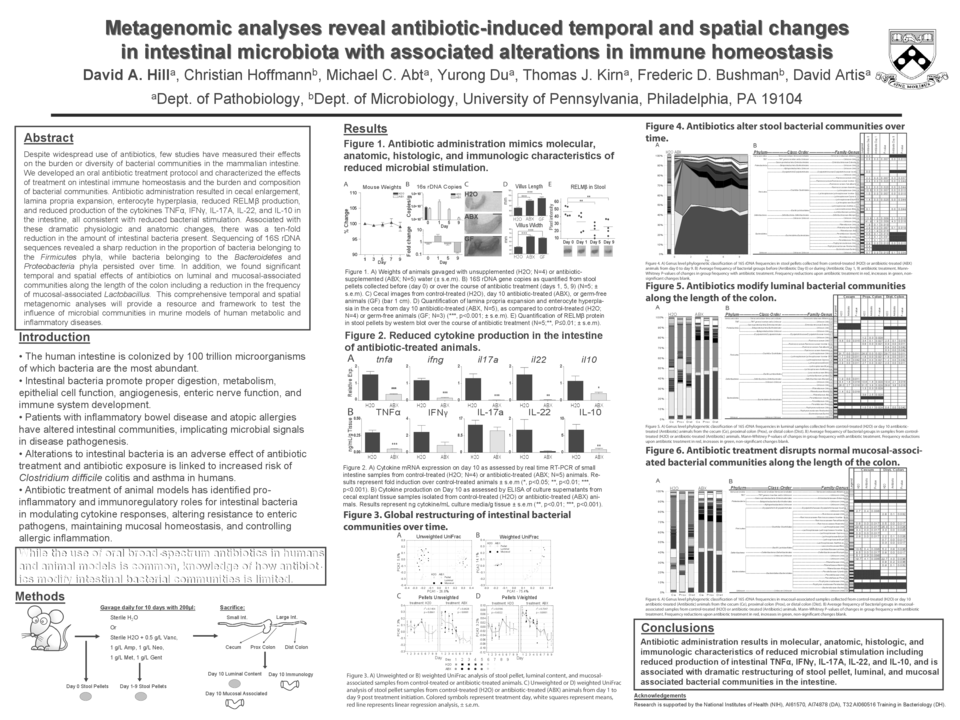
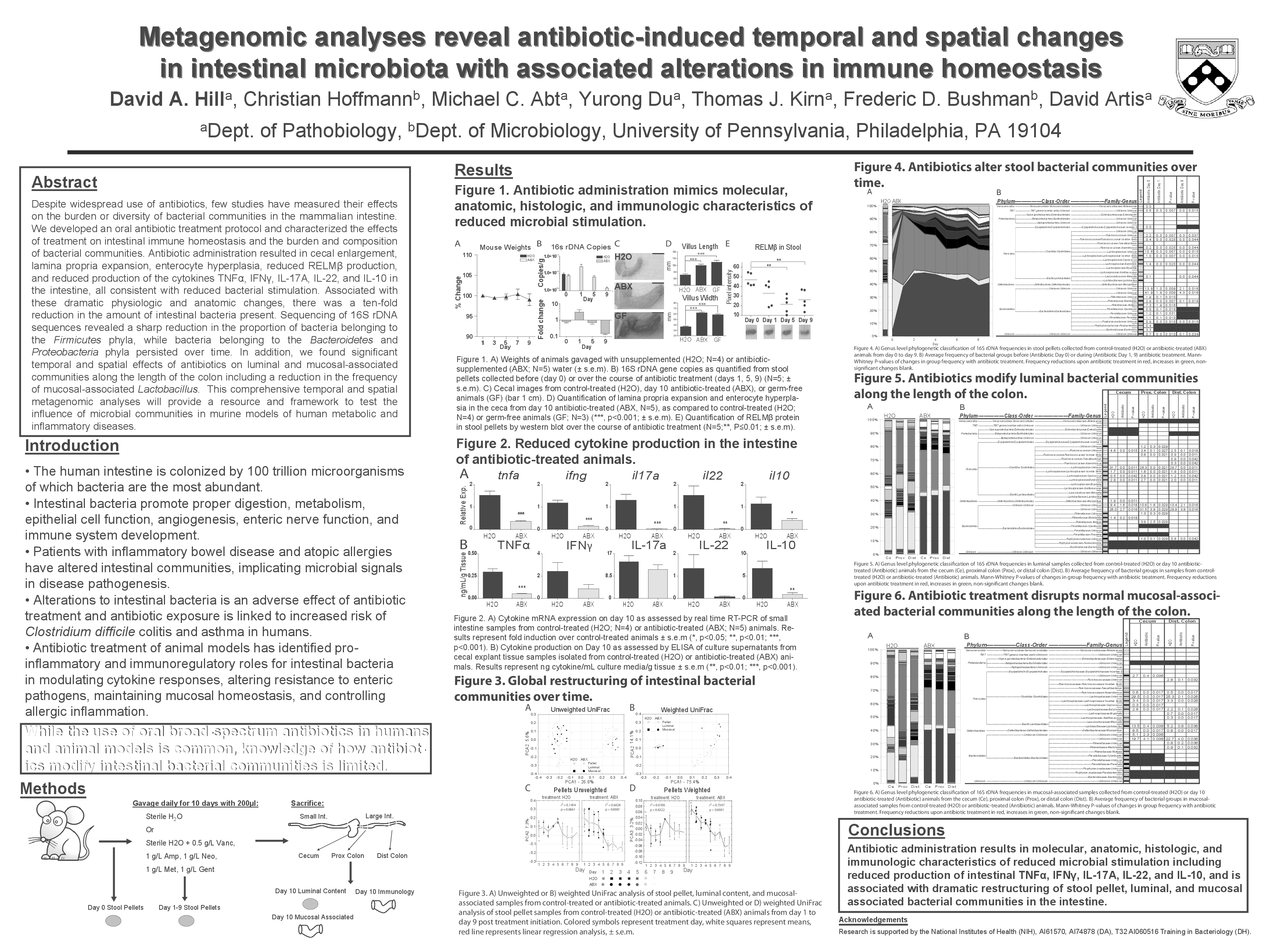
Metagenomic Analyses Reveal Antibiotic-Induced Temporal and Spatial Changes in Intestinal Microbiota with Associated Alterations in Immune Homeostasis
Abstract
Despite widespread use of antibiotics, few studies have measured their effects on the burden or diversity of bacterial communities in the mammalian intestine. We developed an oral antibiotic treatment protocol and characterized the effects of treatment on intestinal immune homeostasis and the burden and composition of bacterial communities. Antibiotic administration resulted in cecal enlargement, lamina propria expansion, enterocyte hyperplasia, reduced RELMβ production, and reduced production of the cytokines TNFα, IFNγ, IL-17A, IL-22, and IL-10 in the intestine, all consistent with reduced bacterial stimulation. Associated with these dramatic physiologic and anatomic changes, there was a ten-fold reduction in the amount of intestinal bacteria present. Sequencing of 16S rDNA sequences revealed a sharp reduction in the proportion of bacteria belonging to the Firmicutes phyla, while bacteria belonging to the Bacteroidetes and Proteobacteria phyla persisted over time. In addition, we found significant temporal and spatial effects of antibiotics on luminal and mucosal-associated communities along the length of the colon including a reduction in the frequency of mucosal-associated Lactobacillus. This comprehensive temporal and spatial metagenomic analyses will provide a resource and framework to test the influence of microbial communities in murine models of human metabolic and inflammatory diseases.
Related articles