Abstract
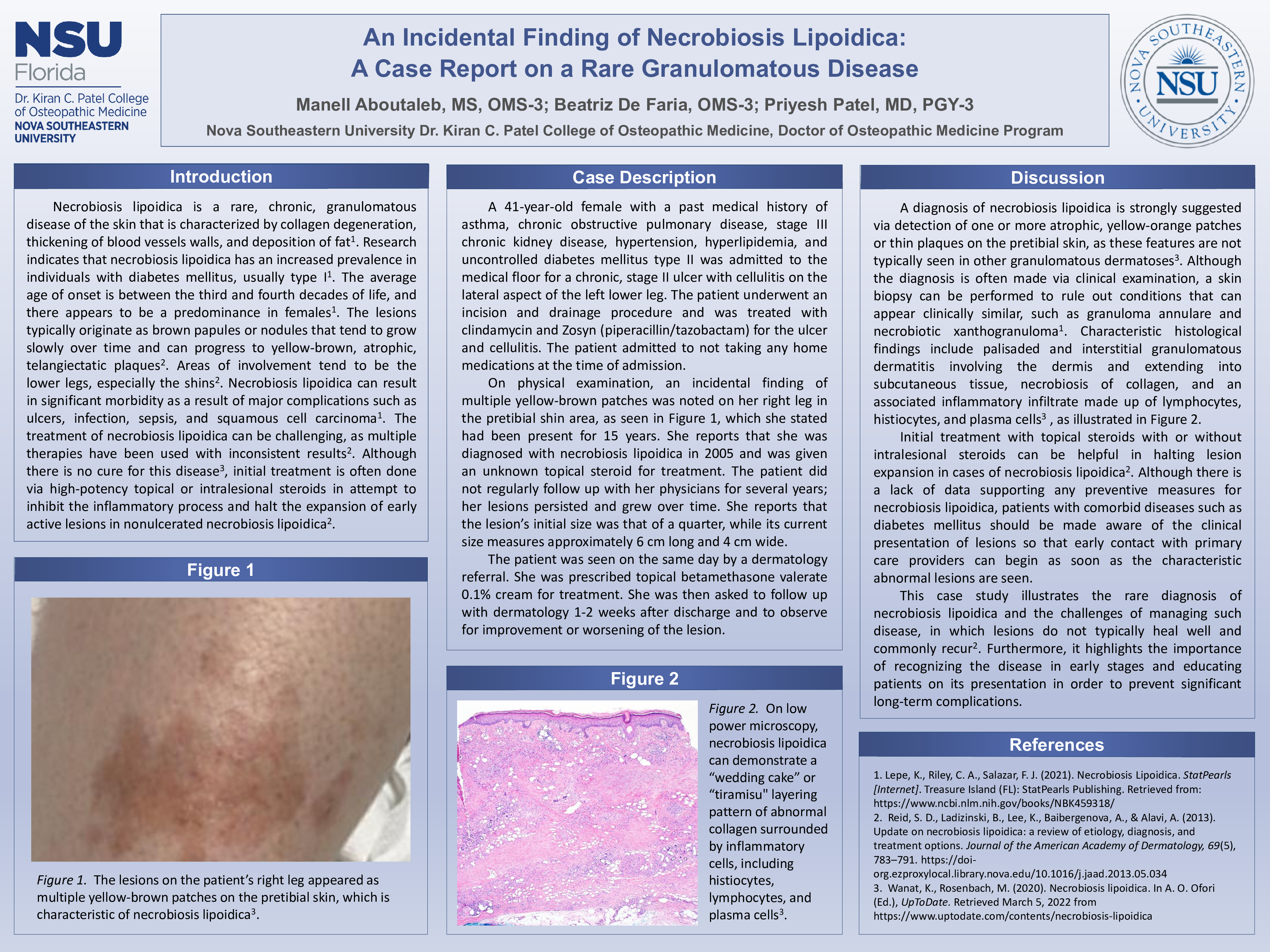
Necrobiosis lipoidica is a rare, chronic, granulomatous disease of the skin that is characterized by collagen degeneration, thickening of blood vessels walls, and deposition of fat. The lesions are typically found on the shins, and they usually originate as slow-growing brown papules or nodules that can progress to yellow-brown, atrophic, telangiectatic plaques. Research indicates that there is an increased prevalence of necrobiosis lipoidica in individuals with diabetes mellitus, usually type I. Necrobiosis lipoidica can result in significant morbidity because of major complications such as ulcers, infection, sepsis, and squamous cell carcinoma. The treatment of this condition can be challenging, as multiple therapies have been used with inconsistent results. In this case report, we present a rare case of a 41-year-old female with an incidental finding of necrobiosis lipoidica.